
Pale chanterelle
Cantharellus pallens
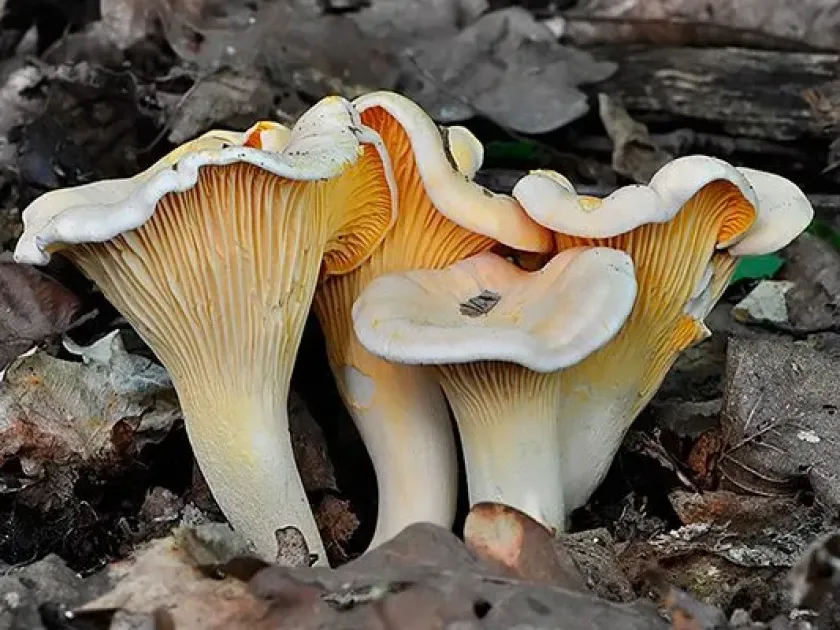
Description
Pathogen
Cantharellus pallens is a species of fungus belonging to the Cantharellaceae family, recognized for its role in forming ectomycorrhiza.
The fungus establishes a mutualistic relationship with forest trees, wrapping the root tips in a dense fungal mantle.
This interaction is characterized by the exchange of nutrients, where the fungus provides the host with essential minerals and water.
Reproduction is carried out through basidiospores that are dispersed by air currents within forest habitats.
While often viewed as beneficial, in certain agricultural or nursery contexts, the aggressive colonization of roots is monitored closely.
Conditions for development
Growth is highly dependent on specific soil moisture levels, requiring a stable environment typical of woodland areas.
The fungus thrives in temperate climates, with soil temperatures ranging between 15°C and 23°C being optimal for mycelial expansion.
Soils rich in decaying organic matter and with a slightly acidic pH level provide the best substrate for development.
Shaded environments are critical for the fungus, as direct sunlight can dry out the surface mycelium.
Fluctuations in ground water levels significantly influence the fruiting activity of the organism within the ecosystem.
Why it matters
The primary concern involves the competitive uptake of soil nutrients that would otherwise be available to the host plant.
Stunting of growth in young tree seedlings has been observed in areas where mycorrhizal density is exceptionally high.
The physical presence of the mycelium can interfere with the root hair functioning, impacting the uptake of secondary minerals.
In high-density nursery plots, the colonization by Cantharellus pallens complicates soil management and nutrient application strategies.
Long-term colonization can alter the rhizosphere chemistry, potentially creating an environment favorable for other opportunist pathogens.
Protection
Preventative measures focus on maintaining balanced soil conditions to prevent excessive colonization by the fungus.
Mechanical aeration of the soil surface is an effective way to disrupt the continuous mycelial mat in nursery settings.
Careful irrigation scheduling helps manage the soil moisture, keeping it below the threshold that triggers aggressive sporulation.
Crop rotation in nurseries is a standard practice to prevent the accumulation of fungal propagules in the growing medium.
Chemical intervention is strictly regulated due to the potential for disrupting beneficial soil microflora and sensitive root systems.
Discussion
No discussions yet — be the first.