
Blackening chanterelle
Cantharellus melanoxeros
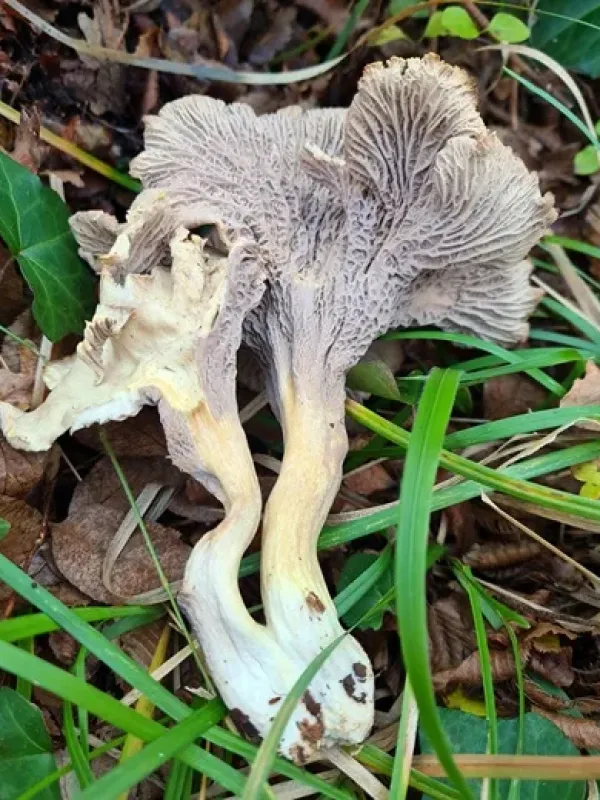
Description
Symptoms
The most distinctive sign of Cantharellus melanoxeros is the coloration of its fruiting body during development.
The cap typically features a funnel shape, and the flesh characteristically turns black when bruised or as the fungus ages.
It possesses false gills that are decurrent and often interconnected, which is a hallmark feature of chanterelle species.
The colors range from yellowish-brown to grayish, which allows for visual differentiation from other members of the genus.
These mushrooms grow from the forest floor, appearing during periods of sufficient soil moisture and appropriate temperatures.
Pathogen
The blackening chanterelle, scientifically known as Cantharellus melanoxeros, is not a plant disease or a pathogenic organism.
It is a species of fungus in the Cantharellaceae family that functions as a beneficial mycorrhizal symbiont in forest ecosystems.
The fungus establishes a mutualistic relationship with trees, meaning it does not attack or cause disease symptoms in host plants.
Instead, it helps trees absorb nutrients and water more efficiently, supporting the health of the entire forest stand.
Therefore, classifying this fungus as a plant disease is factually incorrect as it plays a supportive role in nature.
Conditions for development
This species thrives in deciduous and mixed woodlands where it can form symbiotic relationships with suitable host trees.
It requires soil conditions rich in organic matter and relatively undisturbed ground to maintain its mycelial network.
The presence of this fungus is often an indicator of an ecologically stable environment with low levels of chemical pollution.
Consistent rainfall and moderate seasonal temperatures are essential for the production of macroscopic fruiting bodies.
High soil compaction or forest floor disruption negatively impacts the growth and reproductive capacity of the fungal colony.
Why it matters
There is no economic or agricultural damage associated with the blackening chanterelle as it does not infect any cultivated crops.
The species does not produce toxins or enzymes that would cause degradation of living plant tissue or farm products.
It is entirely harmless to agriculture, horticulture, and forestry operations, making it a completely non-threating biological entity.
The only potential for harm is the destruction of the fungus's natural habitat due to deforestation or landscape alteration.
No agricultural losses are linked to this fungus, thus no management or mitigation of damages is required in any field.
Protection
Because the blackening chanterelle is not a disease, no plant protection measures, chemical treatments, or control programs are necessary.
Applying fungicides to kill such beneficial mycorrhizal fungi is counterproductive and harmful to the health of the local soil ecosystem.
The best practice is to allow these fungi to persist in their natural habitat as part of the diverse soil microbiome.
Monitoring efforts should be limited to ecological assessments rather than pest control or disease management activities.
General healthy soil management and sustainable forest practices are sufficient to maintain these valuable organisms in their environment.
Discussion
No discussions yet — be the first.