
Amethyst chanterelle
Cantharellus amethysteus
Description
Symptoms
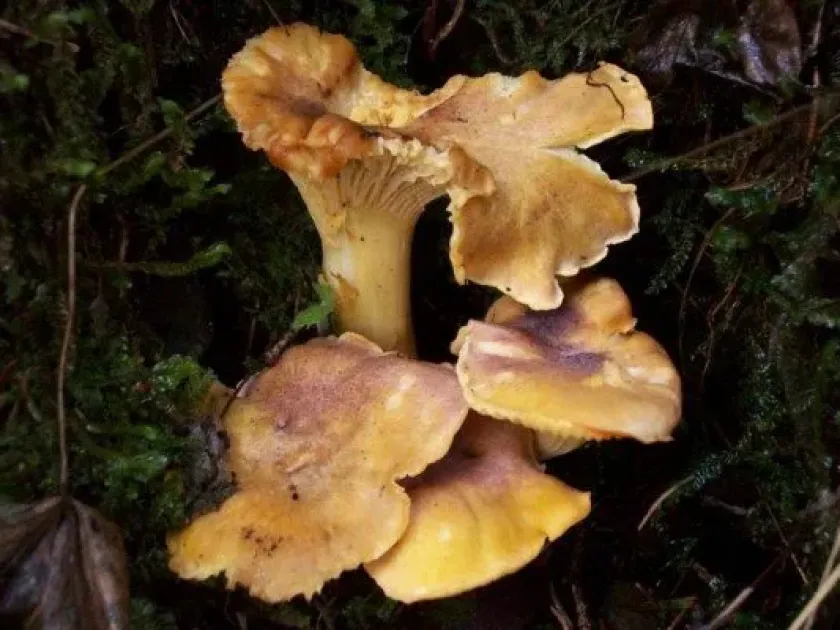
The primary distinguishing feature of the Amethyst chanterelle is the presence of violet scales on the cap surface.
The fruit body typically displays a funnel shape, transitioning from yellow to light orange, contrasted by its amethyst-colored scales.
The pseudogills on the underside are decurrent, running down the stem, and are generally uniform in texture.
These mushrooms grow in clusters, often appearing in the vicinity of mature deciduous trees such as oaks or beeches.
The flesh is firm and white, lacking the slimy or necrotic appearance associated with pathogenic fungal infections.
Pathogen
The Amethyst chanterelle (Cantharellus amethysteus) is a wild edible mushroom, not a plant pathogen or a disease agent.
It is classified as a mycorrhizal fungus, meaning it lives in a mutually beneficial relationship with the roots of specific trees.
Unlike parasitic fungi that cause plant diseases, this species helps trees absorb nutrients and water from the soil.
The fungus does not secrete toxins, cause rot, or lead to any form of tissue degeneration in host plants.
Therefore, it is biologically inaccurate to describe this organism as a disease or a pest of any plant species.
Conditions for development
This species favors damp, acidic soils found in ancient woodlands with abundant leaf litter.
The development of fruit bodies is triggered by high moisture levels and mild temperatures during the summer and autumn months.
It requires an established root network of symbiotic host trees to maintain its mycelial presence underground.
The species is sensitive to extreme chemical changes in the soil, which can disrupt its complex mycorrhizal network.
Stable forest conditions, including consistent humidity and moderate light penetration, support its growth cycles.
Why it matters
The Amethyst chanterelle is not harmful to any forestry or agricultural crops.
Its role as a symbiont contributes to the overall vitality of the forest by facilitating nutrient uptake in trees.
There is no evidence of this fungus causing any growth inhibition, wilting, or structural damage to trees.
It acts as a beneficial component of the ecosystem, helping to maintain soil fertility through its natural metabolic processes.
Any suggestion of this fungus being a danger is misplaced and does not align with mycological reality.
Protection
No protection or control measures are required because this fungus does not pose a threat to plant health.
Applying fungicides to kill such fungi would be detrimental to the forest soil health and the trees' mycorrhizal associations.
The best practice is to preserve the natural habitat and avoid soil compaction in areas where these mushrooms thrive.
Forest management should encourage the presence of mycorrhizal species to promote healthy, sustainable tree growth.
Conservation efforts should focus on protecting the biodiversity of the woodland rather than controlling naturally occurring fungal species.
Discussion
No discussions yet — be the first.