
Cantharellula umbonata
Cantharellula umbonata
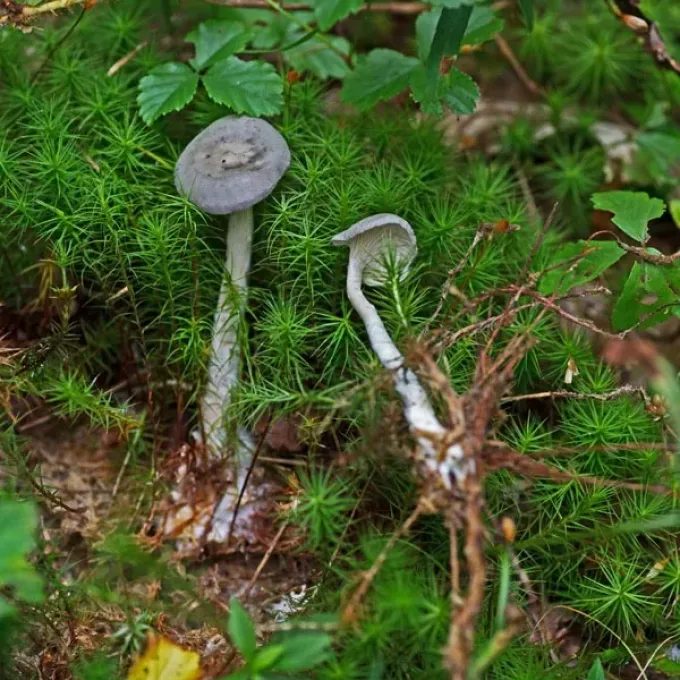
Description
Pathogen
Cantharellula umbonata is a species of gilled mushroom in the family Hygrophoraceae, which is not a plant pathogen.
The organism is classified as a saprotroph, meaning it derives its nutrients from dead organic matter, such as leaf litter and mosses.
It does not possess the biological mechanisms to invade or infect living plant tissues, making it harmless to crops.
The mycelium often grows in close proximity to mosses like Polytrichum, which is a structural association rather than a parasitic one.
In mycological terms, this species is defined by its role as a decomposer rather than a primary or secondary pathogen.
Conditions for development
This fungus thrives in cool, moist, and acidic environments typically found in coniferous woodlands and wetlands.
Optimal development of fruit bodies occurs during the autumn season when humidity levels remain consistently high.
The fungus requires specific micro-habitats where moss cover is dense, providing a stable environment for spore germination.
Dispersal is primarily achieved through airborne spores, which colonize suitable substrates after autumn rains.
Growth is generally limited to wild environments and is rarely observed in well-tilled agricultural fields.
Why it matters
Cantharellula umbonata poses absolutely no threat to agricultural, ornamental, or silvicultural plant species.
As a decomposer, it plays a vital role in nutrient cycling by breaking down complex cellulose and lignin in forest debris.
There is no evidence of economic damage caused by this species, and it is not considered a pest in any context.
The confusion regarding its status as a "disease" often stems from misidentifying its presence near sick trees as the cause of the illness.
It is fundamentally beneficial to the soil ecosystem, contributing to soil fertility rather than degrading plant health.
Protection
No protective or preventative measures are necessary for Cantharellula umbonata as it is not a threat to plant health.
The application of fungicides in areas where this mushroom occurs is unnecessary and may negatively impact soil biodiversity.
Effective management of any plant disease should focus on identifying the true pathogen rather than targeting harmless saprotrophic fungi.
If you encounter these mushrooms in a garden, it is recommended to leave them be, as they aid in maintaining soil structure.
Education on fungal roles in the garden ecosystem is the best approach to ensure appropriate treatment of perceived issues.
Discussion
No discussions yet — be the first.