
Cantharellopsis prescotii
Cantharellopsis prescotii
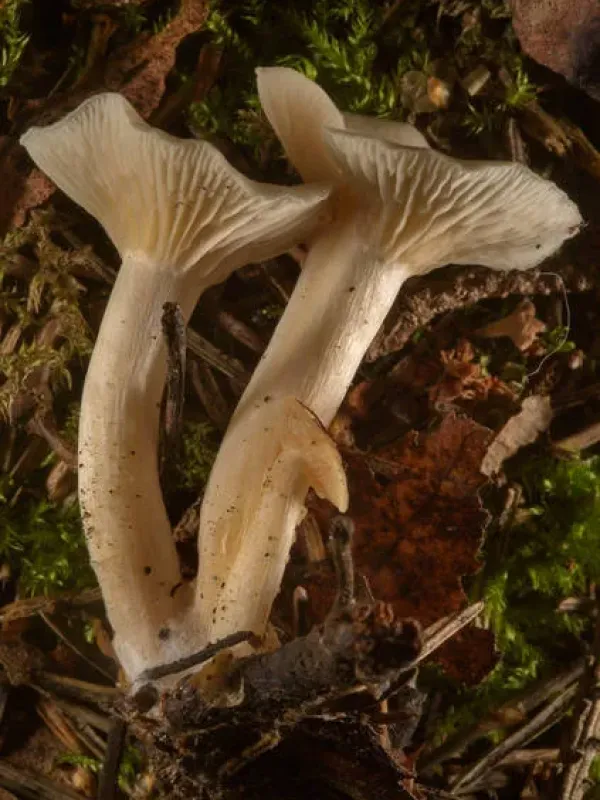
Description
Symptoms
Initial signs include the emergence of characteristic funnel-shaped fruiting bodies on the trunk or branches, often appearing in clusters during moist periods.
Leaves on infected limbs may show signs of chlorosis, premature yellowing, and eventually wilting as the hydraulic conductivity of the tree is severely compromised.
The bark often becomes spongy, cracked, or loose, revealing discolored and fibrous wood underneath. This is a clear indicator of active fungal decay.
- Whitish discoloration of the infected wood.
- Surface cracks filled with fungal mycelial mats.
- Reduced vitality and stunted annual growth.
In advanced stages, structural integrity is lost, leading to branch breakage or the toppling of the tree during high-wind events.
Pathogen
The pathogen Cantharellopsis prescotii is a basidiomycetous fungus known for its role in wood degradation. It acts as a facultative parasite, primarily attacking the structural tissues of trees.
The mycelium colonizes the woody biomass, secreting extracellular enzymes that effectively break down lignin and cellulose components. This leads to the progressive weakening of the host plant.
Reproduction is carried out through spore release, facilitated by wind and water splash. These spores can travel significant distances, initiating new infection cycles.
The fungus develops morphologically distinct fruiting bodies that typically emerge from the bark or trunk crevices when the infection is well-established.
Biologically, it thrives by adapting to various woody hosts, demonstrating a high degree of survival strategy within both forest ecosystems and managed orchards.
Conditions for development
The development of Cantharellopsis prescotii is highly dependent on humidity levels, as the fungus requires significant moisture to maintain its vegetative growth.
Mechanical injuries, such as pruning wounds, frost cracks, or sunscalds, serve as the primary entry points for fungal spores to infect the tree's internal tissues.
Poor aeration in dense plantings creates a stagnant microclimate with high relative humidity, which is highly conducive to the proliferation of the pathogen.
Shaded environments limit the tree's physiological defenses, making it easier for the fungus to colonize the host without significant resistance.
The optimal temperature for fungal activity typically ranges between 15°C and 22°C, providing the necessary energy for rapid mycelial expansion.
Why it matters
The primary threat posed by this pathogen is the physical destruction of the tree, which can lead to significant aesthetic and economic losses in orchards.
Infected trees suffer from a decline in nutrient and water uptake, resulting in significantly reduced yields and overall physiological stress.
The disease spreads effectively through spore dispersal, posing a continuous risk to the surrounding healthy vegetation if the infected source is not managed.
Economic damage is exacerbated by the costs associated with tree removal, pruning, and the potential need for chemical control measures on nearby trees.
In addition to primary decay, the weakened tree often becomes a magnet for secondary pests, such as wood-boring insects, further accelerating the plant's demise.
Protection
Sanitation is the most effective management strategy, requiring the removal and destruction of all infected wood to reduce the local spore concentration.
Pruning tools should be sterilized regularly between cuts to prevent mechanical transmission of the fungus from symptomatic to healthy parts of the plant.
Application of copper-based fungicides to pruning wounds can provide a protective barrier, preventing spores from germinating on fresh, vulnerable tissues.
Ensuring proper tree spacing and thinning can improve air circulation and sunlight penetration, creating a less favorable environment for the pathogen.
Continuous monitoring of the garden or plantation allows for early detection, enabling surgical removal of infected areas before the entire tree is compromised.
Discussion
No discussions yet — be the first.