
Plant candidiasis
Candida viswanathii
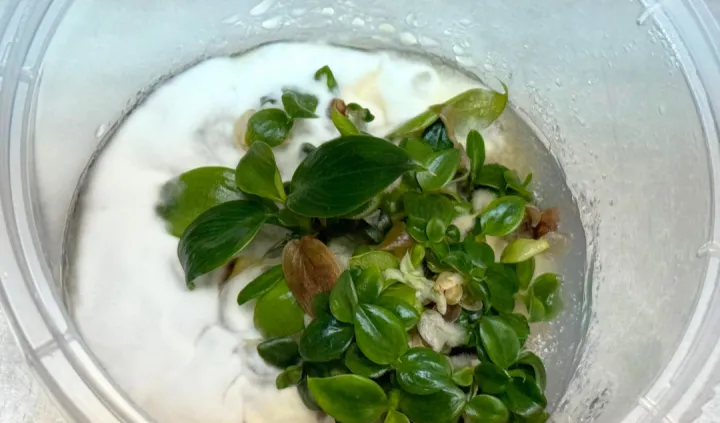
Description
Symptoms
The primary clinical sign of plant candidiasis is the appearance of soft, water-soaked lesions on fruits, leaves, or stems.
A characteristic white to yellowish fungal film or layer often develops on the surface of the affected areas, indicating active yeast proliferation.
Tissues affected by the pathogen show signs of rapid necrosis and decay, often emitting a distinct yeast-like or sour fermented odor.
As the infection progresses, the structural integrity of the plant tissue is compromised, leading to complete softening and collapse of the plant parts.
- Water-soaked, expanding lesions.
- Development of a whitish surface film.
- Distinct fermentation or yeast smell.
- Rapid softening and tissue decomposition.
Pathogen
The causative agent of this disease is the yeast-like fungus Candida viswanathii, which can act as a pathogen in weakened or damaged plant tissues.
This organism is widely recognized in biology for its metabolic flexibility, allowing it to thrive in various organic substrates including plant organs.
It behaves as an opportunistic pathogen, entering the host plant through wounds, mechanical injuries, or natural openings during periods of high vulnerability.
The fungus is characterized by its ability to form pseudohyphae, which penetrate deep into the plant intercellular spaces, leading to tissue degradation.
Research indicates that Candida viswanathii has high tolerance to environmental stress, making it a persistent threat in agricultural ecosystems.
Conditions for development
The development of Candida viswanathii is strictly dependent on high humidity levels, often exceeding 80%, which promote rapid yeast growth.
Warm temperatures, particularly between 22°C and 30°C, significantly accelerate the enzymatic activity and reproductive cycle of the pathogen.
Poor ventilation in greenhouses or storage facilities creates an anaerobic or humid microclimate that is extremely conducive to the spread of the fungus.
Mechanical damage to the plant epidermis caused by pests, hail, or agricultural handling serves as the primary gateway for fungal penetration.
Over-fertilization, especially with high levels of nitrogen, can result in succulent, weak tissues that are more susceptible to yeast infections.
Why it matters
The disease causes major economic losses by rendering harvested crops unmarketable due to rapid rotting and spoilage.
Contaminated crops suffer from irreversible chemical degradation, which can make the produce unsafe for consumption or processing.
The rapid spread of the pathogen during storage can lead to the loss of entire batches of produce in a very short period of time.
In seedling nurseries, the disease can cause systemic infections resulting in high mortality rates and significant production delays.
Because the symptoms can be overlooked in the early stages, the infection often spreads throughout the field before any control measures are initiated.
Protection
Effective management begins with strict sanitation practices, including the removal and destruction of crop residues that harbor the pathogen.
Proper aeration and humidity control in greenhouses and storage facilities are essential to prevent the conditions that favor yeast growth.
Implementing integrated pest management (IPM) to minimize mechanical damage to the plant epidermis is a critical preventive strategy.
Disinfection of tools, crates, and warehouse equipment using broad-spectrum antimicrobial agents helps break the transmission cycle of the fungus.
Monitoring crops for early signs of decay and immediate removal of infected individuals can prevent localized infections from becoming epidemics.
Discussion
No discussions yet — be the first.