
Giant puffball
Calvatia gigantea
Description
Pathogen
The giant puffball (Calvatia gigantea) is often mistaken for a plant disease, but it is not a pathogen. It is a large basidiomycete fungus belonging to the saprotrophic group.
Unlike parasitic fungi that attack living crops, Calvatia gigantea lives exclusively on dead organic matter. It derives nutrients from decomposing plant debris, humus, and decaying organic materials in the soil.
The mycelium of the fungus plays a beneficial role in the soil ecosystem. It secretes enzymes that break down complex organic compounds, effectively acting as a natural recycler that contributes to soil fertility.
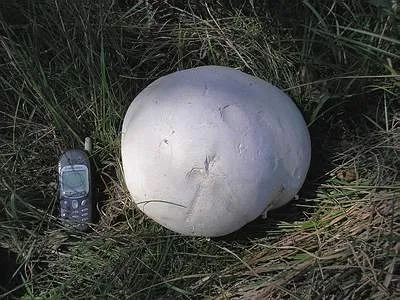
The fungus develops large, globose fruiting bodies after its underground mycelial network reaches sufficient maturity. Because it does not feed on living plant tissues, it does not cause any necrosis, wilt, or decay in agricultural plants.
Therefore, classifying the giant puffball as a plant pathogen is a common misconception in amateur agronomy. It poses absolutely no threat to the health or yield of cultivated crops.
Conditions for development
Giant puffballs thrive in nutrient-rich soils, particularly in pastures, meadows, and areas with high levels of organic nitrogen. They are often found in well-manured fields or garden beds.
High soil and air moisture are the primary environmental requirements for the formation of fruiting bodies. The fungus is most active during periods of moderate temperatures and consistent rainfall.
The optimal temperature for development typically ranges from 15°C to 25°C. In conditions of extreme drought, the mycelium remains dormant, and fruiting bodies do not emerge.
The presence of dense organic matter is the most important factor for the growth of the fungus. In agricultural settings, it often appears in areas where crop residues have been incorporated into the soil.
Unlike true plant pathogens, this fungus does not require a specific host plant to complete its life cycle; its presence is entirely dependent on the availability of decaying substrates.
Why it matters
There is no evidence that the giant puffball causes harm to any plant species. It is non-pathogenic and does not interfere with the physiological processes of crops.
It does not produce any toxins that inhibit plant growth, nor does it compete with plants for water or nutrients in a way that would negatively impact agricultural productivity.
The only potential issue is the size of the fruiting bodies, which can occasionally interfere with mechanical harvesting or tillage equipment if they grow in large numbers on a field.
Since the fungus only decomposes dead material, it helps maintain the carbon cycle in the soil. It is effectively a decomposer, not a pest or disease agent.
Agricultural managers should not consider Calvatia gigantea a problem. Its presence is generally a sign of a healthy, fertile, and biologically active soil environment.
Protection
No protective measures or fungicide treatments are recommended against the giant puffball because it is not a plant disease. Spraying chemicals to eliminate it is unnecessary and ecologically harmful.
If the appearance of fruiting bodies is undesired for aesthetic reasons or equipment maintenance, they can be removed manually before they reach the stage of spore production.
Regular soil tillage is the most effective way to prevent the formation of puffballs. Cultivating the land disrupts the mycelium in the topsoil, preventing the fungus from developing visible structures.
Preventive strategies include proper management of organic matter and ensuring consistent decomposition of crop residues to avoid creating localized hotspots for the fungus.
The best approach is to welcome the presence of the giant puffball as an indicator of rich, fertile soil rather than attempting to eradicate a harmless and natural part of the ecosystem.
Discussion
No discussions yet — be the first.