
Caloplaca saxicola
Caloplaca saxicola
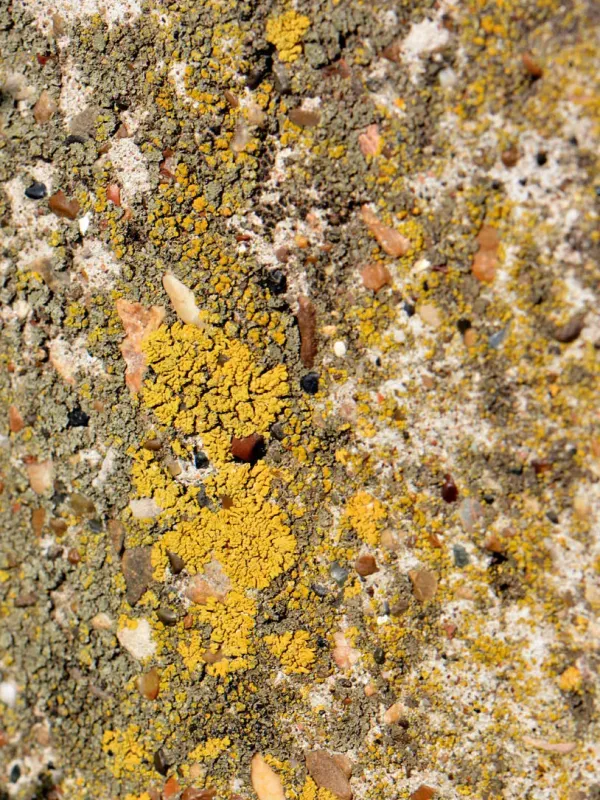
Description
Symptoms
The most distinctive symptom is the appearance of vibrant yellow, orange, or rusty-red circular patches on tree trunks, branches, or stone surfaces.
The thallus appears as a hard, crust-like growth, sometimes with a cracked or areolate surface in the center, which feels rough to the touch.
Unlike parasitic fungi, the lichen does not cause rot or necrosis of the underlying tissue; instead, it grows superficially over the bark layers.
On tree bark, these patches may create a significant contrast in color, making them highly visible during winter months when foliage is absent.
Over time, as the colony matures, it may become more prominent and physically hard, making manual removal without damaging the underlying bark somewhat difficult.
Pathogen
Caloplaca saxicola is a species of crustose lichen belonging to the Teloschistaceae family, commonly known as the orange-colored lichen.
From an agricultural standpoint, it acts as an epiphyte or bio-indicator rather than a primary plant pathogen, as it does not derive nutrients directly from the host plant's tissues.
The lichen consists of a symbiotic relationship between a fungus and an alga, forming a colorful, circular thallus that is firmly attached to its substrate.
It reproduces through spores produced in apothecia and can also colonize surfaces through vegetative fragments that break off and reattach elsewhere.
Its presence is often a sign of environmental stability, as it is relatively sensitive to air pollution and thrives in areas with clean air and moderate light.
Conditions for development
Caloplaca saxicola thrives in open, well-lit environments, as it requires exposure to sunlight to support its photosynthetic algae component.
It is frequently observed on older, slow-growing trees where the bark is stable and the canopy allows sufficient light penetration to the main branches.
The organism does not require excessive moisture but benefits from dew and atmospheric dust that provides essential mineral nutrients for its slow growth.
High air quality is a key ecological condition, as sensitive species like this one often disappear in areas with high levels of industrial or urban pollution.
The aging process of trees, which results in thicker, more cracked bark, provides a stable, long-lasting surface that is ideal for lichen colonization.
Why it matters
While not a direct disease agent, Caloplaca saxicola can be harmful by creating an ideal shelter for overwintering pests like mites, scales, and aphids.
Dense colonization may potentially hinder bark respiration, although the impact on the overall tree physiology is generally considered minimal in healthy specimens.
The lichen can mask early signs of bark infections or structural damage, as the crustose growth covers the surface of the tree effectively.
Its presence often signals that a tree is lacking in vigor, as rapidly growing, young trees rarely support significant lichen populations on their bark.
In ornamental horticulture, heavy lichen growth is often viewed as a sign of poor tree maintenance, reducing the overall aesthetic value of the garden.
Protection
Mechanical removal using a wire brush or wooden scraper during the dormant season is the most direct and effective method for clearing lichen from trees.
Applying a lime wash or copper-based fungicide to the trunk after cleaning helps to prevent re-colonization and disinfects the bark surface.
Regular crown thinning and pruning are recommended, as they improve light exposure and air circulation, which are environmental deterrents for many lichen species.
Maintaining optimal tree health through proper fertilization and watering promotes faster bark growth, which makes it harder for slow-growing lichens to establish.
For large-scale control, standard dormant oil applications and copper fungicides often used for disease prevention help suppress the growth of lichen colonies.
Discussion
No discussions yet — be the first.