
Ivy Calonectria
Calonectria hederae
Description
Symptoms
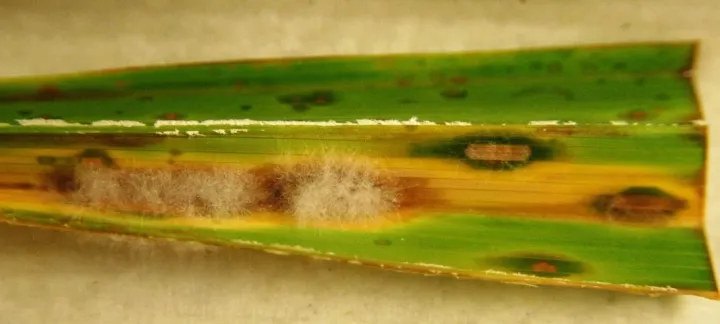
Early symptoms manifest as small, circular spots on the foliage that transition from yellowish to dark brown as the infection advances.
A distinctive yellow halo often surrounds these necrotic spots, representing the plant's physiological stress response to the invading fungal organism.
Under humid conditions, a whitish or creamy fungal growth appears on the undersides of infected leaves, consisting of the pathogen’s reproductive structures and spores.
Heavy infections lead to widespread chlorosis, causing leaves to turn yellow and drop prematurely, which significantly compromises the health and appearance of the ivy.
Stem lesions can also occur, appearing as sunken, dark areas that disrupt the plant's vascular system and often lead to the dieback of shoots.
Pathogen
The disease is caused by the fungus Calonectria hederae. This pathogen is known for infecting various evergreen ornamentals, with a particular affinity for plants of the Hedera genus.
The fungus operates through a complex life cycle, featuring an anamorphic stage previously identified as Cylindrocladium hederae, which produces numerous asexual spores for rapid dispersal.
The pathogen is highly persistent, capable of surviving in soil, decaying plant debris, and on infected nursery stock for extended periods.
It infects plant tissues by penetrating through stomata or small physical wounds on the leaf surface, where it subsequently initiates the colonization process.
Inside the plant, the fungus secretes specific enzymes that degrade cell walls, allowing the mycelium to spread and establish deep-seated infections within the host tissues.
Conditions for development
High humidity and poor air circulation are the primary drivers of disease development, creating an environment where spores can easily germinate.
The optimal temperature range for the rapid growth and spread of Calonectria hederae is between +20°C and +25°C, typical for greenhouse environments.
Stagnant air and prolonged leaf wetness allow the pathogen to successfully invade host tissues, making overcrowding of plants a major risk factor.
Frequent overhead irrigation often facilitates the movement of spores from infected leaves to healthy parts of the plant, promoting an epidemic within the nursery.
Inadequate light and improper fertilization practices may weaken the plant's defense mechanisms, increasing susceptibility to fungal colonization.
Why it matters
This pathogen causes severe aesthetic damage, rendering ornamental ivy plants commercially unsalable and unsuitable for landscaping projects.
Due to its high infectivity, a single outbreak can quickly spread across an entire production batch, resulting in significant economic losses for growers.
The disease disrupts the plant’s photosynthetic capabilities, leading to stunted growth and a general decline in vigor that is difficult to reverse.
Systemic infection may cause total plant collapse, particularly in young or stressed cuttings that lack the reserves to overcome the pathogen's impact.
Management of this disease is costly, requiring strict sanitation protocols, regular monitoring, and the application of specialized chemical treatments.
Protection
The first line of defense is the strict inspection of nursery stock to ensure that only pathogen-free plants are introduced into the growing area.
Implementing drip irrigation or precise watering techniques is crucial to keep foliage dry and prevent the conditions necessary for spore germination.
Improving greenhouse ventilation and maintaining sufficient spacing between plants helps reduce the micro-humidity levels around the foliage.
Early detection and immediate removal of infected plant materials are vital for limiting the spread of the fungus to healthy parts of the crop.
Systemic fungicides, applied in accordance with regional regulations and labels, are effective tools for suppressing the disease in commercial settings.
Discussion
No discussions yet — be the first.