
Calicium
Calicium
Description
Symptoms
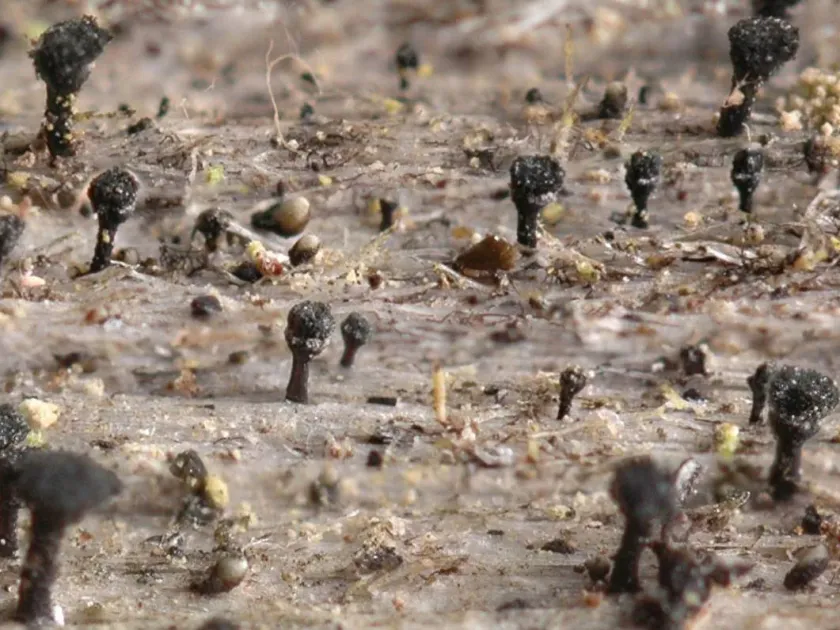
The primary visual sign of Calicium is the presence of minute, stalked black structures. These "pins" are usually less than 2 millimeters in height and are highly distinct against the lighter color of the bark.
These fruiting bodies are typically concentrated in the deep cracks and crevices of mature bark. This positioning protects them from extreme weather conditions and excessive solar radiation.
Dense clusters of these fungi can appear as a dark, granular crust on the trunks of old trees. When wet, the black heads of the apothecia may become slightly more prominent.
Microscopic examination reveals a simple structure with dark spores stored within the head of the fruiting body. The mycelium network remains strictly superficial, not penetrating the living cambium.
Unlike parasitic infections, there is no discoloration of the living bark, no oozing of sap, and no significant tissue decay associated with the presence of Calicium.
Pathogen
Calicium is a genus of fungi belonging to the order Caliciales. In professional forestry and agronomy, these are recognized as epiphytic or saprotrophic fungi rather than pathogenic organisms.
Many members of this genus are lichenized, meaning they live in a symbiotic association with algae. They are famously characterized by their reproductive structures, known as apothecia, which resemble tiny black "pins" or "nails."
These fungi do not invade the living vascular system of the tree. They are restricted to the outermost layers of dead, corky bark, utilizing the substrate for physical anchorage and moisture absorption.
The biology of Calicium is adapted to the micro-environment of tree trunks. They play a role in the breakdown of accumulated organic debris on the bark surface, acting as part of the forest's natural decomposition cycle.
Because of their specific ecological requirements, they are often used as biological indicators. Their presence generally suggests a stable, mature, and relatively clean forest environment.
Conditions for development
Calicium development is highly dependent on the age of the tree. It is rarely found on young specimens because it requires deep, stable bark fissures that take decades to develop.
High relative humidity is a critical factor. The fungi thrive in environments characterized by persistent moisture, such as shaded areas, dense forest stands, or regions with frequent fog.
Air quality is a significant factor for the survival of most Calicium species. They are sensitive to pollutants, which makes their presence a sign of healthy air in forest ecosystems.
Temperature fluctuations are generally tolerated, but moderate, stable climates promote more consistent growth. Extreme heat or severe cold can inhibit the formation of their fruiting bodies.
Proper airflow is also important; while they need humidity, they also require the bark to remain undisturbed by harsh winds or direct, intense mechanical damage.
Why it matters
Calicium is not considered a harmful pathogen to trees. It does not cause root rot, vascular diseases, or any physiological distress to the host plant.
In forestry, it presents no risk to the quality of timber. Since the fungus is confined to the corky outer bark, it is removed during the debarking process at lumber mills.
The only potential concern is that in rare, extreme cases, heavy coverage of various epiphytes can trap moisture against the bark, which could theoretically support the development of opportunistic parasites.
However, this is typically a secondary effect rather than a direct result of the Calicium presence itself. The fungus remains a neutral inhabitant of the bark surface.
In landscape management, some may view it as an aesthetic concern, but from a purely arboricultural perspective, it poses no threat to the vitality of the tree.
Protection
No formal control measures are required for Calicium in natural forests or managed timber stands, as it is a harmless component of the ecosystem.
If aesthetic management is requested for ornamental trees, manual cleaning with a soft brush can remove excessive accumulations of epiphyte growth from the bark.
Preventative strategies are centered on good forest management. Maintaining appropriate tree density and conducting periodic sanitary pruning help ensure proper air circulation, which naturally limits epiphyte density.
Fungicide application is not recommended for controlling Calicium. Such treatments are unnecessary, economically inefficient, and potentially damaging to the overall biodiversity of the forest micro-ecosystem.
Regular monitoring of tree health is sufficient. If a tree is otherwise healthy, the presence of these fungi should be welcomed as an indicator of a stable, mature, and ecologically rich environment.
Discussion
No discussions yet — be the first.