
Caliciopsis
Caliciopsis
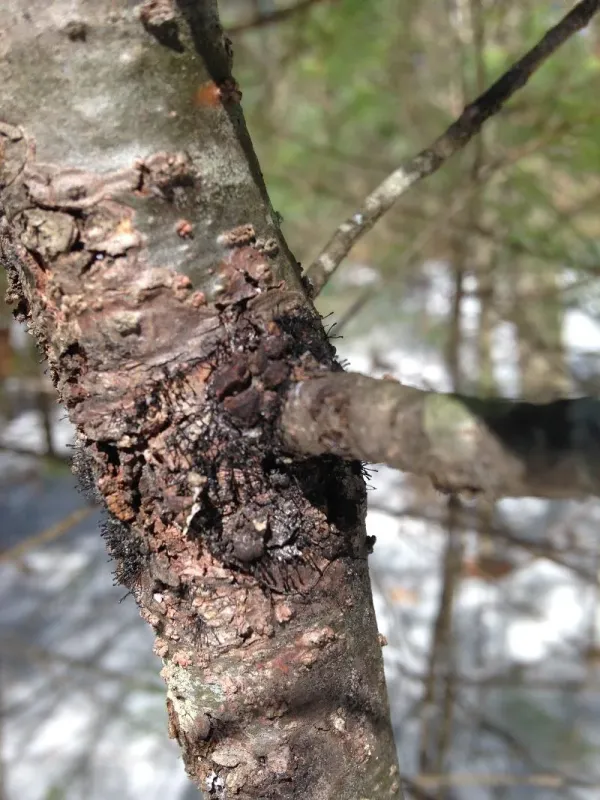
Description
Symptoms
The most visible symptom is the development of localized cankers or necrotic areas on the trunk and branches, often accompanied by resin flow.
Dried resin frequently accumulates on the bark, creating conspicuous whitish or greyish streaks that indicate active infection sites.
In advanced stages, the bark around the infection sites may crack, exposing the wood and creating deep, slow-healing wounds.
Microscopic examination or close inspection of the bark reveals tiny, black, hair-like fruiting structures that are characteristic of the Caliciopsis genus.
As the infection progresses, affected branches may show signs of chlorosis (yellowing) followed by browning and dieback of the needles.
Pathogen
The disease is caused by fungi of the genus Caliciopsis, most notably Caliciopsis pinea, which is an ascomycete fungus that colonizes the inner bark of conifers.
This pathogen produces small, stalked, nail-like fruiting bodies (apothecia) on the surface of the bark, which release spores into the environment.
The fungus is a specialized parasite that targets the phloem and cambium layers, slowly interfering with the transport of nutrients within the tree.
Spores are typically dispersed by wind, rain, or through the movement of insects that create entry points in the bark.
The biological nature of the fungus allows it to persist as a chronic infection, gradually debilitating the host tree over several growing seasons.
Conditions for development
Moist and humid conditions are highly favorable for the germination of fungal spores and their subsequent colonization of the host's bark.
Dense stands with poor air circulation often experience higher levels of disease incidence due to the accumulation of inoculum.
Trees that are under physiological stress due to drought, nutritional deficiencies, or root compaction are significantly more susceptible to infection.
Wounds caused by physical damage or insect feeding act as primary entry points, allowing the fungus to penetrate the tree's natural defenses.
Seasonal weather patterns that include prolonged periods of rain facilitate the active dispersal of spores across the canopy.
Why it matters
Chronic infection with Caliciopsis disrupts nutrient flow, leading to stunted growth and reduced vigor of the affected trees.
Severe canker development weakens the structural integrity of the trunk, increasing the risk of mechanical failure during windstorms.
The disease causes significant economic loss in forestry by degrading wood quality and potentially killing young, vulnerable trees.
In ornamental landscaping, the presence of the fungus ruins the aesthetic appeal of conifers, often necessitating the removal of affected branches.
The pathogen can persist in the environment and act as a reservoir for infection, threatening the health of surrounding healthy trees.
Protection
Maintaining tree vigor through appropriate fertilization and adequate watering is the first line of defense against fungal colonization.
Sanitation practices, such as pruning and removing infected branches or severely damaged trees, are crucial to reducing the amount of inoculum.
Applying copper-based fungicides can provide a protective barrier for young or valuable trees, especially during periods of high humidity.
Integrated pest management should be employed to control insect populations that cause bark damage and facilitate fungal entry.
Thinning dense stands improves airflow and drying, which directly discourages the development of the fungus on the bark surface.
Discussion
No discussions yet — be the first.