
Bovista limosa
Bovista limosa
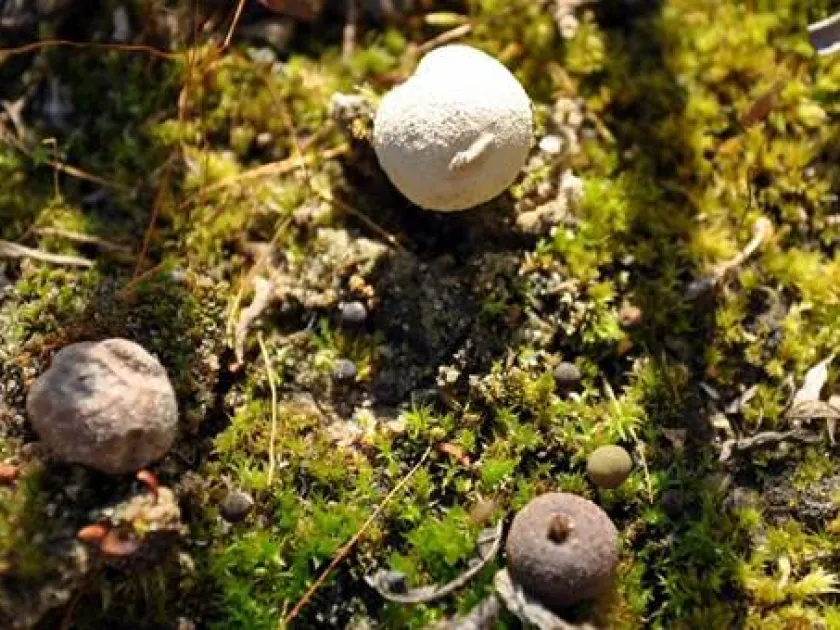
Description
Pathogen
Bovista limosa is a species of puffball fungus belonging to the Agaricaceae family. It is strictly a saprotrophic organism that feeds on decaying organic matter rather than attacking living plant tissue.
As a non-pathogenic fungus, it plays a vital role in the decomposition cycle within the soil ecosystem. It helps break down complex organic materials into simpler substances that can be reused by plants.
The fungus is characterized by small, globular fruiting bodies that emerge from the soil surface. These structures house the spores which are essential for the reproductive strategy of the species.
Biologically, it is closely related to edible puffballs, but it is primarily recognized for its role in soil nutrient recycling. It does not infect crops, roots, or seeds during its lifecycle.
It propagates through the release of basidiospores that are dispersed by wind and water, landing in suitable substrates where they germinate to initiate a new mycelial network.
Conditions for development
Bovista limosa thrives in environments with high moisture levels and specific soil conditions. It is frequently encountered on damp, open ground, riverbanks, or in areas with sparse vegetation.
Optimal development of the fruiting bodies occurs during cool and wet seasons, particularly in spring and autumn. Consistent humidity in the upper soil layer is essential for mycelial activity.
The fungus prefers soils that contain a mix of decomposed plant debris. It often colonizes areas where the turf has been disturbed, as these spots offer less competition from established plants.
It exhibits a strong preference for areas that are not heavily shaded, as direct sunlight exposure on the soil surface can influence the local humidity levels required for its growth.
Environmental factors like drainage and soil aeration are key; poor drainage often creates the exact micro-conditions that this species exploits to thrive and produce fruiting bodies.
Why it matters
Bovista limosa poses no threat to agricultural productivity or plant health. It is not a parasite, and its presence does not inhibit the growth of common garden vegetables or field crops.
While some growers mistakenly perceive it as a harmful disease, the fungus is purely a decomposer. Its appearance is often a result of local soil conditions rather than a plant pathology.
In landscaping or lawn management, the emergence of these fungi can be considered a cosmetic issue. However, they do not damage the root systems of grass or decorative plants.
There is no evidence of toxin production that could affect neighboring plants. Consequently, the fungus is generally ignored by professional agronomists as it holds no economic relevance to crop loss.
The main concern for gardeners is usually the visual impact, as the presence of fruiting bodies can be alarming if the species is misidentified as a potential pathogen.
Protection
As Bovista limosa is not a plant pathogen, the use of chemical fungicides is unnecessary and entirely discouraged. Focus should be placed on cultural practices to alter the environment.
Improved drainage is the most effective way to limit the proliferation of this fungus. Removing excess water from the soil surface significantly reduces the likelihood of mushroom formation.
Regular soil cultivation helps break up the mycelium and improves aeration, which in turn speeds up the decomposition of organic matter, leaving less food for the fungus to colonize.
Maintaining a clean garden by removing excessive plant debris helps in discouraging the fungus. Proper hygiene in the garden prevents the accumulation of the organic materials it thrives on.
Finally, promoting a healthy and diverse soil microbiome helps keep saprotrophic species in check. A balanced ecosystem naturally limits the dominance of any single fungal species.
Discussion
No discussions yet — be the first.