
Bovista dermoxantha
Bovista dermoxantha
Description
Symptoms
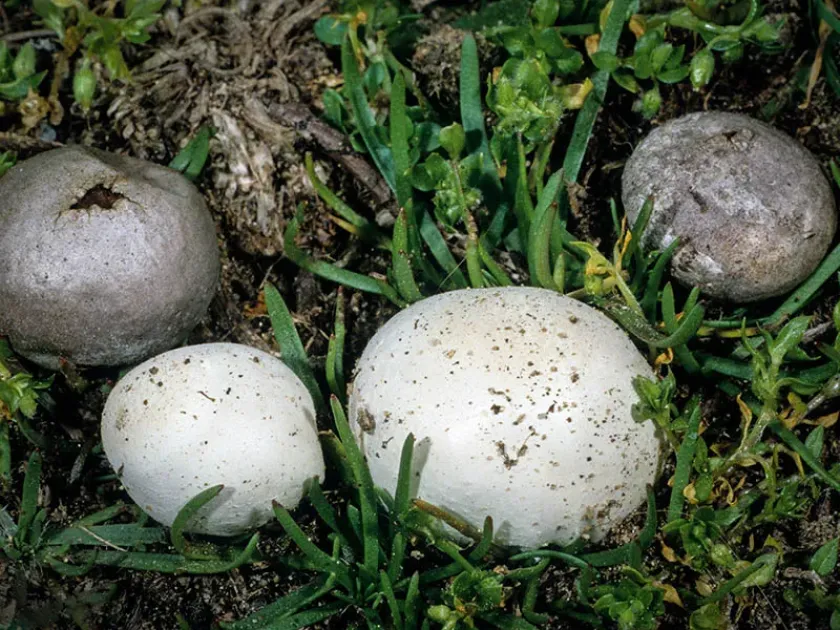
The most recognizable sign is the emergence of small, globose, tan-to-ochre colored puffball mushrooms during favorable weather conditions.
Affected areas often display symptoms similar to fairy rings, where the grass may appear chlorotic or stunted in circular or arc patterns.
The soil beneath the affected turf often becomes compacted or hydrophobic, preventing adequate moisture penetration to the root zone.
In some cases, a stimulation of growth (a dark green ring) may occur around the edge of the fungal colony due to the release of nitrogenous nutrients from organic decomposition.
As the fruiting bodies mature, they split or rupture, releasing a fine cloud of microscopic spores that can settle on the surrounding vegetation.
Pathogen
Bovista dermoxantha is a species of puffball mushroom that can appear in residential and agricultural turf environments. While not an aggressive crop parasite, it acts as a significant saprotroph within the soil profile.
The organism colonizes the thatch layer and upper soil, feeding on decaying organic matter. Although it does not directly infect living plant tissues, its physical presence and competitive nature can negatively impact the health and appearance of turfgrass.
As a basidiomycete, it reproduces via spores that disperse through wind, water runoff, and maintenance activities. This makes it a common sight in areas where environmental conditions favor fungal proliferation.
Agronomically, this fungus serves as an indicator of dense thatch accumulation, poor soil aeration, or improper drainage patterns within a lawn or managed area.
The life cycle is opportunistic, capitalizing on moisture and organic debris to form extensive mycelial networks that persist under the surface of the turf.
Conditions for development
Prolonged high humidity levels and frequent rainfall create the optimal moisture levels required for the rapid expansion of the mycelium.
A thick accumulation of thatch—decomposed organic matter between the green grass blades and the soil surface—provides the essential nutrition for the fungus.
Mild to warm temperatures, generally ranging from 18 to 25 degrees Celsius, facilitate the most active growth phases for Bovista dermoxantha.
Poor soil drainage leads to waterlogged conditions, which significantly increases the susceptibility of a lawn to fungal colonization.
The use of high-nitrogen organic fertilizers in improperly managed lawns can exacerbate the growth of the fungus by providing an abundance of substrate.
Why it matters
The primary concern is the aesthetic degradation of high-quality lawns, parks, and sports turf due to the irregular patches and ring patterns.
The dense mycelial mat can create water-repellent (hydrophobic) soils, which lead to localized drought stress in the turfgrass.
Disturbance of the soil structure and root zone competition can lead to thinning of the lawn, necessitating costly repairs and overseeding.
Metabolic byproducts of the fungus may alter the soil microbiome, potentially suppressing beneficial microorganisms essential for healthy plant development.
Continued spore production and accumulation in the soil profile ensure that the fungus remains a recurring problem in subsequent growing seasons.
Protection
Regular dethatching and aerating are the most effective management practices to reduce the organic buildup and improve soil oxygenation.
Adopting a "deep and infrequent" watering strategy allows the turf surface to dry out, which is a powerful deterrent for fungal development.
Manual removal of fruiting bodies before they release their spores can help limit the spread of the fungus across the area.
Improving general drainage of the site ensures that the soil does not stay overly saturated, thereby reducing the chances of colonization.
While chemical fungicides may offer short-term control, they should be used in conjunction with corrective cultural practices to prevent re-establishment of the fungus.
Discussion
No discussions yet — be the first.