
Botrytis rot of iris
Botrytis convoluta
Description
Symptoms
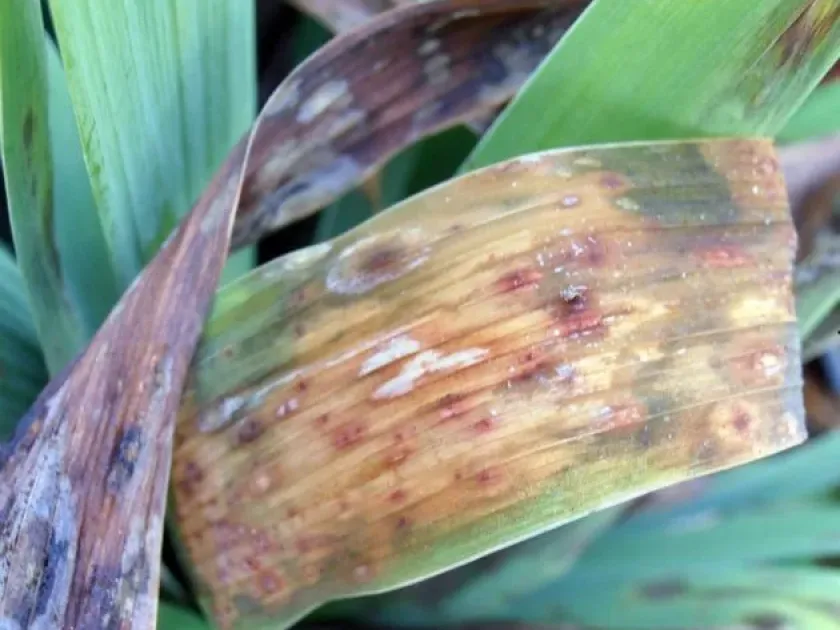
The first signs in spring are stunted growth and chlorosis. The affected iris leaves appear pale, wither, and eventually turn brown and die prematurely, often exhibiting a grey, dusty mass of fungal spores at the base of the shoots.
When inspecting the bulbs or rhizomes, you will find areas of decay ranging from soft, brownish rot to dry, shriveled tissue. The most diagnostic sign is the presence of large, black, hardened sclerotia appearing as a crust on the infected surface.
During storage, infected bulbs decay rapidly, losing their firmness and becoming shrunken. In humid conditions, these bulbs are quickly covered by the characteristic grey mycelium of the fungus, which can easily spread to healthy bulbs stored in close proximity.
Leaf infection manifests as oval or elongated brown spots that gradually enlarge, causing the entire leaf to collapse. This reduces the plant's ability to photosynthesize, eventually leading to the death of the entire plant cluster.
Root systems of infected plants are severely compromised. Roots become brittle, black, and detach easily from the rhizome, making it impossible for the plant to absorb nutrients and water, resulting in total systemic collapse.
Pathogen
The causal agent of this disease is the pathogenic fungus Botrytis convoluta. It is a highly specialized pathogen that affects plants within the Iris genus, causing significant destruction to rhizomes and bulbs through the formation of persistent sclerotia.
The disease is characterized as a dry rot, where the fungus colonizes the internal tissues of the iris, leading to rapid necrosis. It is a persistent soil-borne pathogen, meaning it can survive for several years in the ground, waiting for suitable conditions to infect new plants.
Transmission occurs primarily through infected planting material, but the fungus also spreads via spores carried by wind and water splashes. Once introduced into a garden, the pathogen can become deeply embedded in the soil, making eradication extremely difficult.
The fungus produces large, black, convoluted sclerotia that function as resting structures, allowing it to withstand extreme cold and periods of drought. These structures are the primary reason for the long-term persistence of the disease in agricultural settings.
Biologically, Botrytis convoluta is distinct from other Botrytis species due to its specific host range and the severity of the rot it causes in subterranean organs, often leading to total plant death before the gardener notices any symptoms.
Conditions for development
High humidity and cool, wet weather are the primary catalysts for Botrytis convoluta development. The fungus thrives in these conditions, which facilitate the germination of spores and the rapid colonization of host tissues.
Improper storage conditions are a critical factor for the disease's spread. Lack of ventilation and excessive moisture in storage facilities allow the fungus to jump from one bulb to another, often destroying an entire inventory within a short period.
Densely planted iris beds create a microclimate that traps moisture and limits airflow. This high-humidity environment around the base of the plant is perfect for fungal growth, especially if the soil is poorly drained.
Wounds caused by mechanical damage, such as weeding, hoeing, or insect feeding, provide easy entry points for the fungus. Once the protective outer layer of the rhizome is broken, the mycelium penetrates the internal tissues rapidly.
Acidic, poorly drained soils exacerbate the issue. Irises planted in such conditions are under physiological stress, which significantly weakens their natural defenses against fungal pathogens, making them more susceptible to infection.
Why it matters
Botrytis rot is arguably the most destructive disease for iris growers. It can decimate entire collections or commercial fields, causing severe economic and aesthetic losses by killing off high-value cultivars.
The latent nature of the infection is particularly dangerous. Often, a plant looks relatively healthy on the surface while its rhizome is already significantly colonized, leading to sudden, unexpected plant loss in the garden.
The disease impairs flowering quality, causing flower buds to abort, rot, or emerge deformed. This reduces the garden's ornamental value and makes the propagation of affected irises risky and often impossible.
The accumulation of sclerotia in the soil creates a long-term problem for gardeners. Once an area is infested, it remains dangerous for future iris plantings for many years, necessitating expensive soil treatments or the complete removal of soil.
Beyond the loss of individual plants, the disease threatens the genetic preservation of rare iris varieties, as once a collection is contaminated, the spread is extremely difficult to halt without aggressive measures.
Protection
The most important control strategy is the selection of healthy, disease-free planting stock. Always inspect bulbs thoroughly upon arrival, and immediately discard and destroy any specimens showing signs of spotting, discoloration, or crust-like growth.
Systematic fungicide treatment of rhizomes before planting is highly recommended. Soaking planting material in appropriate systemic fungicides provides a necessary protective layer against initial soil-borne infections.
Crop rotation is essential for managing the disease in the garden. Avoid planting irises in the same location for at least 4 to 5 years to allow the soil-borne sclerotia to die off naturally.
- Ensure excellent soil drainage to prevent waterlogging around roots.
- Practice proper spacing to allow for adequate airflow between plants.
- Sanitize all garden tools after working in infested areas to prevent spread.
- Store bulbs in a well-ventilated, cool, and dry environment.
If an infection appears, remove and destroy the affected plants immediately, including the surrounding soil. Application of copper-based fungicides or modern systemic fungicides during the early spring growth stage can help suppress the spread of the pathogen.
Discussion
No discussions yet — be the first.