
Botryosphaeria canker of oak
Botryosphaeria quercuum
Description
Symptoms
One of the first signs of infection is premature yellowing and wilting of leaves on individual branches, often referred to as flagging.
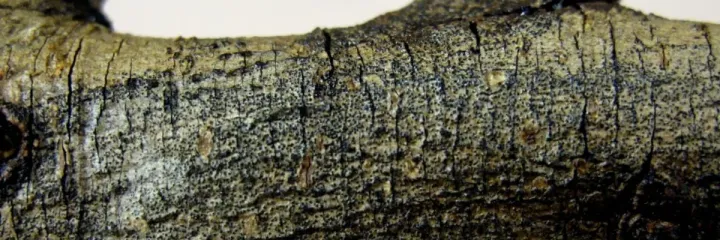
Dark, sunken cankers develop on the bark of branches or the main trunk, which may eventually lead to the girdling of the affected area.
Peeling back the outer layer of the bark in the cankered area reveals dark, necrotic tissues and the presence of fungal structures.
Repeated infections result in dieback of the crown, starting from the tips of the branches and progressing downwards into the main scaffold limbs.
In advanced cases, sap flow or bleeding may be observed from the canker sites, often mixed with fungal spores during high humidity.
Pathogen
The disease is caused by the fungus Botryosphaeria quercuum (anamorph Diplodia mutila), an ascomycete pathogen that primarily behaves as a facultative parasite.
The fungus produces reproductive structures called pycnidia, which appear as small black bumps embedded in the bark of infected branches or stems.
Conidia (spores) are released from these pycnidia during wet weather and are dispersed via wind, splashing rain, or insect vectors.
This pathogen has a wide host range and can survive as a saprophyte on dead wood, waiting for favorable conditions to infect weakened trees.
Infection typically occurs through wounds, pruning cuts, frost cracks, or sites damaged by insects, allowing the mycelium to colonize the phloem and cambium.
Conditions for development
Host susceptibility is significantly increased by environmental stressors such as prolonged drought, which prevents the tree from forming defensive callus tissue.
Frost damage during late spring is a major contributor to the disease, as it creates extensive open wounds that are highly susceptible to colonization.
High humidity and mild temperatures are critical for the spore germination process, allowing the fungus to rapidly infect new host tissues.
Dense stand structures with poor airflow facilitate the accumulation of inoculum, leading to a higher rate of infection within a forest or park.
The interaction with wood-boring beetles is significant, as these insects weaken the tree's defenses and transport the fungal spores directly into the vascular system.
Why it matters
Botryosphaeria canker causes severe aesthetic damage and structural weakening of oak trees, making them hazardous in urban and park environments.
The disease leads to cumulative canopy loss, which severely reduces the tree's ability to photosynthesize and maintain its vigor over time.
Long-term infections result in timber degradation, rendering the wood of poor quality due to localized necrotic spots and secondary decay processes.
Affected trees often become heavily infested by secondary pests and wood-boring beetles, which accelerates the decline and mortality of the tree.
Economic losses in nurseries and plantations are significant due to the loss of growth, reduced sale value of young trees, and costs associated with management.
Protection
Sanitation is the most effective management strategy; removing and destroying dead or heavily infected branches reduces the local inoculum pressure.
Pruning should be performed during dry weather to minimize the risk of new infections, and all tools must be disinfected after each cut.
Maintaining tree vigor through proper irrigation and soil care helps the tree build up natural resistance and defend against potential canker formation.
Preventative applications of copper-based fungicides can protect high-value trees during periods of high spore dispersal and vulnerability.
Managing the population of wood-boring insects is crucial to minimize the transmission of the fungus and reduce the number of entry points.
Discussion
No discussions yet — be the first.