
Botryosphaeria canker of Douglas fir
Botryosphaeria pseudotsugae
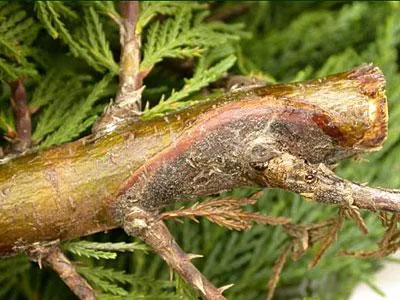
Description
Symptoms
The disease is characterized by the development of localized bark cankers that can eventually girdle branches or stems, causing tissue death.
Infected areas often exhibit discolored, sunken, or cracked bark, which serves as a visible entry point for further degradation by opportunistic microorganisms.
Small, dark-colored fruiting bodies (pycnidia) typically emerge through the surface of the infected bark, often forming visible clusters during the growing season.
Foliage on affected branches typically turns yellow or brown, eventually drying out and dropping prematurely as the supply of nutrients is cut off.
Terminal shoots may exhibit wilting and dieback, giving the tree crown a thin and sparse appearance as the fungal infection progresses over time.
Pathogen
The causal agent of this disease is the ascomycete fungus Botryosphaeria pseudotsugae, known to infect various conifer species.
It acts as a facultative parasite, often taking advantage of trees that are already compromised by environmental stress or physical injuries.
The fungus produces pycnidia, which are specialized reproductive structures embedded in the bark, releasing conidia under moist conditions.
These spores act as the primary source of inoculum, facilitating the spread of the disease to adjacent branches and nearby susceptible trees.
The pathogen is capable of surviving in dead bark and woody debris, allowing it to remain in the environment for extended periods until suitable conditions arise.
Conditions for development
Development and spread of the fungus are highly dependent on high moisture levels and warm temperatures that favor spore germination.
Prolonged wet weather promotes the release and dispersal of conidia by rain splash and high winds, increasing the risk of widespread infection in a stand.
Trees undergoing drought stress or those subjected to sudden temperature fluctuations are significantly more susceptible to infection by this pathogen.
Mechanical damage resulting from pruning errors, storm damage, or animal feeding provides ideal infection sites for fungal hyphae to enter the host.
Dense planting patterns often restrict airflow, leading to high humidity around the bark, which creates a perfect environment for the fungus to establish.
Why it matters
The disease causes significant damage by killing branches and potentially girdling the main stem, which can lead to the decline of entire tree specimens.
In forestry and nursery settings, this pathogen causes reduced growth rates, poor tree aesthetics, and a higher mortality rate among young saplings.
Severe infestations can lead to substantial financial losses due to the need for tree removal, replacement, and increased costs for disease management.
Once established, cankers weaken the overall structure of the tree, making it prone to breakage during high winds or heavy snowfall events.
Furthermore, the presence of the fungus invites secondary bark beetles, which can further aggravate the tree's poor health and accelerate total decline.
Protection
The most effective strategy involves maintaining tree vigor through proper irrigation and balanced fertilization to enhance natural resistance.
Sanitation is critical: all infected branches should be pruned back to healthy wood and removed immediately to prevent further spore production.
Pruning tools must be thoroughly disinfected with alcohol or a bleach solution between every cut to prevent the inadvertent transmission of the fungus.
Protective sprays, particularly copper-based fungicides, can be applied during bud break to help prevent initial infection on healthy plant tissue.
- Monitor tree health regularly for early signs of bark discoloration.
- Avoid wounding trees during maintenance activities.
- Improve air circulation within dense plantings through selective thinning.
Discussion
No discussions yet — be the first.