
Velvet Bolete
Boletus torosus
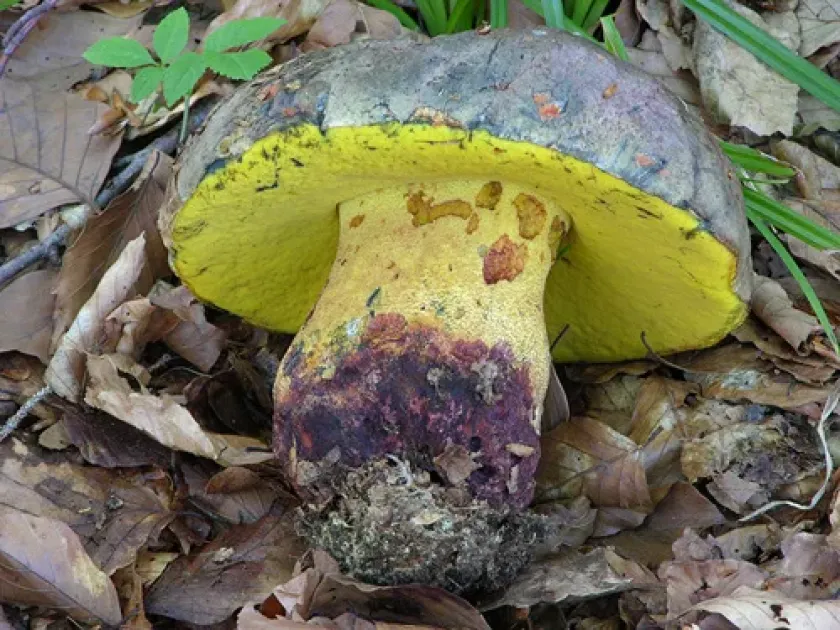
Description
Pathogen
It is scientifically inaccurate to classify Boletus torosus, commonly known as the Velvet Bolete, as a plant disease or agricultural pathogen.
This fungus is a member of the Boletaceae family and functions exclusively as a beneficial mycorrhizal partner for specific broad-leaved trees.
Unlike parasitic fungi that cause plant diseases, the Velvet Bolete does not invade host tissues or cause rot, wilt, or blight in agricultural crops.
Its biological impact is purely symbiotic, helping host trees improve nutrient uptake from the forest soil through an extensive mycelial network.
Agronomists do not include this species in lists of plant pests or pathogens, as it has zero negative impact on farming or commercial plant production.
Conditions for development
The fungus is predominantly found in warm, broad-leaved forests, specifically in habitats with calcareous soil types.
It thrives in symbiosis with oaks and beeches, relying on these tree species to maintain the integrity of its mycorrhizal relationship.
The development of its fruiting bodies depends on specific seasonal weather patterns, typically appearing during the late summer and autumn months.
Soil composition is a critical limiting factor for its distribution, as it requires a high calcium content and specific organic layer depth found in undisturbed forests.
Due to its high environmental requirements, this species is considered a rarity and is incapable of surviving in typical agricultural environments or monoculture fields.
Discussion
No discussions yet — be the first.