
Devil's bolete
Boletus satanoides
Description
Symptoms
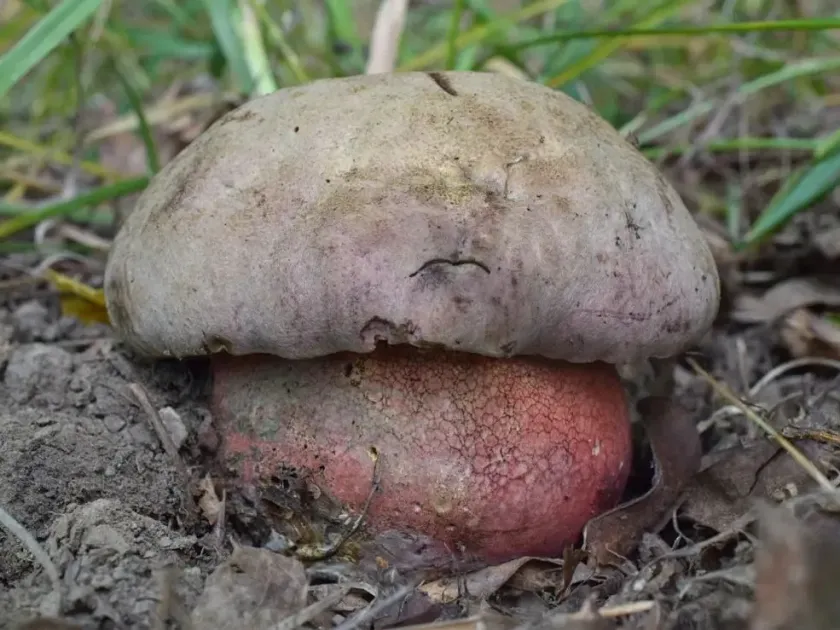
The fruiting body features a large, convex cap that is typically whitish, grayish, or olive-colored, reaching diameters of up to 25 centimeters.
The undersurface of the cap is covered with pores that are initially yellow but turn a vivid blood-red or orange-red color as the mushroom matures.
The stem is characteristically thick and bulbous at the base, adorned with a distinct red or brownish reticulated pattern that is diagnostic for the species.
When the flesh of the mushroom is cut or bruised, it immediately changes color from white to a deep blue, which is a hallmark reaction for this species.
Presence in the forest can be observed during the summer and autumn months, particularly in areas with calcified soils and temperate climates.
Pathogen
The Devil's bolete (lat. Rubroboletus satanas) is a mushroom belonging to the Boletaceae family. It is crucial to clarify that it is not a plant pathogen and does not cause plant diseases.
This fungus acts as an ectomycorrhizal partner, forming symbiotic relationships with the roots of broad-leaved trees such as oaks, beeches, and hornbeams.
In this association, the fungus creates a sheath around the root tips, which facilitates the exchange of water and minerals between the soil and the tree.
Mycorrhizal fungi are generally beneficial, providing the tree host with protection and increased nutrient uptake capacity, rather than acting as a disease agent.
Classifying this organism as a pathogen in agronomic or forestry literature is factually incorrect and misrepresents its vital ecological function.
Conditions for development
The Devil's bolete thrives in warm, well-drained soils, showing a strong preference for chalky or limestone-rich substrates with a neutral to alkaline pH.
Favorable conditions include sunny, open forest environments or the edges of clearings where the soil temperature is sufficiently high for mycelial growth.
As a mycorrhizal fungus, its survival and reproduction are directly tied to the presence and health of suitable host trees in the immediate vicinity.
It prefers temperate climates with moderate rainfall, avoiding waterlogged or acidic soil conditions that are unsuitable for its development.
The stability of the forest floor microclimate and the continuity of the host tree root system are essential for sustaining the fungal population.
Why it matters
The Devil's bolete causes no harm to the host trees or other vegetation, as it is a beneficial symbiont rather than a parasitic or pathogenic organism.
The primary concern regarding this fungus is its significant toxicity to humans, as it is widely recognized as one of the most poisonous boletes.
Consumption can lead to severe gastrointestinal distress, including vomiting and diarrhea, necessitating medical attention if accidentally ingested.
In a forestry context, it is considered a sign of a healthy, biodiverse soil environment rather than a threat to the timber or forest health.
There are no documented cases of this fungus negatively impacting the growth rate or vitality of forest tree stands through disease or damage.
Protection
As this species is not a plant disease agent, there is no requirement for control measures, fungicides, or any other interventions in forestry management.
Management efforts are strictly limited to health and safety awareness to prevent public or personnel exposure to this toxic mushroom species.
Public education campaigns and informative signage in recreational areas are the most effective methods to prevent accidental consumption of the fungus.
Maintaining the natural integrity of the forest ecosystem is encouraged, as the presence of such fungi is indicative of a robust mycorrhizal network.
Any attempts to chemically suppress or remove this species from the ecosystem are unnecessary and potentially disruptive to the soil biology.
Discussion
No discussions yet — be the first.