
Satan's bolete
Boletus satanas
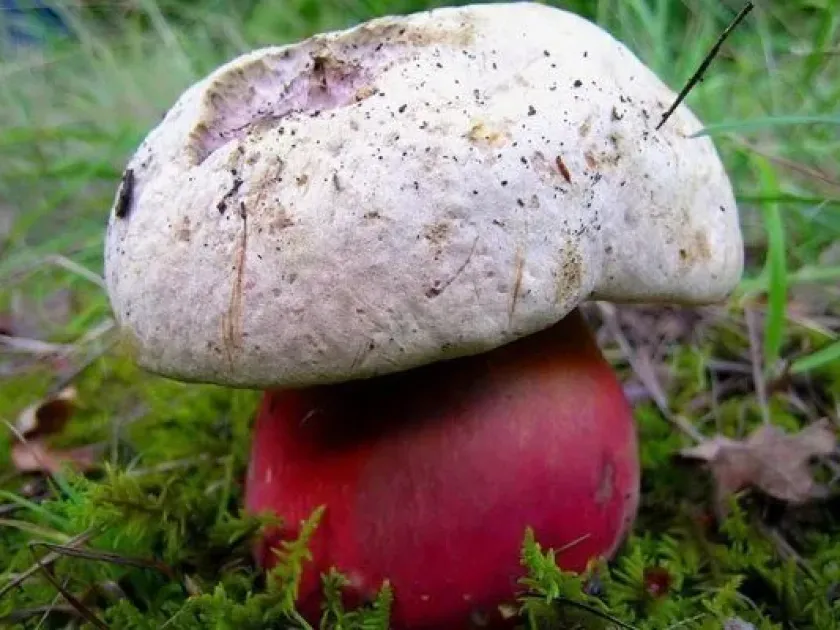
Description
Pathogen
Satan's bolete (Boletus satanas) is not a plant pathogen or a disease-causing agent for agricultural crops or forest trees.
It is a member of the Boletaceae family and functions as an ectomycorrhizal fungus, establishing a symbiotic relationship with hardwood trees.
Unlike parasitic fungi that cause rot or necrosis, Boletus satanas provides benefits to its host by increasing nutrient and water uptake.
It is strictly tied to woodland ecosystems and does not demonstrate any capabilities to infect or damage agricultural or garden plant tissues.
The classification of this species as a disease is biologically incorrect and is likely a confusion arising from its well-known toxicity to humans.
Conditions for development
The development of Boletus satanas is conditioned by the presence of mature hardwood trees, particularly oak and beech species, with which it forms mycorrhiza.
The species prefers warm, sunny habitats with calcareous or limestone-based soils, which provide a neutral to alkaline pH level.
Environmental humidity and moderate temperature fluctuations during the late summer are essential for the emergence of its large fruiting bodies.
The stability of the forest floor is crucial for the survival of the mycelial network, which remains buried and active for many years.
Changes in soil chemistry, such as the introduction of heavy fertilizers or soil acidification, can disrupt the delicate mycorrhizal balance required by this fungus.
Why it matters
There is no economic or agronomic damage associated with Boletus satanas, as it does not interfere with plant metabolism or structural integrity.
The only harm posed by this fungus is its significant toxicity if consumed by humans or animals, which requires careful management of public or recreational spaces.
It does not cause wilting, leaf spots, or root decline in crops, confirming its status as a neutral or beneficial organism within the ecosystem.
Attempts to treat this fungus as a plant disease are counterproductive, as they might lead to the unnecessary application of chemicals.
Agricultural monitoring should focus on genuine threats rather than harmless symbiotic fungi that inhabit forest zones adjacent to agricultural land.
Protection
No control measures are necessary for Boletus satanas, as it is a natural component of the local environment rather than a pest or disease.
If physical removal is desired for safety reasons (to prevent ingestion), the fruiting bodies can be picked manually without affecting the tree hosts.
Chemical intervention is strongly discouraged, as the disruption of mycorrhizal networks can negatively impact the health of the associated trees.
Maintenance of healthy, diverse plant communities is the most effective approach to managing any forest-based vegetation that might appear in managed landscapes.
Clear communication to staff regarding the difference between mycorrhizal symbionts and plant pathogens is sufficient for managing any concerns about this species.
Discussion
No discussions yet — be the first.