
Rubroboletus rhodopurpureus
Boletus rhodopurpureus
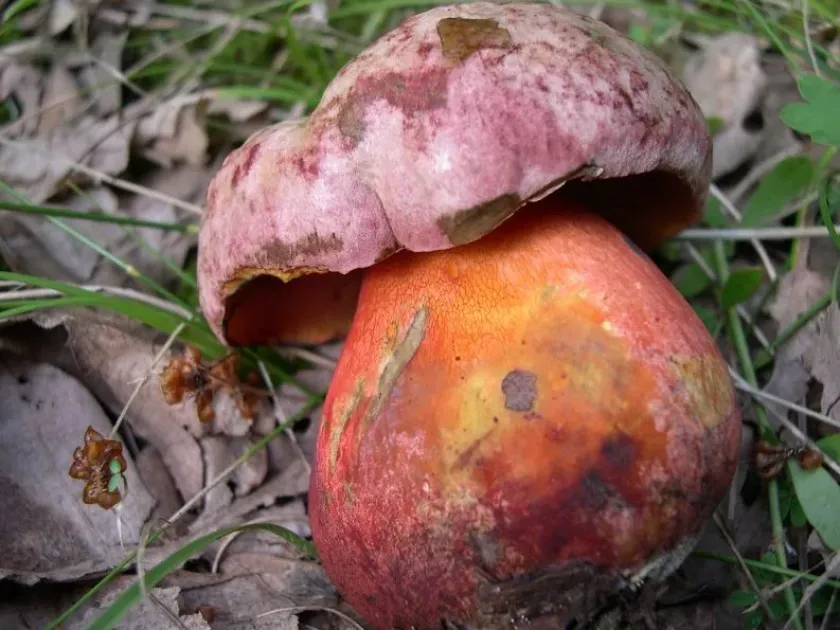
Description
Symptoms
The fungus is identifiable by its striking pink to purple cap color, which is usually convex and can become uneven as the fruit body develops over time.
A distinctive diagnostic feature is the intense blue bruising that occurs almost instantly on the cap or flesh when it is touched or cut, caused by chemical oxidation.
The stem is typically thick and sturdy, featuring a prominent reticulated pattern that is usually red or orange-yellow in color.
Underneath the cap, the pore surface is a vivid red or orange, which turns into a darker hue as the spores reach maturity.
It prefers warm, calcareous soils and is frequently found in sunny, open areas within deciduous woodlands during the peak of the summer and autumn months.
Pathogen
The fungus Rubroboletus rhodopurpureus is not a plant pathogen and does not cause diseases in agricultural crops. It is a mycorrhizal fungus that thrives in a symbiotic relationship with hardwood trees such as oaks and beeches.
Unlike parasitic fungi that cause plant diseases, this species provides nutrients to its host tree in exchange for carbohydrates. It plays a crucial role in maintaining the health and vigor of forest ecosystems.
Agronomists and pathologists do not categorize this fungus as a plant disease. It does not produce mycotoxins that harm plant health, nor does it invade plant tissues in a way that causes decay or necrosis.
Ecologically, the presence of this fungus is often an indicator of high soil quality and a balanced forest environment rather than a symptom of an infestation or infection.
Protection measures are not required for agricultural lands, as this mushroom is confined to forested areas and is protected by law in many regions due to its rarity.
Discussion
No discussions yet — be the first.