
Summer cep
Boletus reticulatus
Description
Symptoms
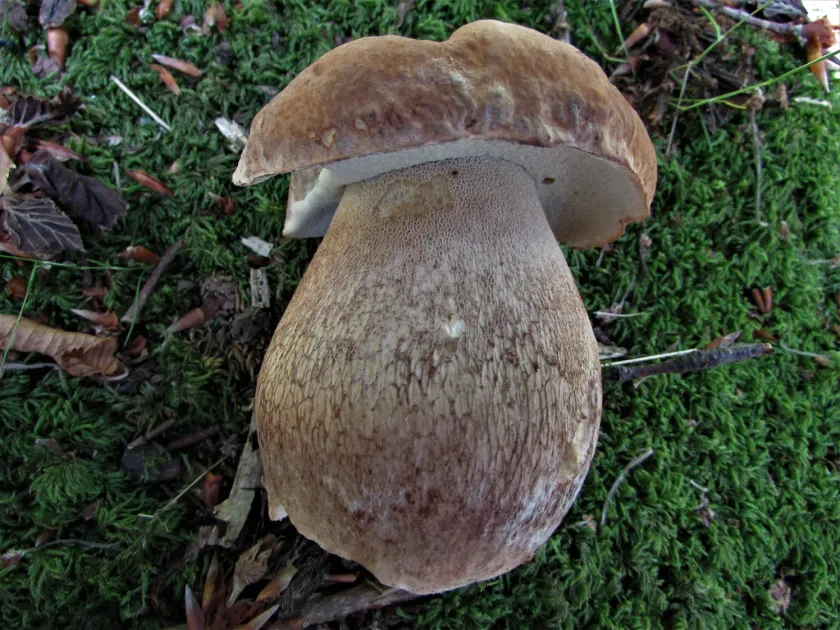
The Summer cep, scientifically known as Boletus reticulatus, is a distinctive large mushroom. It is characterized by its velvety cap, which often cracks during periods of low humidity.
The cap color ranges from light beige to brown. The diameter of the cap typically varies from 6 to 30 cm, making it a prominent feature in the forest understory.
A key diagnostic feature is the distinct reticulated (net-like) pattern on the stem. This pattern is usually paler than the background color of the stem and covers most of its length.
The flesh is firm and white throughout. It does not change color when cut or bruised, which is a key identification feature for mycologists and foragers alike.
The hymenophore consists of tubes that are white when young and turn yellowish-olive as the spores mature. The pores are round and do not bruise upon touch.
Pathogen
The Summer cep is not a plant pathogen; it does not cause diseases in crops or trees. Instead, it is a beneficial mycorrhizal fungus that forms symbiotic relationships.
It creates a partnership with the roots of deciduous trees, such as oak, beech, and chestnut. This mutualistic connection aids both the fungus and the tree in nutrient uptake.
Biological classification places it in the Basidiomycota division. It relies on the host tree for carbohydrates, while the fungus provides the tree with minerals and water.
The mycelium of the fungus is perennial, expanding through the soil layers over many years. It remains active throughout the growing season of the host tree.
There is no record of this species acting as a parasite. It is strictly a symbiont, contributing significantly to the health and vitality of forest soil ecosystems.
Conditions for development
This mushroom prefers warm deciduous forests with specific host trees like oak, beech, and hornbeam. It is often found in sun-drenched, well-drained forest areas.
The Summer cep thrives in temperatures between 15°C and 22°C. It is typically the first of the porcini family to appear, often fruiting as early as late May.
It favors environments where light can reach the forest floor, such as glades and edges of pathways. Proper humus accumulation is essential for its growth.
Soil pH is a critical factor, with the species showing a preference for slightly acidic to neutral soils that are rich in organic material and well-aerated.
High levels of humidity are required for the emergence of the fruiting bodies. However, it is more tolerant of drier conditions compared to other members of the Boletus genus.
Discussion
No discussions yet — be the first.