
False blue-staining bolete
Boletus pseudosensibilis
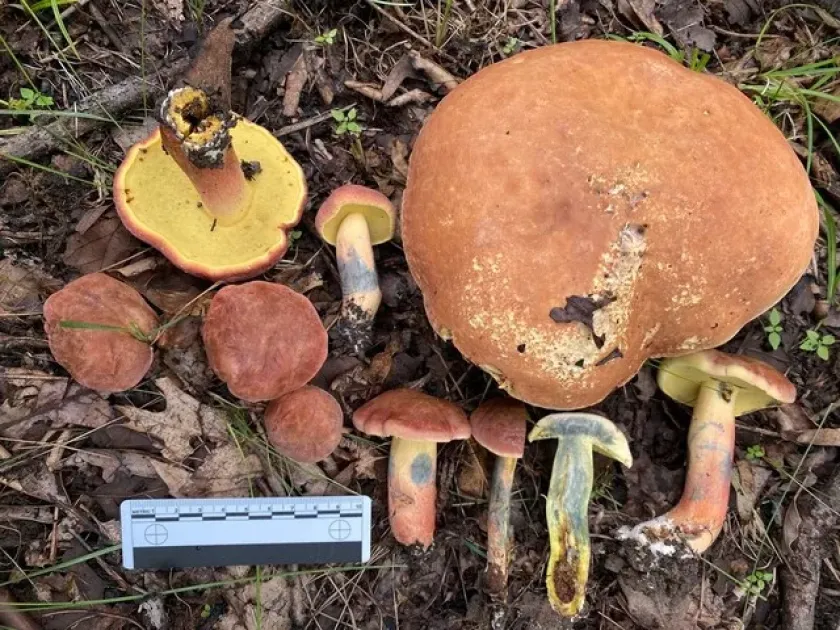
Description
Pathogen
Boletus pseudosensibilis is a species of fungus in the family Boletaceae known for its bluing reaction upon flesh exposure.
This organism is strictly a mycorrhizal species and does not act as a plant pathogen or a disease agent.
The fungus establishes a mutualistic relationship with the roots of host trees, exchanging nutrients and water.
It lacks the genetic and physiological mechanisms required to colonize plant tissue or cause agricultural blight.
Mycology studies classify this organism as a beneficial soil component within forest ecosystems.
Conditions for development
The development of Boletus pseudosensibilis is inextricably linked to the presence of specific forest tree hosts.
It thrives in environments with high moisture levels and adequate soil acidity typical of deciduous forests.
The fungus requires a stable layer of organic debris to sustain its mycelial network effectively.
Moderate temperatures during the growing season facilitate the emergence of reproductive fruit bodies.
It is sensitive to environmental disturbances such as heavy soil compaction or synthetic fungicide usage.
Why it matters
There is no evidence to suggest that Boletus pseudosensibilis causes any harm to agricultural crops.
It is not responsible for any plant diseases, rot, or reductions in harvest yields.
As a mycorrhizal fungus, it aids in the health of forest trees and surrounding ecological zones.
Management practices do not require any protective measures, as the species is ecologically neutral.
No economic damage is associated with this fungus, and it poses no threat to farming operations.
Discussion
No discussions yet — be the first.