
Magnificent bolete
Boletus permagnificus
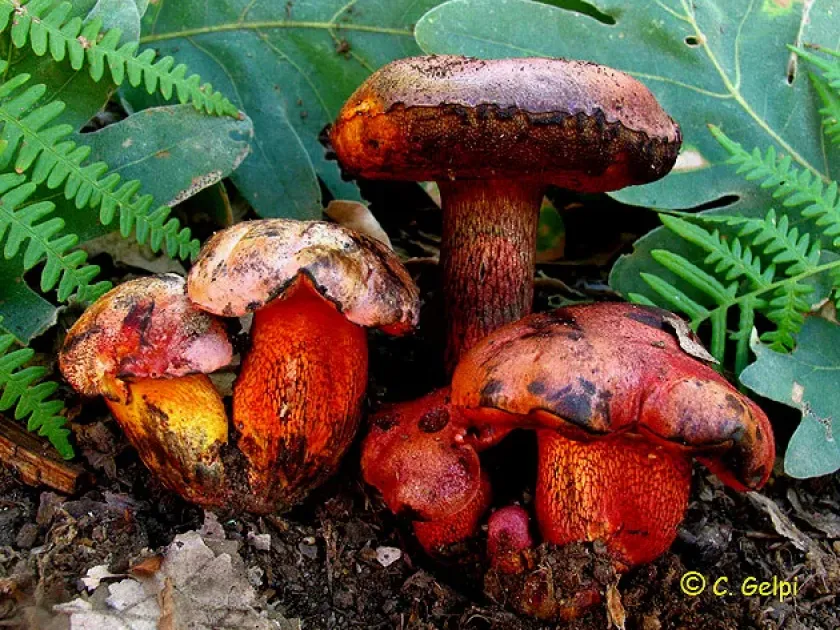
Description
Symptoms
Initial symptoms include reduced vigor, evidenced by chlorosis (yellowing) of the leaves and premature leaf drop during the growing season.
Root systems show clear signs of infection, such as discolored necrotic lesions on the epidermis and softened wood texture, leading to a loss of structural integrity.
Reduced terminal growth is a hallmark of systemic infection. The trees often exhibit shorter internodes and smaller leaf sizes compared to healthy counterparts.
The emergence of fungal fruiting bodies at the base of the trunk is a strong indicator of established internal root decay and advanced stages of the disease.
Visible mycelial mats may be found underneath the soil surface near the crown, tightly encircling fine root hairs, which restricts the plant's ability to absorb nutrients.
Pathogen
The causal agent is the fungus Boletus permagnificus, which typically acts as a mycorrhizal partner but can become a pathogen under stressful conditions for the host plant.
The fungus colonizes the root systems of hardwood trees. Its mycelium forms extensive networks that, when the host's vitality declines, can lead to the degradation of root tissues.
The life cycle involves the production of spores that disperse via wind or water. Once in the soil, spores germinate and initiate the development of a hyphal network around the roots.
As a fungus, it utilizes specific enzymatic complexes to break down organic matter, which can inadvertently damage healthy plant root cell walls during aggressive growth phases.
The pathogen is highly persistent in soil environments, maintaining its viability through dormant structures until favorable conditions allow for renewed active growth.
Conditions for development
High soil moisture and waterlogged conditions are the primary drivers of fungal proliferation. Poor drainage significantly increases the risk of infection.
Optimal temperatures for mycelial expansion range from 18 to 24 degrees Celsius. Stable, temperate climates support the rapid spread of the fungus through root grafting.
Mechanical damage to roots or stems, often caused by maintenance machinery or soil-dwelling pests, facilitates the entry of hyphae into the host tree tissues.
Low soil nutrient availability and poor soil aeration can stress the tree, making it more susceptible to colonization by Boletus permagnificus.
Dense planting schemes that limit airflow and sunlight penetration to the soil surface maintain the high humidity levels required for the pathogen's development.
Why it matters
The fungus causes severe impairment to the plant's nutrient and water uptake mechanisms, eventually leading to dieback and tree mortality if left untreated.
It creates entry points for secondary pathogens, such as wood-decay bacteria and other fungi, accelerating the destruction of the tree's internal structure.
The economic impact is significant in forestry, as it leads to the loss of valuable timber and necessitates costly sanitation and reforestation activities.
Trees infected with this fungus have compromised stability, making them prone to falling during storms, which poses a safety risk in park and urban environments.
The cumulative effect of infection is a reduction in the overall growth rate and productivity of the forest stand, limiting its ecosystem services.
Protection
Preventive measures include the removal of decaying organic matter and woody debris from the soil surface to minimize inoculum levels.
Improving soil drainage and optimizing tree spacing are critical cultural practices that reduce the environment's suitability for the fungus.
Systemic fungicides, when applied correctly, can manage the spread of the pathogen by inhibiting mycelial growth in the root zone.
- Regular monitoring of root health in forest nurseries.
- Sanitation of tools to prevent cross-contamination between trees.
- Enhancement of soil health through balanced fertilization to boost natural tree immunity.
Integrated pest management strategies focusing on early detection and rapid removal of infected specimens are essential for long-term control of this disease.
Discussion
No discussions yet — be the first.