
Lurid bolete
Boletus luridus
Description
Pathogen
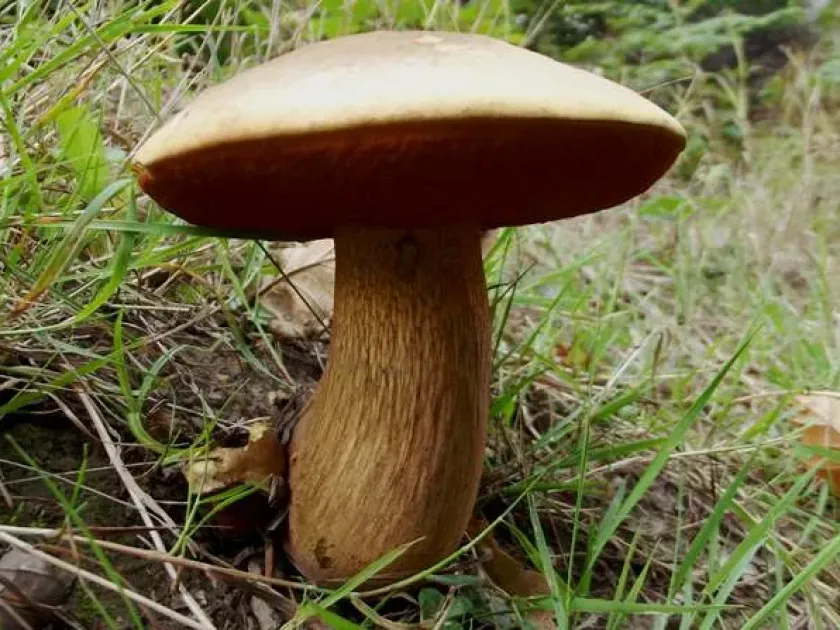
The lurid bolete (scientific name Boletus luridus) is not a plant pathogen, disease agent, or parasite. It is a large forest fungus classified within the order Boletales, known for its mycorrhizal relationship with hardwood trees such as oaks and beeches.
It exists as a symbiont, living in a mutually beneficial association with tree roots. The mycelium forms a network that assists the host plant in absorbing nutrients and water, while the tree provides the fungus with essential sugars produced during photosynthesis.
Gardeners often mistakenly identify this fungus as a plant disease because its flesh turns dark blue upon injury or oxidation. While this reaction can be startling, it is purely a chemical property of the mushroom and poses zero threat to plant health.
Unlike true phytopathogens that invade cells or tissues, the lurid bolete remains in the rhizosphere. It does not produce enzymes to degrade plant cell walls and does not cause decay, rot, or wilting in trees or shrubs.
Classifying this fungus as a disease is a fundamental taxonomic and biological error. It is a vital component of healthy forest ecosystems, contributing to soil fertility and the overall vigor of the host trees it associates with.
Conditions for development
The lurid bolete thrives in well-drained, calcareous, or neutral soils. It requires stable environmental conditions, specifically moderate rainfall and humidity, to successfully develop its fruit bodies during the growing season.
Optimal growth occurs at temperatures ranging between 18°C and 24°C. The species is highly sensitive to soil compaction and excessive chemical contamination, such as the heavy use of synthetic fungicides that target pathogenic fungi.
Development of the mycelial network depends on the presence of mature trees that can support mycorrhizal colonization. This creates a specific ecological niche often found in old orchards or wooded garden areas with minimal soil disturbance.
Spore dispersal is facilitated by wind and local fauna. Once the spores colonize the soil surface near a compatible host, the hyphae extend into the roots to establish a long-term symbiotic connection that can last for decades.
A lack of the fungus in its natural habitat often suggests environmental degradation, such as excessive tillage or chemical pollution. Its presence is generally regarded as a sign of high biological soil quality.
Why it matters
The lurid bolete causes no harm to agricultural crops or ornamental plants. It is not an invasive species and does not interfere with the life cycle, growth, or reproductive processes of its host trees or neighboring flora.
In a horticultural context, the fungus actually provides benefits to the tree by expanding the root surface area. This enhanced connectivity increases the tree's resistance to environmental stress, particularly during periods of drought or nutrient scarcity.
There is no economic damage associated with this fungus. Attempts to eradicate it from a site using chemical agents are not only ineffective but potentially harmful to the beneficial microbial life residing in the soil.
The only safety concern relates to human consumption; the mushroom is edible only after proper, thorough cooking. Eating it raw can cause digestive distress, but this is a toxicological, not a phytopathological, concern.
As the lurid bolete is a beneficial symbiont, it requires no mitigation, management, or control measures. It is a natural occupant of the soil environment that contributes positively to the ecosystem without posing any risk to plants.
Discussion
No discussions yet — be the first.