
Helminthosporium leaf spot of millet
Bipolaris panici-miliacei
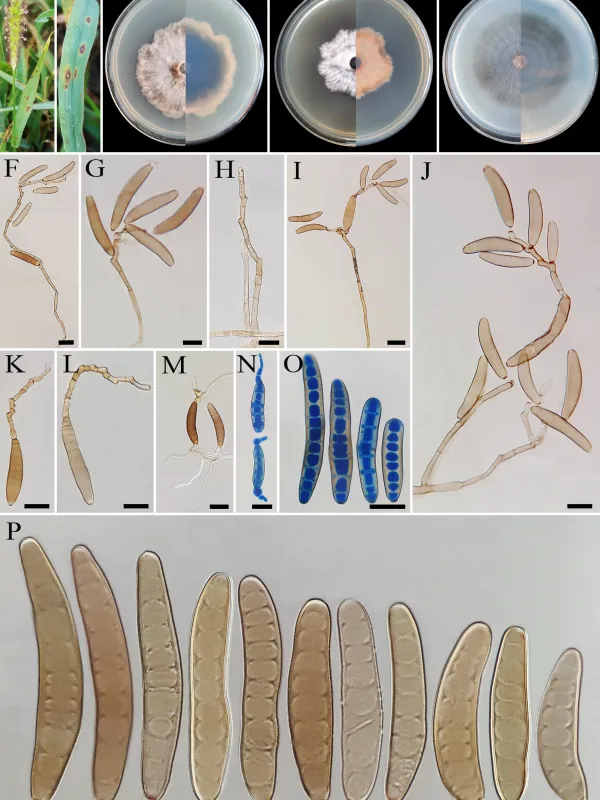
Description
Symptoms
Symptoms typically appear as small, oval to elongated lesions on the leaves, which gradually enlarge and turn dark brown or reddish-brown in color.
Often, a chlorotic halo forms around the necrotic spots, and under conditions of high humidity, the centers of these spots become covered with a velvety fungal growth.
In severe cases, the lesions coalesce, covering a significant portion of the leaf blade, which leads to premature yellowing and necrosis of the entire leaf.
The fungus can also attack stems, leaf sheaths, and the panicle, resulting in grain shriveling and reduced overall grain weight due to impaired photosynthesis.
Seedlings infected from soil-borne or seed-borne inoculum may show root or crown rot, resulting in damping-off and poor stand establishment in the field.
Pathogen
The causal agent of Helminthosporium leaf spot of millet is the fungus Bipolaris panici-miliacei, which is classified within the group of Ascomycetes (anamorph state).
This pathogen produces dark olive-brown conidia on conidiophores, which are the primary means of dispersal within the field during the growing season of the crop.
The fungus survives primarily in crop residues left on the soil surface and can also be seed-borne, allowing it to initiate infection early in the plant's development.
The infection cycle is favored by active mycelial growth, which colonizes the host tissues, leading to the characteristic necrotic lesions that define the disease.
Understanding the life cycle of B. panici-miliacei is crucial for managing the disease, as the pathogen's ability to remain dormant makes sanitation practices vital.
Conditions for development
The disease development is strongly correlated with warm temperatures and high humidity levels, particularly during the rainy season or periods of dew accumulation.
Temperatures ranging from 20°C to 25°C are considered optimal for the rapid germination of conidia and the infection process of Bipolaris panici-miliacei.
Dense plant stands or excessive weed growth impede air circulation within the canopy, creating a localized humid microclimate that favors pathogen proliferation.
Frequent precipitation events promote the movement of spores via rain splash, which is a major mechanism for the spread of the pathogen from lower to upper leaves.
Crops that are nutritionally stressed or affected by other abiotic factors are more prone to infection as their natural physiological defenses are weakened.
Why it matters
The primary damage caused by this disease is the reduction of the photosynthetic surface area of the leaves, directly limiting the plant's ability to fill the grains.
Economic losses can be significant, often resulting in lower grain yields and reduced quality, including smaller seed size and lower germination rates.
In addition to yield loss, the infection can degrade the commercial value of the grain, making it unsuitable for processing and reducing its marketability.
Increased susceptibility to lodging can occur due to stem infection, complicating the mechanical harvesting process and leading to further harvest-related losses.
Chronic infestation of the soil with the pathogen can lead to recurring outbreaks, making millet production less profitable over successive planting cycles.
Protection
Integrated disease management begins with the use of high-quality, fungicide-treated seeds to ensure healthy germination and early protection of seedlings.
Crop rotation remains the most effective cultural practice, as it prevents the buildup of Bipolaris panici-miliacei in the soil by breaking the infection cycle.
Deep plowing or incorporating crop residues into the soil helps accelerate the decomposition of infected material, significantly reducing the primary inoculum source.
- Applying balanced fertilizers, particularly potassium, improves plant vigor and resistance to fungal attack.
- Implementing weed control to eliminate alternative hosts and improve field aeration.
- Foliar fungicide applications during the vegetative phase in high-risk seasons to suppress disease spread.
Selection and planting of resistant or tolerant millet cultivars constitute the core of a sustainable approach to minimizing losses from this disease.
Discussion
No discussions yet — be the first.