
Battarraea phalloides
Battarraea phalloides
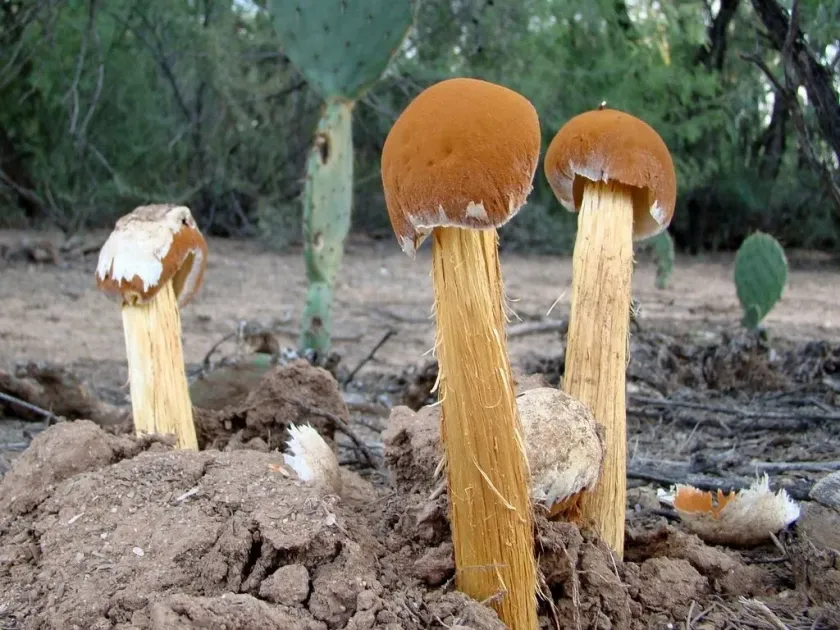
Description
Symptoms
Battarraea phalloides is distinguished by its unique morphology, featuring a long, woody, scaly stalk that supports a distinct head.
The upper part of the fruiting body forms a cap or bell shape, which contains a powdery, brown mass of spores ready to be dispersed by wind.
Before emergence, the fungus develops beneath the soil surface as an egg-like structure, eventually pushing upward as it matures.
Its striking appearance often leads farmers to mistake it for a pathogen, though it has no physiological connection to plant disease cycles.
Recognizing the physical characteristics of this fungus helps to avoid unnecessary panic when it appears in agricultural fields or pastures.
Pathogen
It is essential to emphasize that Battarraea phalloides is a saprotrophic fungus and not a pathogen that causes plant diseases.
The organism feeds on dead organic material, breaking it down into nutrients, which makes it a decomposer rather than a parasite.
Classified within the Agaricaceae family, it lacks the mechanisms required to infect living plant tissue or cause agricultural damage.
No systemic or local infections in agricultural crops are linked to the presence of this fungus; it does not harm plants in any way.
Labeling it as a disease is a technical error, as it operates entirely outside the ecosystem of plant-parasitic pathogens.
Conditions for development
This fungus thrives in arid and semi-arid environments, favoring sandy or rocky soils where moisture levels are relatively low.
It typically appears in locations with significant organic decay, such as windbreaks, fallow fields, or natural desert landscapes.
Specific temperature fluctuations often trigger the rapid emergence of its fruiting bodies following periods of stability in the soil environment.
The fungus is highly specialized, meaning its occurrence is sporadic and limited to environments where it can complete its reproductive cycle.
Changes in soil management and land use can significantly impact its ability to establish or spread within a specific region.
Why it matters
Battarraea phalloides poses no threat to crop yield, plant health, or the overall productivity of agricultural land.
It acts as a beneficial component of the soil biome by accelerating the decomposition of lignified organic matter present in the soil.
There are no economic losses associated with its presence, and it does not compete with crops for water or essential mineral nutrients.
Agricultural intervention is unnecessary, as the fungus does not possess any properties that could negatively affect crop development.
Understanding that it is a harmless saprotroph allows for more efficient management and prevents the waste of resources on unnecessary treatments.
Protection
Given its harmless nature, no chemical control or intervention strategies are required or recommended for this species.
If physical removal is desired for aesthetic reasons, manual picking of the fruiting bodies before spore release is the most effective method.
Maintaining high standards of soil cultivation and regular field maintenance naturally discourages the growth of such sporadic fungi.
There is no justification for the use of fungicides, as these would likely harm beneficial soil bacteria without providing any agricultural benefit.
Integrated soil health management remains the best practice for ensuring that fungal populations within the field remain balanced and diverse.
Discussion
No discussions yet — be the first.