
Battarraea
Battarraea
Description
Pathogen
Battarraea is a genus of fungi in the family Agaricaceae, belonging to the gasteromycetes group. It is important to note that this is not a plant disease, but a naturally occurring saprotrophic soil fungus.
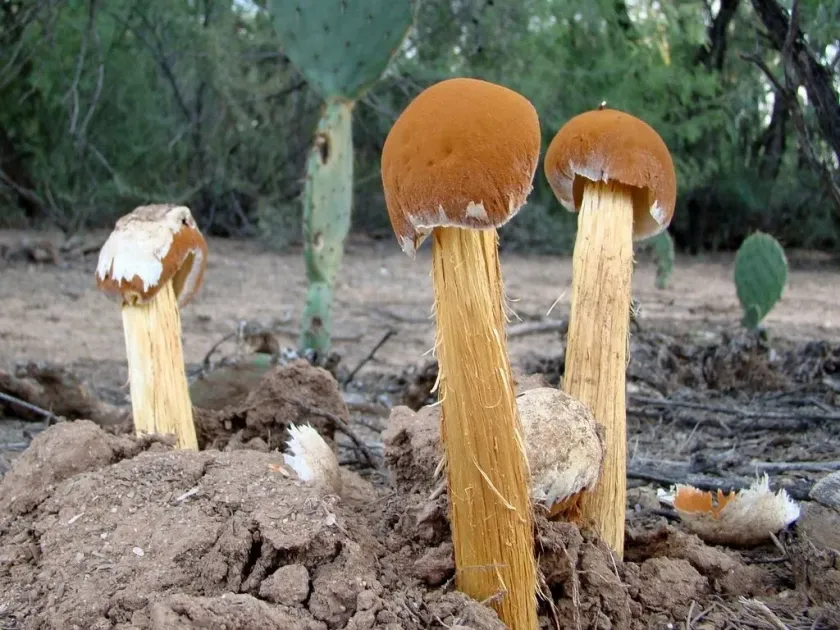
The most well-known species is Battarraea phalloides. The fungus is characterized by a distinctive structure consisting of a tough, woody stem and a cap-like upper part where the spore mass is produced.
During its early development, the fruit body exists underground inside a membrane. As it matures, the stem elongates rapidly, rupturing the protective shell and lifting the spore-bearing head above the ground surface.
Battarraea is not a plant pathogen and does not infect agricultural crops. It obtains nutrients by decomposing organic matter in the soil, which makes it a crucial component of desert ecological balance.
The species is primarily found in arid and semi-arid regions, thriving in loose, sandy substrates where competition from other soil-borne microorganisms is relatively low.
Conditions for development
Battarraea requires specific environmental conditions typical of desert and semi-desert habitats. It is adapted to survive extreme temperatures and prolonged droughts, remaining dormant underground.
The key factor for its spread is the presence of loose, sandy soil with a moderate amount of organic debris. The fungus reacts rapidly to rare but heavy rainfall, which triggers metabolic activity in the mycelium.
Its biology is closely linked to intense solar radiation. The formation of fruit bodies occurs during brief periods of increased soil moisture, allowing the fungus to complete its spore-dispersal cycle before the soil dries out again.
Spore dispersal is primarily mediated by wind, a typical feature of gasteromycetes. When the spore sac ruptures, a large volume of spores is released and carried across vast distances by air currents.
Human activities, such as overgrazing or land cultivation, significantly threaten these fungi populations as they disturb the fragile upper soil crust required for their successful development.
Why it matters
Battarraea poses absolutely no threat to the agricultural sector or cultivated crops. It acts strictly as a saprotroph and lacks the ability to penetrate living plant tissues or cause necrosis.
Unlike phytopathogenic fungi, Battarraea does not produce phytotoxins and does not compete with crops for vital water or mineral resources. Instead, it contributes to the cycle of organic matter decomposition.
The lack of harmful impact is inherent to its ecological role. As a decomposer, it breaks down complex organic polymers in environments where bacterial activity is significantly limited.
Farmers and agronomists should not consider this fungus as a target for pest or disease control. The application of pesticides in areas where Battarraea is present is unnecessary and economically unjustified.
In many regions, this species is protected as a rare component of desert biodiversity, emphasizing the need to preserve its natural habitat rather than eradication efforts.
Discussion
No discussions yet — be the first.