
Basidioradulum
Basidioradulum
Description
Symptoms
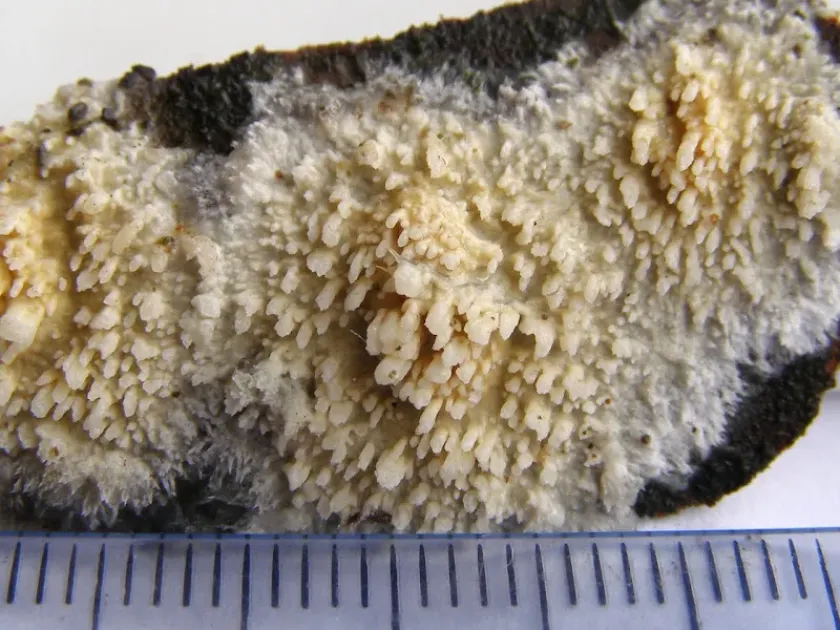
The most visible symptom is the appearance of distinct, crust-like or effused-reflexed fruiting bodies on the bark of trunks or branches. They often appear cream-colored or yellowish.
Internal symptoms involve the formation of white rot. The infected wood loses its structural integrity, becomes soft, and breaks easily under manual pressure or strong winds.
External signs on the tree include general decline, such as crown thinning, leaf chlorosis, and the failure of branches to develop new growth during the spring season.
Removing a portion of the bark in affected areas often reveals a white or yellowish mycelial mat that penetrates deep into the cambium layer, essentially killing the living tissue.
- Presence of characteristic fungal growth on bark.
- Internal discoloration and softening of woody tissues.
- Premature yellowing and shedding of leaves.
- Increased risk of mechanical failure or wind breakage.
Pathogen
The disease is caused by a fungus belonging to the genus Basidioradulum, specifically known as Basidioradulum radula. It is a wood-decaying basidiomycete that impacts various woody plants.
This fungus behaves as an opportunistic pathogen or saprotroph. It is capable of decomposing structural components of wood, such as lignin and cellulose, using specific enzymatic mechanisms.
The biology of the fungus involves the development of perennial or annual basidiocarps, which serve as the primary reproductive structures for disseminating spores through the air.
The mycelium colonizes the xylem and phloem, spreading through the vascular system and parenchyma cells, effectively disrupting the tree's natural physiological processes.
Persistence of the pathogen is ensured by its ability to remain dormant within dead or dying wood, waiting for favorable environmental cues to initiate a new cycle of infection.
Conditions for development
High humidity and moderate temperatures are the most critical factors favoring the germination of spores and the subsequent colonization of the tree's wood.
Entry points are essential for infection. The fungus commonly infects trees through wounds caused by pruning, animal damage, storm events, or freeze-thaw cycles that rupture the bark.
Poorly ventilated forest stands or orchards with high density promote a microclimate where moisture persists on tree surfaces, facilitating the survival of the pathogen.
Trees that are already stressed by drought, poor nutrient availability, or insect attacks exhibit a weakened defense mechanism, making them primary targets for Basidioradulum.
Insects act as secondary vectors, potentially carrying fungal spores from old, decaying logs to fresh wounds on healthy, vigorous trees.
Why it matters
The primary damage caused by Basidioradulum is the structural compromise of the tree. As the wood decays, the tree's ability to support its own weight is severely reduced.
The disruption of water and nutrient transport leads to a slow death. By the time visual symptoms appear on the crown, the internal damage to the trunk is often extensive.
In forestry and arboriculture, this disease leads to significant economic loss as affected trees often need to be felled to prevent accidental falls or further spread of the fungus.
The disease acts as a source of long-term infection in the immediate environment. Dead wood colonized by the fungus releases spores for years, threatening nearby healthy specimens.
Because the disease often progresses internally without obvious exterior cues, it is a silent killer that can drastically reduce the lifespan of orchard and ornamental trees.
Protection
Effective control requires a proactive approach centered on sanitation. All dead wood and infected branches should be removed and destroyed to minimize the spore load.
When pruning, it is crucial to use clean, disinfected tools and to apply professional wound sealants to any cuts larger than a few centimeters to block spore entry.
Maintaining tree health through proper fertilization and irrigation helps trees form strong defense barriers, which significantly limits the establishment of fungal mycelium.
Regular monitoring of the orchard is necessary to identify and treat injuries or bark damage before the fungus has a chance to penetrate the wood.
In case of severe infestation, the complete removal of the tree and the treatment of the surrounding area are recommended to prevent the spread to adjacent healthy trees.
Discussion
No discussions yet — be the first.