
Balsamia vulgaris
Balsamia vulgaris
Description
Symptoms
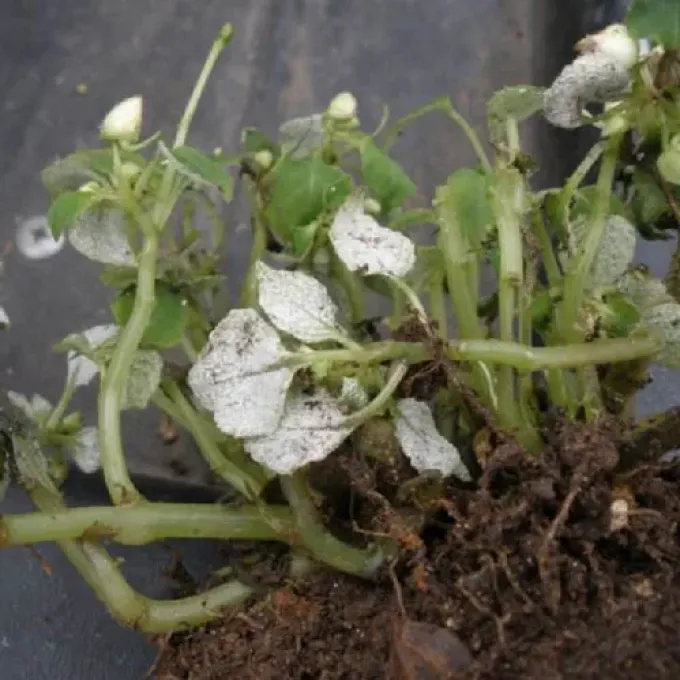
The primary symptom of Balsamia vulgaris infection is the specific deformation of the affected plant tissue. Initially, small yellowish spots appear on the leaves, which gradually turn brown or dark necrotic patches over time.
Tissues in the affected areas die off, creating necrosis zones often surrounded by a light chlorotic halo. Under high humidity, a faint fungal mycelium may be observed on these spots, indicating active spore production.
The infection frequently affects leaf blades, leading to premature curling and leaf drop. In some cases, the disease shows a systemic nature, causing stem distortion and significantly slowing the growth of the entire plant.
Inspecting the root system often reveals signs of decay, which impairs nutrient uptake. Consequently, plants start to wilt even under sufficient watering conditions, as the vascular system becomes compromised by the fungal activity.
A diagnostic feature is the presence of microscopic fruit bodies that develop within the affected tissue. For a definitive diagnosis, a specialized laboratory analysis of the tissue is required to identify the pathogen correctly.
Pathogen
The disease is caused by the ascomycete fungus Balsamia vulgaris, belonging to the Balsamiaceae family. This fungus typically follows a saprotrophic or weakly parasitic lifestyle, activating under specific environmental stressors.
The fungus is capable of forming fruit bodies either underground or directly on the surface of infected plant parts. Its life cycle is closely linked to the accumulation of organic matter in the soil, where it can persist for long periods.
Reproduction occurs through endogenous spores, which are disseminated by soil moisture, insects, or wind. These spores possess high resistance to unfavorable environmental conditions, making eradication difficult.
The pathogenic potential of Balsamia vulgaris increases when the host plant's immune system is weakened by environmental stressors. The fungus penetrates tissues through natural openings like stomata or via mechanical wounds.
Studies of the pathogen's biology show that it secretes specific enzymes designed to break down plant cell walls. This enzymatic activity facilitates the penetration of hyphae into the vascular system and internal tissues.
Conditions for development
High humidity in both air and soil is the most favorable condition for the development of Balsamia vulgaris. Over-irrigation or stagnant water in the field significantly increases the risk of infection spread.
The temperature optimum for mycelial growth ranges from +15 to +22 degrees Celsius. Sharp daily temperature fluctuations in the spring can also trigger disease outbreaks in susceptible crops.
Poor agricultural practices, such as overcrowded planting, lead to poor aeration. This creates a microclimate with consistently high humidity, which is ideal for spore germination and cross-infection.
Soil acidity plays a significant role in disease proliferation. Infections caused by this fungus are more prevalent in acidic, poorly drained soils compared to neutral and well-aerated substrates.
The presence of a primary infection source is critical. Plant debris left on the soil surface during the off-season serves as the main reservoir for the fungus to spread to new plantings.
Why it matters
The harmfulness of Balsamia vulgaris lies in the reduction of overall crop productivity. By disrupting photosynthesis and transpiration, the infection prevents plants from developing properly and limits yield potential.
Massive infection results in significant loss of green biomass, which is particularly detrimental to leafy vegetables and ornamental plants. Produce quality also degrades due to toxin accumulation and metabolic disruption.
The disease makes plants highly susceptible to secondary infections, such as bacterial rots. Combined pathogenic action can destroy an entire crop in a very short period, leading to total harvest failure.
Economic damage includes both the cost of additional fungicide applications and the loss of revenue due to reduced yield quality. Infected produce is often unsuitable for long-term storage or transport.
In greenhouses, Balsamia can cause local epiphytotics if proper disinfection protocols are ignored. Rapid spread in controlled environments can lead to complete loss of the entire greenhouse assortment.
Protection
Prevention starts with strict adherence to crop rotation, which breaks the pathogen's life cycle. Returning susceptible crops to the same location is recommended only after a period of 3 to 4 years.
A key method involves thorough field sanitation, particularly the removal of plant debris after harvest. Deep plowing helps bury remnants, allowing the pathogen's spores to die through natural organic decomposition.
Using resistant cultivars is a highly effective control measure. It is also essential to ensure the quality of planting material and to treat seeds with broad-spectrum fungicides before sowing.
Chemical control includes the application of copper-based fungicides or systemic products upon the first signs of infection. It is crucial to strictly follow the label instructions regarding dosage and waiting periods.
Maintaining an optimal water regime and ensuring good soil aeration significantly reduces outbreak risks. Consistent weed management reduces humidity in the root zone and denies the fungus suitable spots for growth.
Discussion
No discussions yet — be the first.