
Pinecone cap
Baeospora myosura
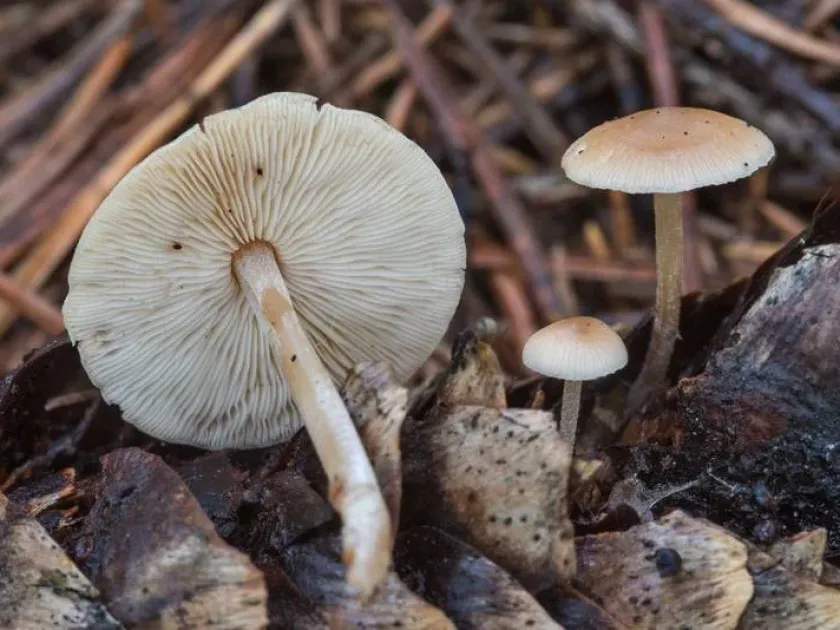
Description
Symptoms
The primary sign of this fungus is the emergence of small, delicate mushrooms directly from the surface of fallen pine or spruce cones.
The caps are typically cream to light brown in color, often featuring a small umbo or depression in the center of the cap surface.
A distinctive feature is the presence of very crowded, thin gills underneath the cap, which help distinguish it from other wood-decay fungi.
The stem is often slender and may feature a fine white fuzz or dusting, which contributes to its common name and taxonomic characteristics.
During damp periods, multiple fruiting bodies can be observed growing in dense clusters across a single cone.
Pathogen
The pinecone cap (Baeospora myosura) is a small saprotrophic fungus belonging to the Marasmiaceae family.
This species is not a plant pathogen; instead, it plays a vital role as a decomposer in coniferous forest ecosystems.
Its mycelium is specialized in breaking down tough organic matter, specifically the lignin and cellulose found in fallen pine or spruce cones.
By decomposing these cones, the fungus acts as a recycler, returning essential nutrients back into the forest soil profile.
The biological cycle of this fungus is strictly tied to the seasonal shedding of cones from host trees.
Conditions for development
Growth conditions for this species are most favorable during late autumn and throughout the winter, which is rare for many other mushroom species.
High relative humidity and moderate temperatures within the forest litter are essential for the initiation of the fruiting body.
The fungus thrives in shaded, moist areas where the forest floor retains moisture, supporting continuous mycelial activity.
Freshly fallen cones serve as the primary substrate, providing the necessary nutrients for spore germination and colony colonization.
Stable microclimatic conditions under the canopy allow the fungus to persist even when temperatures approach freezing levels.
Why it matters
Baeospora myosura is not considered a threat to living trees, as it cannot infect or damage healthy plant tissues.
It is strictly a decomposer of dead plant materials, providing a net benefit to forest floor nutrient cycling.
Its economic impact is limited to the potential degradation of seed cones if they are stored in inappropriate, overly moist environments.
In such conditions, the fungus can compromise the integrity of the cones, rendering them unsuitable for seed extraction processes.
Therefore, it is not a forest disease but rather a natural biological agent in forest management.
Protection
There is no need for protective or chemical measures against this fungus in a forest setting, as it is a natural component of the biome.
For forestry applications where seeds are being harvested, proper post-harvest handling is the best prevention method.
Cones collected for seed production must be dried immediately in well-ventilated conditions to prevent mycelial colonization.
Storing cones in dry, elevated, or slatted containers will inhibit the growth of the fungus and ensure high-quality seed preservation.
- Maintain low humidity levels during storage (below 15%).
- Ensure adequate ventilation in seed storage facilities.
- Avoid prolonged contact between harvested cones and damp soil.
Discussion
No discussions yet — be the first.