
Myrtle rust
Austropuccinia
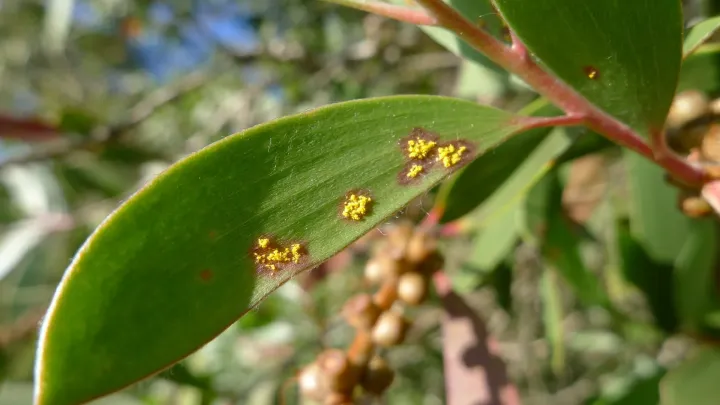
Description
Symptoms
The most recognizable symptoms appear on actively growing plant parts, including young leaves, tender shoots, floral buds, and developing fruits.
Initial infection manifests as small chlorotic spots that quickly develop into characteristic, bright yellow pustules bursting through the epidermis.
When the infection is severe, the underside of the leaves becomes covered in a thick, powdery coating of spores, often accompanied by reddish-brown discoloration.
Infected shoots and branches exhibit significant deformation, stunting, and necrosis, leading to dieback of twigs and stems.
Severe infestations often result in premature leaf drop and the complete failure of floral buds, drastically impacting the plant's reproductive success.
Pathogen
The causative agent of this devastating disease is a specialized basidiomycete fungus known as Austropuccinia psidii, formerly classified as Puccinia psidii.
It is an obligate parasite, which means it relies exclusively on the tissues of living hosts within the Myrtaceae family to complete its life cycle.
The fungus is highly aggressive, capable of producing massive quantities of urediniospores that facilitate its rapid dispersal over long distances.
This pathogen possesses significant genetic diversity, which complicates the development of resistant plant varieties and global mitigation efforts.
It is widely recognized as one of the most significant biosecurity threats to ecosystems dominated by myrtaceous species globally.
Conditions for development
Warm temperatures ranging from 15 to 25 degrees Celsius create the ideal thermal window for the germination and penetration of the fungus.
High relative humidity, typically exceeding 80 percent, is a critical environmental factor that enables the survival and spread of the pathogen.
The presence of free water, such as dew, rain, or irrigation spray, on the leaf surface is required for the spores to germinate and infect host tissues.
Poor ventilation and overcrowded planting environments in nursery settings significantly exacerbate the risk of a major disease outbreak.
Dispersal is primarily driven by wind currents, but spores can also be spread by human activity, such as contaminated tools, clothing, or transported plant material.
Why it matters
Myrtle rust poses a catastrophic threat to biodiversity, particularly in regions where native Myrtaceae are key components of forest ecosystems.
For commercial growers, the disease results in severe economic losses due to plant mortality, quarantine restrictions, and the high cost of chemical treatments.
The disease destroys the aesthetic value of ornamental plants, rendering them unfit for sale or landscaping purposes.
Long-term infestation weakens the vitality of host trees, leaving them susceptible to secondary pathogens and further environmental stressors.
The global spread of this fungus has necessitated the implementation of stringent biosecurity measures and international trade regulations.
Protection
The most effective strategy against myrtle rust is the implementation of strict biosecurity protocols to prevent the introduction of the pathogen into new areas.
If an infection is identified, immediate removal and deep burial or incineration of all symptomatic plant parts are necessary to stop spore dispersal.
Protective fungicides can be applied to healthy plants to prevent infection, although this is often logistically difficult in large-scale field settings.
Systemic fungicides, particularly those containing triazoles or strobilurins, are used to manage existing infections and protect developing foliage.
- Maintaining optimal airflow and spacing in nurseries
- Stringent decontamination of tools and machinery
- Avoiding overhead irrigation to reduce leaf wetness
- Regular surveillance and reporting of suspicious symptoms
Discussion
No discussions yet — be the first.