
Armillaria root rot
Armillaria heimii
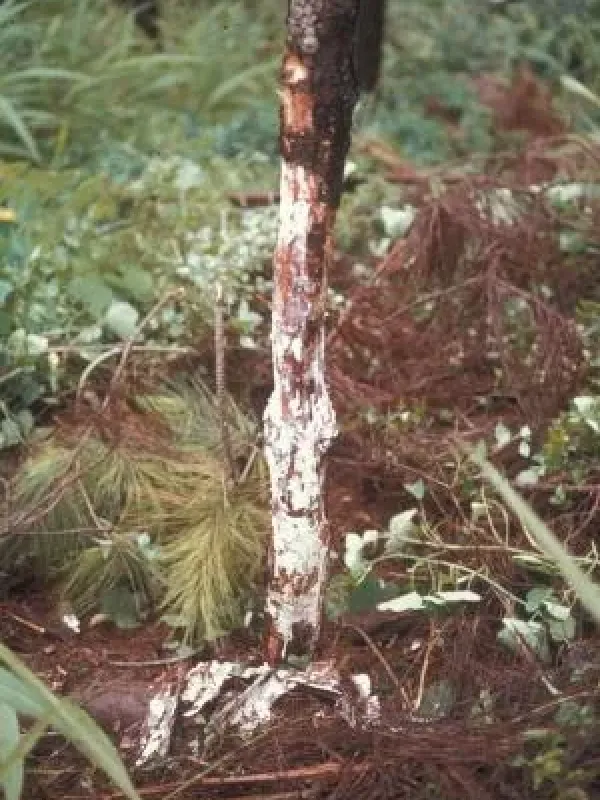
Description
Symptoms
One of the first signs of infection is the gradual wilting of foliage and a change in color to a chlorotic state, which is often mistaken for the consequences of drought or nutrient deficiency.
Upon inspection of the root collar and roots of an infected tree, dense white or cream fan-shaped mycelial mats are discovered under the bark, which emit a specific mushroom-like odor.
On the surface of the roots and in the surrounding soil layer, characteristic dark, almost black strands known as rhizomorphs can be noticed, which serve as the fungus's organs of spread.
In the late stages of the disease, fruiting bodies of the fungus often form at the base of the trunk in dense clusters, becoming the primary source of spores for further infection.
The wood in the affected area undergoes deep structural changes: it becomes brittle and takes on a yellowish hue with characteristic black lines, which are a diagnostic sign of armillaria root rot.
Pathogen
The causative agent of this disease is the fungus Armillaria heimii, which belongs to the Physalacriaceae family. This is an aggressive basidial pathogen that specializes in attacking the root systems and root collars of perennial woody plants.
The biology of the pathogen is closely linked to the formation of rhizomorphs — dense mycelial strands that allow the fungus to actively move through the soil and penetrate healthy plant tissues via micro-wounds or directly through the bark.
Unlike other honey fungus species, Armillaria heimii often acts as a necrotroph, causing rapid death of the cambium and subsequent destruction of the wood, which leads to the disruption of trophic links within the tree.
The fungus's life cycle includes a saprotrophic phase that allows it to survive for long periods on stumps and root system remains, making the eradication of the infection from a site an extremely difficult task.
Spread of the pathogen within stands occurs primarily through physical contact between the roots of adjacent plants, as well as through mechanical damage to trunks and root collars.
Conditions for development
The main factor promoting the development of the infection is high soil moisture, which creates an ideal environment for rhizomorph growth and facilitates the process of root system infection.
Weakened plants suffering from stress due to unfavorable weather conditions, pests, or mechanical damage are the most vulnerable to pathogen infiltration.
Infection often occurs in areas where remnants of old wood are present; these serve as primary reservoirs of infection, providing the fungus with the necessary nutrition for expansion.
Optimal temperatures for the active development of Armillaria heimii vary within the tropical belt, but even short periods of waterlogging significantly accelerate the spread of the disease.
Dense planting of trees significantly facilitates the transmission of the fungus from infected specimens to healthy ones through root contact, creating conditions for the focal collapse of stands.
Why it matters
The primary danger lies in the rapid death of roots, which causes the tree to lose its ability to absorb water and minerals, leading to the total death of the plant within a short period.
The disease provokes extensive root collar rot, which reduces the tree's resistance to windthrow, leading to the mass collapse of mature specimens in infected areas.
In industrial plantations, armillaria root rot can destroy a significant portion of the harvest, causing the death of both young saplings and mature fruit-bearing trees, resulting in massive economic losses.
The presence of the pathogen in the soil makes it impossible to plant new crops in the same location for many years due to the high level of infectious background accumulated in soil debris.
Affected areas become sources of secondary infection for neighboring healthy plantations, necessitating the introduction of strict quarantine measures and restrictions on the movement of plant material.
Protection
The most important preventive measure is the thorough cleaning of the site of stumps and root system remains of previous stands, as these are the main foci of infection.
An effective containment method is the creation of deep isolation trenches around infected sites, which prevents the further spread of rhizomorphs through the soil to healthy trees.
It is necessary to maintain a high level of agricultural practices, providing plants with optimal nutrition and irrigation to enhance their natural immunity to fungal diseases.
Upon detection of the first signs of the disease, it is recommended to immediately remove the infected trees along with the main mass of the root system and disinfect the soil with specialized fungicides.
- Regular monitoring of the health of stands.
- Timely sanitary removal of diseased specimens.
- Avoiding root damage during mechanical operations.
- Use of resistant species and cultivars.
Discussion
No discussions yet — be the first.