
Armillaria gallica
Armillaria gallica
Description
Symptoms
The most reliable diagnostic sign is the presence of white, fan-shaped mycelial mats found beneath the bark at the base of the tree or on the main roots.
Affected trees often show symptoms of decline such as thinning of the crown, yellowing of leaves (chlorosis), and a significant reduction in annual shoot growth.
Exudation of resin or sap from cracks near the root collar is common, as the tree attempts to defend itself against the advancing fungal invasion.
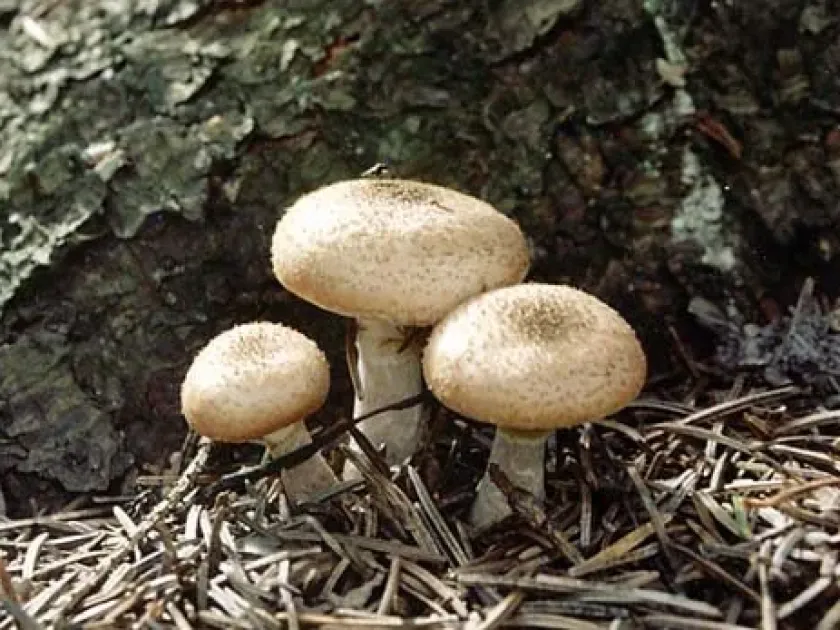
During late summer and autumn, clumps of tan-colored mushrooms may appear at the base of the trunk, signaling an established and advanced infection.
- Premature leaf drop and wilting.
- White mycelium visible under the bark.
- Dieback of twigs and branches.
- Formation of mushrooms at the stem base.
- Root decay and tree instability.
Pathogen
Armillaria gallica is a species of fungus in the family Physalacriaceae that acts as a facultative parasite. It is widely recognized for its ability to attack both stressed and occasionally healthy trees in forests and orchards.
The fungus produces cord-like structures known as rhizomorphs, which travel through the soil to locate and infect the roots of potential host plants over significant distances.
This pathogen survives primarily as a saprotroph on stumps and dead root systems, maintaining its presence in the soil for many years before attacking living hosts.
Unlike some aggressive pathogens, it often enters through existing root damage, gradually colonizing the cambium and xylem, eventually causing severe decay.
The life cycle involves the production of mushroom-like fruiting bodies at the base of the infected trunk, which produce spores that aid in local dispersal.
Conditions for development
High soil moisture is the primary environmental factor favoring the growth and migration of Armillaria gallica rhizomorphs within the garden soil.
Stressed trees, particularly those suffering from waterlogging, nutritional deficiencies, or pest infestations, are significantly more susceptible to infection.
Compacted soils with poor drainage provide a stagnant environment where the fungus thrives, increasing the likelihood of successful host colonization.
Root wounding, whether caused by cultivation tools or ground-dwelling pests, creates an ideal entry point for the fungus to bypass the tree's natural defenses.
Warm temperatures, generally ranging from 15 to 25 degrees Celsius, optimize the metabolic activity of the fungus and promote its spread through root contact.
Why it matters
The primary damage caused by this fungus is the destruction of the root system, which prevents the uptake of water and nutrients, leading to tree mortality.
Decay of the structural roots weakens the tree's stability, creating a severe safety hazard due to the risk of the tree falling during high winds.
In orchards, the fungus can create localized hotspots of infection, killing successive trees as it spreads through root-to-root contact across the landscape.
Long-term soil contamination makes it extremely difficult to replant susceptible tree species in the same area without extensive remediation efforts.
The economic impact includes the total loss of productive orchard stock and the high cost associated with tree removal and subsequent soil treatment.
Protection
Sanitation is the most effective management tool; this involves the complete removal of stumps and large root systems to starve the fungus of its food source.
Improving soil drainage and maintaining optimal tree vigor through proper fertilization and watering can help trees resist potential fungal attacks.
If an infection is identified, creating a trench around the affected area can physically isolate the root zone and prevent the spread of rhizomorphs.
Using certified disease-free planting material and avoiding deep cultivation near the base of trunks are crucial preventative agronomic practices.
For high-value trees, experimental application of biological fungicides can offer some protection if the infection is detected in its very early stages.
Discussion
No discussions yet — be the first.