
Armillaria cepistipes
Armillaria cepistipes
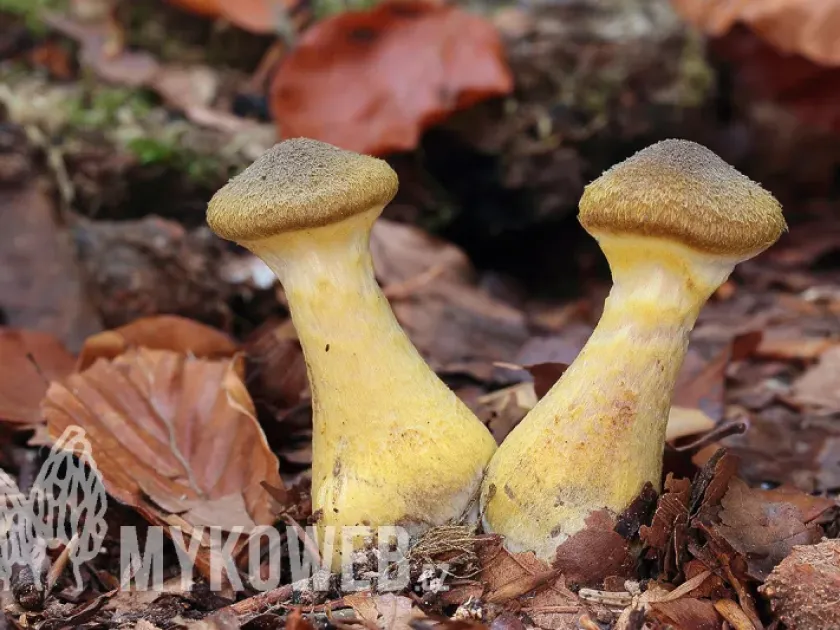
Description
Symptoms
Visible symptoms often include a gradual thinning of the canopy, premature yellowing of leaves or needles, and a stunted growth rate compared to healthy individuals in the same area.
On the trunk's root collar, heavy resin flow is a common reaction in conifers. Peeling back the bark in this area typically reveals white, fan-shaped mycelial mats, which are a definitive sign of infection.
Dark, string-like rhizomorphs may be detected in the soil near the root system or directly under the bark of the lower stem, showing how the fungus colonizes the plant.
The wood within the infected roots and the base of the trunk usually becomes soft and pale, often exhibiting dark, irregular lines (zone lines) caused by fungal metabolic products.
In the final stages, trees lose their anchor in the soil, making them highly susceptible to windthrow, even during moderate storm conditions, as the root structure disintegrates.
Pathogen
The pathogen Armillaria cepistipes is a fungus belonging to the Physalacriaceae family. It acts as a facultative parasite that can survive both as a saprotroph on dead organic matter and as a pathogen attacking living woody tissues.
The fungus is named for the distinct swelling at the base of its stipe (stalk), which resembles an onion. These fruiting bodies are often found in clusters at the base of infected trees during the late summer and autumn seasons.
A key feature of its biology is the formation of rhizomorphs — tough, cord-like mycelial structures. These allow the fungus to traverse the soil and bridge the gaps between host tree roots, effectively spreading the infection.
As a white-rot fungus, Armillaria cepistipes breaks down both lignin and cellulose, which are the main structural components of wood, eventually leading to a complete collapse of the host's integrity.
While often less aggressive than other Armillaria species, it can still cause significant decline, especially when combined with environmental stressors such as drought or physical damage to the root system.
Conditions for development
High moisture levels in both the soil and the air provide the optimal environment for the germination of basidiospores and the rapid growth of rhizomorphs across the forest floor.
The presence of stumps from previously harvested trees serves as a primary infection hub, allowing the fungus to persist for years and eventually spread to neighboring healthy saplings.
Forest stands that are stressed due to over-competition, poor site conditions, or pest outbreaks exhibit lower defense mechanisms, making them significantly more prone to fungal invasion.
Soil compaction caused by heavy logging equipment often damages tree roots, providing entry points that make it easier for Armillaria to infiltrate the tree's internal tissues.
Warm, humid periods facilitate the emergence of mushrooms, which release large quantities of spores, leading to the colonization of wounded parts of trees or decaying wood piles.
Why it matters
The primary harm is the destruction of the root system, which disrupts the transport of water and essential nutrients, leading to progressive wilting and eventual death of the host.
The disease spreads in patches within a stand, creating clearings or gaps in the canopy that decrease the overall forest cover and timber productivity over time.
Wood quality is severely compromised by the white-rot decay, rendering the lumber useless for construction purposes and reducing the economic value of the timber harvest.
In forest nurseries, young plants are particularly vulnerable, often suffering from high mortality rates that lead to significant financial losses during reforestation efforts.
By weakening the structural support of trees, the fungus increases the risk of trees falling, which creates a safety hazard for forestry workers and affects the overall biodiversity of the ecosystem.
Protection
Sanitation is the most effective management strategy, involving the thorough removal of stumps and root systems that act as long-term reservoirs for the fungal mycelium.
Regular monitoring of the forest stand allows for the early detection of infection spots, enabling foresters to perform sanitary felling before the pathogen spreads to surrounding trees.
In high-value areas, creating deep trenches around infection centers can physically block the growth of rhizomorphs, thereby containing the spread of the fungus.
Promoting a mixture of tree species in replanting programs enhances the resilience of the ecosystem, as different species have varying levels of resistance to the pathogen.
- Regular forest health inspections
- Prompt removal of infected timber
- Improving soil drainage in plantations
- Using biological control agents
Discussion
No discussions yet — be the first.