
Plane tree anthracnose
Apiognomonia platani
Description
Symptoms
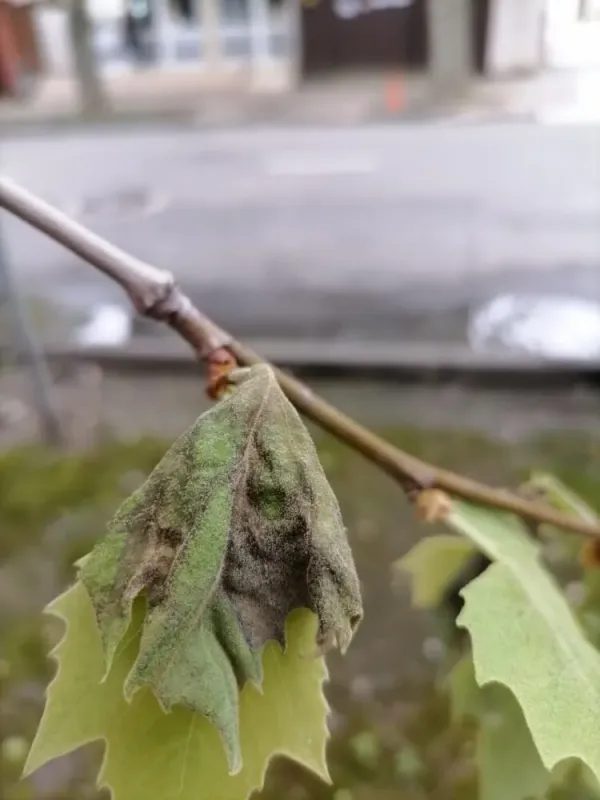
Early symptoms in spring include the browning and sudden death of expanding buds and young leaves. Foliage may appear shriveled or scorched shortly after emerging from the buds.
Twigs often develop small, sunken cankers or lesions. These cankers can eventually girdle the stem, causing the entire branch section above the lesion to wither and die back.
During summer, look for small, buff-colored fungal cushions on the underside of the leaves. These represent the active sporulation phase of the disease.
Heavy defoliation in late spring or early summer is a hallmark symptom. The tree often responds by producing a second flush of foliage, which depletes its nutrient reserves.
On older branches and trunks, chronic infections can lead to irregular growth patterns, fissured bark, and the formation of perennial cankers that weaken the tree's structure.
Pathogen
The disease is caused by the ascomycete fungus Apiognomonia platani (anamorph: Gloeosporium platani). This pathogen specifically targets Platanus species, colonizing both foliage and twigs.
The fungus overwinters primarily as mycelium in the dead twigs and fallen leaves of the host tree. When spring temperatures rise, the fungus produces spores to initiate new infections.
Spore dispersal is heavily dependent on rainfall and high humidity. Splashing water carries the spores from infected twigs to the newly emerging buds and young leaves.
Once established, the pathogen infiltrates the vascular tissues of the tree. This disrupts the translocation of nutrients and water, leading to localized dieback and systemic stress.
The fungus is capable of surviving for several years within the woody tissue, becoming active annually when environmental conditions permit, making it a chronic issue for infected trees.
Conditions for development
Plane tree anthracnose is essentially a wet-weather disease. Prolonged periods of cool, rainy, and cloudy weather during the bud-break phase are ideal for infection.
The fungus thrives at temperatures ranging from 15°C to 20°C. If this weather persists during the canopy expansion phase, the severity of the outbreak increases dramatically.
Poor airflow within the tree canopy traps humidity, allowing the fungus to flourish. Densely planted trees or those in poorly ventilated urban courtyards are highly susceptible.
Lack of sanitation allows the pathogen to accumulate in the environment. Fallen debris acts as a reservoir, providing a constant source of inoculum for the next growing season.
While the disease is widespread, host vitality plays a role. Stressed trees, whether from drought, compacted soil, or mechanical damage, are generally hit harder by the pathogen.
Why it matters
The primary concern is the significant loss of aesthetic value in urban landscape trees. Extensive defoliation creates a sparse, unhealthy appearance during the prime growing season.
Structural damage from twig dieback and branch cankers can pose a safety risk, as deadwood becomes brittle and prone to falling in public areas during wind events.
Repeated annual defoliation saps the tree's energy. This leads to a decline in growth, reduced vigor, and increased susceptibility to secondary pests and environmental stressors.
In severe cases, long-term infection can kill individual branches or contribute to the premature mortality of the entire tree, necessitating costly removals and replacements.
Management of the disease requires ongoing labor and financial investment for pruning, debris cleanup, and potential chemical applications in high-value park settings.
Protection
The most important control measure is strict sanitation. All infected twigs and fallen leaves must be removed and destroyed to minimize the overwintering inoculum.
Pruning out deadwood is essential to reduce the pathogen population within the canopy. Ensure all tools are disinfected to avoid spreading the fungus to healthy parts of the tree.
Fungicidal sprays containing copper may be used prophylactically. The timing of the first application, just as buds begin to swell, is critical for effective disease prevention.
Promoting tree health through deep watering during dry spells and appropriate fertilization helps the tree resist infection and recover from defoliation events.
- Regular monitoring of the canopy for sunken twig cankers.
- Applying mulch around the base to bury infected leaf debris.
- Selective pruning to improve air circulation and sunlight penetration.
- Consulting local arborists for timing chemical interventions.
Discussion
No discussions yet — be the first.