
Aphanomyces root rot
Aphanomyces cladogamus
Description
Symptoms
The earliest symptom is typically an overall decline in plant vigor, manifested by wilting and chlorosis of the lower leaves. This wilting often persists even after sufficient irrigation.
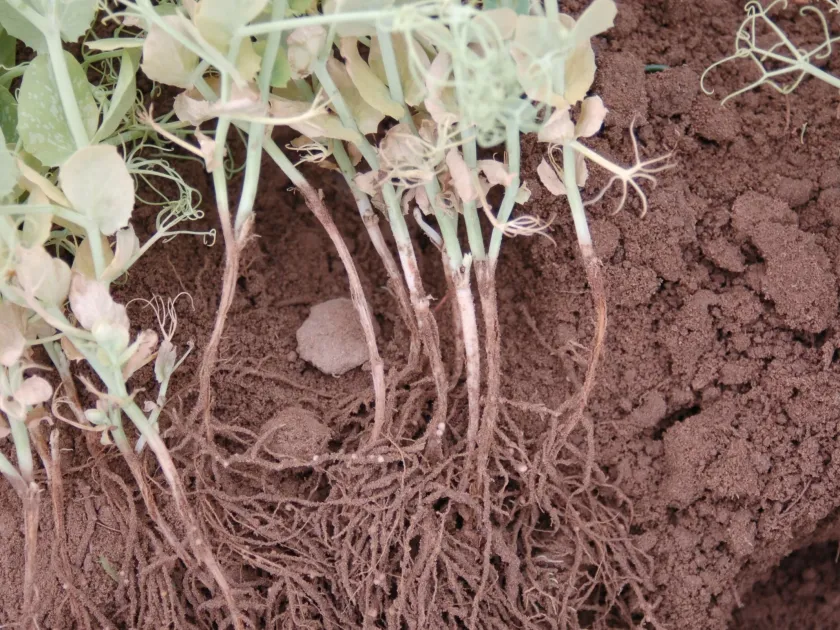
When roots are inspected, they exhibit classic signs of decay: the outer cortical tissue becomes mushy and discolored, often turning a light to dark brown shade as the rot progresses.
A distinctive feature of this infection is the separation of the root cortex from the vascular cylinder, which remains intact but unable to supply nutrients to the rest of the plant.
Seedlings infected shortly after emergence frequently show damping-off symptoms, collapsing at the soil line due to the rapid destruction of their developing root systems.
In more mature plants, the root mass is drastically reduced, leaving the plant stunted, poorly anchored, and significantly more vulnerable to environmental stresses like heat and drought.
Pathogen
The causative agent of this disease is the oomycete Aphanomyces cladogamus. As a soil-borne pathogen, it specializes in attacking the root systems of various susceptible plant species under favorable conditions.
The pathogen is highly resilient due to the production of oospores. These thick-walled resting structures allow the organism to survive in the soil for several years even in the absence of a host plant.
Infection spreads through the release of motile zoospores. These spores utilize flagella to navigate through water-saturated soil pores, actively seeking out the roots of susceptible crops.
Being an oomycete, it is taxonomically distinct from true fungi, which explains why conventional fungicides targeting chitin-based cell walls are often ineffective against this pathogen.
The biological lifecycle of Aphanomyces cladogamus is tightly linked to hydrological conditions, making it an opportunistic killer that thrives when soil oxygen levels drop due to excessive moisture.
Conditions for development
Excessive soil moisture is the primary driver of disease development. Saturated soil conditions provide the necessary medium for zoospores to swim and locate new infection sites.
Compacted, heavy clay soils with poor drainage are particularly susceptible, as they naturally retain water longer than well-aerated, sandy-loam soil structures.
Temperature plays a crucial role, with the pathogen being most active in warm, damp conditions typical of spring planting or greenhouse production environments.
High planting density contributes to the spread of the pathogen by creating a humid microclimate at the soil surface and promoting the buildup of inoculum over successive seasons.
Poor crop rotation practices significantly increase the risk, as the soil population of Aphanomyces oospores increases every time a susceptible crop is planted in the same location.
Why it matters
The economic impact of Aphanomyces root rot is severe, often resulting in significant yield loss due to stand thinning and the stunted growth of the surviving plants.
By damaging the primary root system, the disease inhibits the plant's uptake of essential water and minerals, leading to overall reduced plant health and decreased fruit quality.
The weakened root tissue is highly susceptible to colonization by secondary organisms, such as Fusarium or Pythium species, which further accelerate the plant's decline.
In the produce industry, fields infested with this pathogen may become unusable for susceptible crops, leading to long-term devaluation of land and increased management costs.
Total crop failure in specific sectors or field patches is a common outcome when environmental conditions remain conducive to the pathogen throughout the vegetative growth period.
Protection
Preventative measures are the cornerstone of managing Aphanomyces cladogamus, as eradication of the pathogen from the soil is virtually impossible once established.
Implementing a strict crop rotation schedule, avoiding the return of host crops for at least 4–6 years, is the most effective way to lower the soil inoculum level.
Improved field drainage and land leveling are critical to eliminate standing water and ensure that soil oxygen levels remain optimal for plant root health.
- Utilize high-quality, certified, and fungicide-treated seed.
- Incorporate soil amendments to enhance biological activity and drainage.
- Use beneficial microbes, such as Trichoderma species, to suppress pathogen growth.
- Monitor soil moisture levels to avoid unnecessary over-irrigation.
Chemical control is limited to specific systemic fungicides that are active against oomycetes and must be applied preventatively to protect roots during the highly susceptible seedling stage.
Discussion
No discussions yet — be the first.