
Antrodiella serpula
Antrodiella serpula
Description
Symptoms
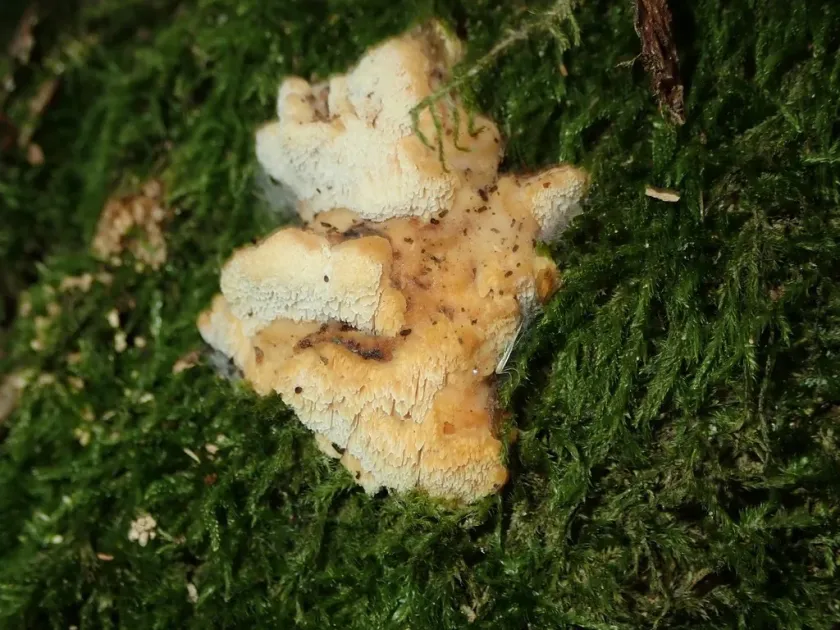
The main external manifestation of the pathogen's presence is the emergence of specific fruit bodies on tree trunks or stumps. They often appear as small, tightly pressed growths on the bark with irregular edges.
Internal changes include a change in wood color, which becomes whitish due to the active breakdown of lignin. The texture turns fibrous and brittle, losing its original strength.
In affected trees, premature drying of individual branches or the entire crown is often observed. The bark in the area where the mycelium develops may crack, exposing the damaged sections of the trunk.
When the bark is removed in the affected area, thin, spiderweb-like strands of white or slightly yellowish mycelium can be found. This indicates deep penetration of the pathogen into the cambium and sapwood.
- Appearance of creamy fruit bodies on trunks
- Whitish discoloration of the wood
- Loss of structural integrity and brittleness
- Crown drying and branch dieback
Pathogen
The causal agent is the fungus Antrodiella serpula, which belongs to the Basidiomycota division. This is a wood-decaying fungus that specializes in the decomposition of deciduous wood.
Biologically, this species is a polypore fungus that causes white rot in infected wood. It primarily acts as a saprotroph, but in certain conditions, it can exhibit pathogenic properties, weakening living trees.
The spores of the fungus spread mainly through the air, settling on damaged bark or tree cuts. Once they germinate, the mycelium penetrates deep into the tree tissues, initiating the process of breaking down lignin and cellulose.
Morphologically, the fruit bodies are characterized by a resupinate shape, often merging together, with a creamy or whitish color. The pore surface of the hymenophore is finely poroid, which serves as a diagnostic feature.
The life cycle of the fungus is closely linked to substrate moisture, where it lives a hidden vegetative life in the form of mycelium, destroying the tree structure from within over many years.
Conditions for development
Fungal development is most intense under conditions of high air humidity and moderate temperatures. The optimal range for mycelial growth is between +15 and +25 degrees Celsius.
The presence of wounds, cuts, frost cracks, and other bark damage is a critical factor for the onset of infection. The fungus is particularly active in colonizing weakened trees with impaired defense functions.
In dense, poorly ventilated stands with excessive soil moisture, the risk of spore dispersal and the formation of new infection hotspots increases significantly.
The seasonality of development correlates closely with the spring-autumn period, when rainfall provides constant moisture on the wood surface, which is necessary for spore germination.
Poor sanitary conditions in forest areas, including the presence of fallen wood and old stumps, create an ideal reservoir for maintaining the infectious background and spreading the pathogen.
Why it matters
Antrodiella serpula causes serious damage to forestry by gradually destroying wood. As a result of the fungus's activity, the commercial value of the wood decreases, rendering it unsuitable for industrial use.
The gradual degradation of the trunk leads to a loss of the tree's resistance to wind stress, which causes windthrow and windbreak. This affects the safety of forest stands and park areas.
The fungus can significantly reduce the tree's life cycle, moving it from the category of healthy trees to standing deadwood. This leads to the thinning of the stand and changes in the microclimate.
In ornamental gardening, infection by this fungus can lead to the death of valuable tree specimens, which require expensive removal and disposal of residual material.
The spread of spores from infection sites poses a threat to neighboring, still healthy trees, requiring immediate intervention upon the discovery of the first signs.
Protection
A key protection method is strict adherence to sanitary rules in forest stands. It is necessary to timely remove deadwood, windthrown trees, and infected specimens to prevent their accumulation.
An important preventive measure is the disinfection of tools after working with infected material. Fungicide solutions or alcohol-based compositions are used to prevent the transfer of spores.
When caring for trees in gardens and parks, it is recommended to timely cover cuts and wounds with special pruning sealers or protective paints. This prevents the entry of pathogenic spores into tree tissues.
The use of biological preparations that strengthen tree immunity can be considered a preventive measure in high-risk infection scenarios.
Regular monitoring of forest health allows for early detection of the fungus, which significantly simplifies the implementation of silvicultural measures and minimizes economic loss.
Discussion
No discussions yet — be the first.