
Antrodiella
Antrodiella
Description
Symptoms
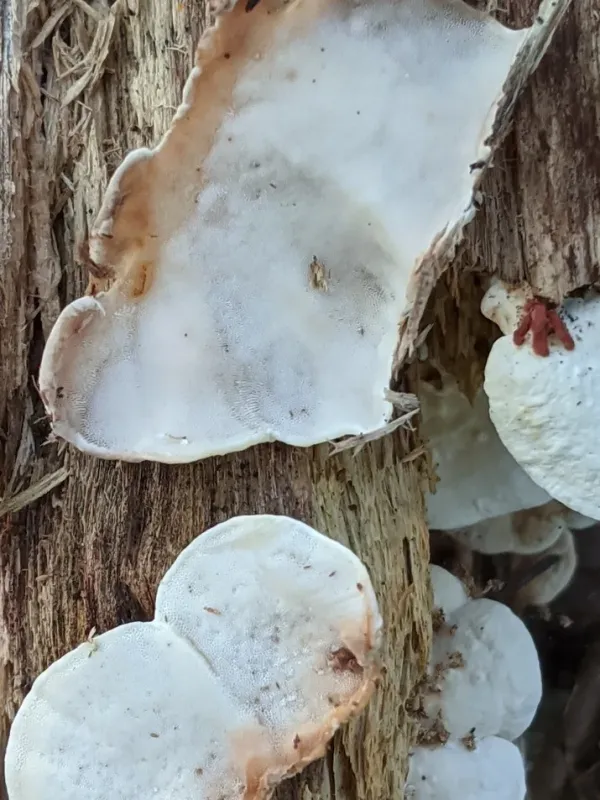
The most visible sign of infection is the emergence of fungal fruiting bodies on tree trunks, branches, or stumps. These bodies often appear in clusters, sometimes in a bracket or shelf-like arrangement.
Affected wood undergoes a significant structural change. It becomes bleached, fibrous, and soft to the touch. This decay is often hidden deep inside the wood, and only becomes visible when the outer bark is removed or when the tree sustains damage.
Trees infected with Antrodiella exhibit symptoms of overall decline, such as yellowing foliage, sparse leaf cover, and stunted twig growth. These signs indicate that the transport of water and nutrients from the roots is being severely restricted.
Loss of mechanical strength is a critical warning sign. Trees infested by the fungus often show signs of instability and are at high risk of breaking during storms or heavy winds due to the hollowed-out internal structure.
In fruit-bearing trees, one may observe poor fruit set and small, deformed yields. The tree diverts its remaining energy toward defense mechanisms, leaving little resources for reproductive or vegetative growth.
Pathogen
Antrodiella is a genus of wood-decay fungi belonging to the Phylum Basidiomycota. These fungi are primarily known for causing white rot, a process where the fungus breaks down the lignin and cellulose components of wood structure.
The pathogen spreads through the dispersal of basidiospores. Once they land on a susceptible surface, such as a wound, cut, or damaged bark, they germinate and form a mycelium that begins to colonize the interior wood tissues.
Biologically, the fungus secretes specialized enzymes capable of decomposing complex woody polymers. This process is essential for nutrient cycling in nature, but it becomes a destructive force when it targets living trees in orchards or plantations.
The fungus develops by forming fruiting bodies on the surface of the infected bark or wood. These structures are typically small, annual or perennial, and vary in color, which helps mycologists in identifying specific species within the genus.
Environmental factors dictate the lifecycle of Antrodiella. High humidity and mild temperatures allow the fungus to thrive and produce spores over extended periods, effectively securing its presence in the ecosystem.
Conditions for development
High moisture levels are a major prerequisite for the infection to take hold. Areas with poor air circulation, such as dense canopies or shaded spots, provide a stable environment for spore germination.
Mechanical injuries are the primary entry point for the pathogen. Fresh pruning cuts, frost cracks, and sunscalds serve as ideal portals for infection. If these wounds are not protected, the risk of fungal colonization increases significantly.
Temperatures between 18°C and 25°C are optimal for fungal growth. While the fungus may go dormant during colder months, it remains viable within the wood tissue, ready to resume activity as soon as conditions improve.
Neglected landscapes containing stumps, fallen logs, or piles of woody debris act as reservoirs for Antrodiella spores. These sites allow the fungus to establish a permanent presence, posing a threat to surrounding healthy vegetation.
Stressed trees, whether due to drought, nutritional deficiencies, or pest infestations, have weaker immune responses. Such plants are significantly more susceptible to successful colonization compared to healthy, vigorous trees.
Why it matters
The primary threat of Antrodiella is the irreversible structural decay of woody plants. As the fungus consumes the heartwood, the tree's internal support system fails, leading to the eventual death of the organism.
The presence of this fungus on a tree poses a safety risk, as decay significantly increases the chance of trunk or branch failure. This can cause property damage or pose a danger to individuals in public spaces or gardens.
Economic losses in agriculture and forestry are substantial. Fruit tree orchards may require removal and replanting of entire blocks, while forest managers face losses in timber value due to internal rot and weakened wood quality.
The fungus disrupts vital physiological functions, including nutrient and water translocation. Even if the tree receives adequate irrigation, the damage to the xylem results in dehydration and gradual dieback of the canopy.
Furthermore, an infected tree serves as a continuous source of spores that can infect neighboring healthy specimens. If left unmanaged, a localized outbreak can rapidly escalate into a widespread health crisis for the entire orchard.
Protection
Sanitation is the most effective control measure. All infected wood must be pruned, removed, and burned or disposed of far from the growing area to eliminate the source of spores.
Proactive wound management is essential. All cuts made during pruning should be treated with appropriate fungicides or wound paint to create a physical barrier against spore infiltration.
Maintaining high horticultural standards helps prevent infection. Ensuring trees are well-watered, properly fed, and managed for pests strengthens their natural defenses against wood-decay pathogens.
Regular inspections of tree trunks and bases are necessary to catch early signs of decay. Early detection allows for targeted pruning or treatment, which can save the affected tree and prevent the spread of the disease.
While chemical control is generally reserved for prevention, systemic fungicides may be used in specific cases to protect high-value trees. Always follow manufacturer labels and safety guidelines to ensure efficacy and environmental protection.
Discussion
No discussions yet — be the first.