
Amaurodon viridis
Amaurodon viridis
Description
Symptoms
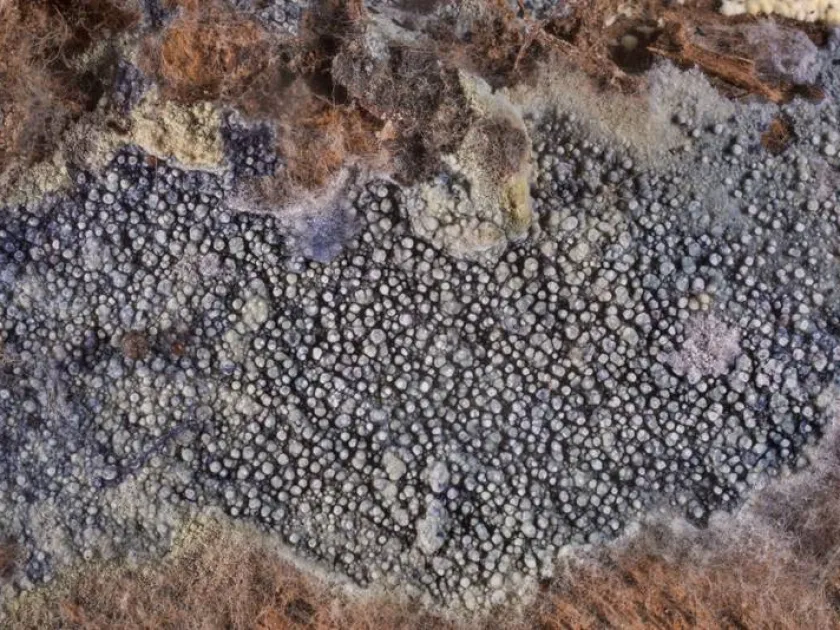
The most visible sign of Amaurodon viridis is the presence of a velvety, vivid green or turquoise coating on the lower parts of tree trunks or on exposed roots. This mycelial growth may eventually thicken into a crust-like structure.
Wood tissue affected by the fungus undergoes progressive softening. The structural integrity of the timber is compromised as the fungus decomposes the woody fibers, leading to a state of decay often referred to as rot.
Bark cracking and localized necrosis are common symptoms near the site of infection. As the fungus consumes the underlying wood, the bark may lose its attachment and begin to peel away.
In advanced stages, affected trees show signs of general vigor loss. This includes chlorosis of the foliage, premature leaf drop, and the gradual drying out of smaller branches in the crown.
Diagnosis requires a close inspection of the base of the trunk. Because the fungus often hides under leaf litter or within crevices, thorough examination is necessary for early detection of the pathogen.
Pathogen
Amaurodon viridis is a corticioid fungus belonging to the family Thelephoraceae. It is primarily known for its role as a wood-decaying organism that thrives on decaying organic matter in forested environments.
The fungus is characterized by the production of a distinctive bright green or turquoise mycelium, which is a key diagnostic feature for field identification. This pigmentation is due to specific fungal secondary metabolites.
As a basidiomycete, it forms resupinate fruit bodies that adhere tightly to the bark or dead wood surface. While typically saprotrophic, it can colonize living trees that have been weakened by environmental stress or physical trauma.
The biological cycle involves the production of basidiospores that are dispersed by wind and water. These spores germinate on moist substrates, initiating the growth of a new mycelial network that degrades lignin and cellulose.
Research into this fungus highlights its niche within forest ecosystems. It contributes to the natural turnover of forest debris, yet in managed timber stands, it can become a significant factor affecting wood quality.
Conditions for development
High moisture levels are the most critical factor for the development of Amaurodon viridis. Periods of high rainfall, fog, or persistent soil saturation provide the necessary hydration for the fungus to colonize wood.
Shaded areas within a forest or park are prime habitats. Lack of direct sunlight prevents the wood from drying out, maintaining the high humidity levels required for the survival and spread of the mycelium.
Accumulation of coarse woody debris and leaf litter around the base of trees acts as a reservoir for the fungus. These materials hold moisture and allow the pathogen to persist even during shorter dry spells.
Moderate temperatures are ideal for rapid fungal expansion. While the fungus is resilient to colder conditions, its most active periods occur during the spring and autumn months when rainfall is frequent.
Densely planted forests restrict airflow and decrease sunlight penetration to the ground. This creates a microclimate with high humidity that effectively encourages the growth of fungal colonies.
Why it matters
The primary harm caused by Amaurodon viridis is the degradation of wood quality and structural strength. This leads to an increased risk of stem breakage, particularly during wind events, which can be devastating for timber production.
By attacking the sapwood and heartwood, the fungus disrupts the plant's ability to transport water and nutrients. This physiological stress reduces the overall vitality of the tree, making it susceptible to further decline.
Trees weakened by this fungus are significantly more attractive to secondary pests, such as wood-boring insects. These insects exploit the softened wood, further accelerating the decay process and tree mortality.
In urban forestry and public parks, the presence of the fungus reduces the aesthetic appeal of the trees. The bright green patches are a clear indicator of a compromised and potentially hazardous tree.
Infection can spread through wind-borne spores, creating clusters of diseased trees. Without intervention, these localized outbreaks can expand, impacting the overall health and economic value of the forest stand.
Protection
Sanitation is the most effective management approach. Prompt removal and disposal of heavily infected trees and accumulated woody debris are essential to reduce the spore load in the environment.
Thinning and pruning practices that increase light penetration and air circulation around the trunk base can help dry out the environment, making it less favorable for the fungus.
Protecting trees from mechanical injury is crucial. Wounds on the trunk caused by equipment or human activity serve as entry points for fungal spores to infect the tree.
In ornamental settings, chemical treatments using copper-based fungicides or appropriate systemic agents can be used to inhibit mycelial expansion on early-stage infection sites.
- Regular monitoring of tree health and base condition.
- Sterilization of pruning tools to prevent cross-contamination.
- Improved site drainage to prevent soil saturation.
- Selection of resistant tree species for new plantings.
Discussion
No discussions yet — be the first.