
Amaurodon cyaneus
Amaurodon cyaneus
Description
Symptoms
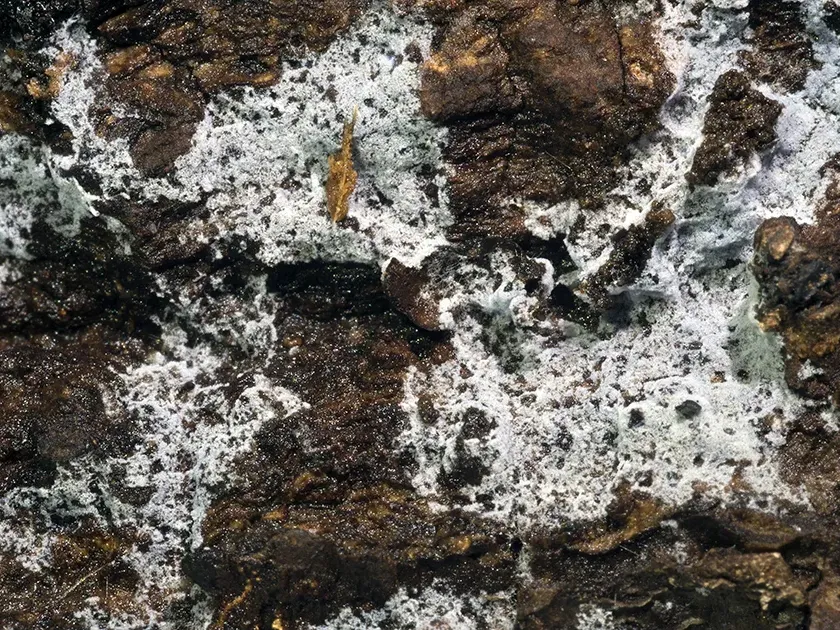
The most diagnostic feature of an infection is the emergence of a vivid blue or blue-green mycelial crust on the surface of the bark or exposed wood.
Upon removing the bark, one can observe deep blue staining in the underlying cambium and sapwood, indicating extensive colonization.
Infected wood fibers often exhibit signs of structural degradation, becoming softer and losing the hardness typical of healthy woody tissue.
As the fungal growth progresses, the colonized areas may become necrotic, leading to cracks, hollows, or the detachment of the bark.
- Vibrant blue or blue-green surface mycelium.
- Deep blue discoloration of internal wood layers.
- Increased fragility and loss of wood density.
- Bark peeling in areas of active mycelial growth.
- Formation of sunken necrotic lesions on the trunk.
Pathogen
The disease is caused by the basidiomycetous fungus Amaurodon cyaneus, a species known for its wood-decaying properties in forest ecosystems.
This organism functions as a decomposer, utilizing specific enzymatic pathways to break down complex lignocellulosic structures within wood tissues.
The fungus is characterized by the production of distinctive blue pigments, which are deposited within the fungal hyphae and penetrate the host tissue.
Its life cycle involves the production of spores that are easily dispersed through environmental factors like wind, water, or vector insects.
As a saprotrophic or opportunistic pathogen, it primarily colonizes decaying, damaged, or physiologically stressed wooden surfaces.
Conditions for development
Optimal growth for Amaurodon cyaneus is achieved in environments with consistently high relative humidity and moderate temperatures.
The fungus thrives in shaded areas where the lack of direct solar radiation maintains the moisture levels required for its development.
Mechanical injuries, such as frost cracks, wounds from maintenance equipment, or insect boring, provide essential entry points for the pathogen.
Dense planting structures that restrict air circulation create microclimates that are highly conducive to the spread and germination of spores.
Weakened trees, suffering from environmental stress or poor nutrition, are significantly more vulnerable to colonization by this opportunistic fungus.
Why it matters
The primary economic impact involves the degradation of wood quality, rendering affected timber unsuitable for commercial use.
Structural damage caused by the fungus significantly increases the risk of windthrow, which can result in the loss of entire tree stands.
Infection impairs the physiological efficiency of the tree by disrupting water and nutrient transport through the xylem and phloem tissues.
The presence of the fungus acts as a persistent inoculum source, endangering neighboring healthy trees within the forest or nursery.
Severe colonization can lead to the mortality of individual trees, especially if the fungal growth reaches the root collar or critical support structures.
Protection
Strict forest hygiene is the foundation of management; removing dead or diseased wood minimizes the potential spore load in the area.
Preventive measures include protecting tree trunks from mechanical injury during forestry or landscaping activities to prevent fungal entry.
Adequate spacing and proper silvicultural practices improve airflow, which helps keep the trunk surface drier and less hospitable to fungi.
Monitoring programs focusing on the early detection of blue staining on bark allow for the swift isolation and removal of infected wood.
While chemical control is rarely practical for large-scale forest stands, fungicidal applications may be considered for high-value ornamental trees.
Discussion
No discussions yet — be the first.