
Amauroderma rude
Amauroderma rude
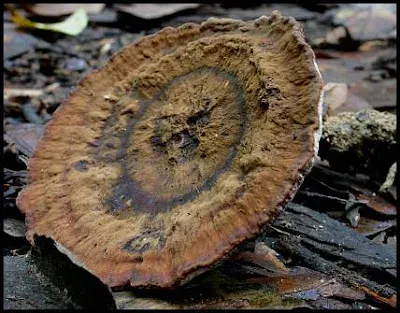
Description
Symptoms
Diagnosis of Amauroderma rude is often challenging because the initial damage occurs below ground. Visible symptoms usually appear only after the root system has suffered significant structural degradation.
Common indicators include premature yellowing or wilting of the foliage and a marked reduction in annual shoot growth. Affected trees often show signs of overall decline and reduced vigor.
The presence of mushroom-like fruiting bodies at the base of the trunk is a definitive sign of infection. These fungi often feature a stem that penetrates deep into the soil to reach decaying roots.
If the bark at the root collar is removed, one may observe mycelial mats or mats of fungal hyphae. The underlying wood typically shows signs of white rot, appearing bleached and fibrous.
Windthrow is a frequent end-stage symptom. As the roots lose their ability to anchor the tree securely in the soil, even moderate winds can cause large trees to topple suddenly.
Pathogen
Amauroderma rude is a basidiomycete fungus belonging to the Ganodermataceae family. It is a well-known wood-decaying pathogen that primarily affects the root systems and root collars of various woody plants.
The fungus produces leathery, brown fruiting bodies that often emerge from the soil near the base of infected trees. These structures are integral to the fungus’s reproductive cycle, releasing spores that can travel via wind or water.
Infection primarily occurs through root-to-root contact in dense forest stands, where the fungal mycelium spreads from decayed wood or infected hosts to healthy neighbors.
Once established, the pathogen colonizes the tissues, breaking down structural components of the wood such as lignin and cellulose. This process weakens the host tree, making it vulnerable to collapse.
The organism is a facultative parasite, meaning it thrives as a saprotroph on dead organic matter. This versatility allows it to persist in the forest soil for many years, even without a living host present.
Conditions for development
The development of Amauroderma rude is closely linked to soil moisture levels. The pathogen thrives in areas with poor drainage or high humidity, which create optimal conditions for mycelial growth.
Forest stands with high planting density are particularly susceptible because the interconnected root systems facilitate the rapid spread of the fungus from tree to tree.
Mechanical damage to roots caused by logging equipment, animals, or soil-borne pests creates entry wounds that the fungus readily colonizes, significantly increasing the risk of infection.
Moderate temperatures and consistent moisture are essential for the production of spores and the vigorous expansion of the fungus. Climate variations that keep the soil moist for longer periods tend to increase disease pressure.
The accumulation of stumps and coarse woody debris in the forest serves as a long-term reservoir for the pathogen, allowing it to survive and propagate regardless of the presence of living trees.
Why it matters
The primary impact of this fungus is the destruction of the root system, which disrupts the tree’s water and nutrient uptake. This eventually leads to the tree’s death due to physiological drought.
Amauroderma rude causes intense white rot, which degrades the wood structure, rendering the timber commercially worthless. The structural failure of the trunk and roots poses significant safety risks in forest areas.
The formation of canopy gaps resulting from tree death alters the forest ecosystem and microclimate. This leads to a decrease in the overall productivity and economic value of the forest stand.
Weakened trees become susceptible to secondary infestation by bark beetles and other wood-boring insects. This compounding effect accelerates the decline of the forest and complicates management efforts.
Economic losses are substantial, stemming from the need for sanitary logging, site clearing, and the long-term impact on timber yield and forest regeneration strategies.
Protection
Preventive strategies include the selection of resistant species during forest regeneration and avoiding overly dense plantings. Promoting diverse ecosystems can help mitigate the risk of rapid disease spread.
Effective management requires regular forest health monitoring to detect infection centers early. Infected trees should be removed promptly, including the root systems, to eliminate sources of inoculum.
Minimizing mechanical injury to trunks and root collars during forestry operations is crucial, as any physical wound serves as a potential infection point for the fungal spores.
The use of biological control agents, such as antagonistic fungi applied to the soil, has shown potential in suppressing the mycelial spread of the pathogen in managed areas.
In cases of severe infestation, stump removal and trenching around affected areas are recommended to physically isolate the fungus and prevent it from reaching healthy root systems in the vicinity.
Discussion
No discussions yet — be the first.