
Amarenomyces leaf spot
Amarenomyces ammophilae
Description
Symptoms
The primary symptom of this fungal infection is the appearance of small, irregular dark spots on the leaves and stems of marram grass. Over time, these lesions expand and coalesce, leading to significant chlorosis and tissue necrosis.
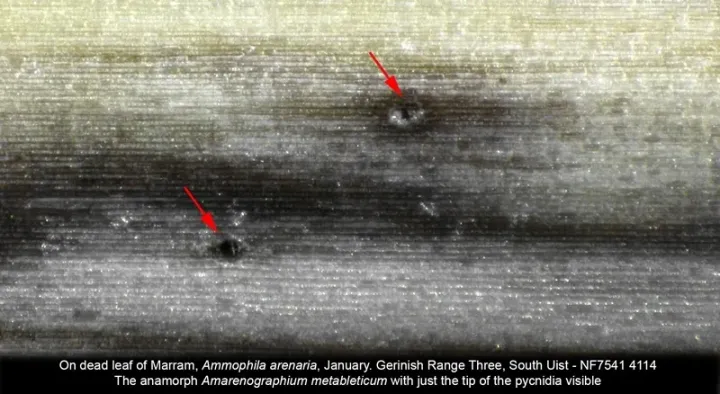
Microscopic inspection reveals the presence of pycnidia, appearing as tiny black fruiting bodies embedded within the necrotic tissue. These structures are essential for the production and dispersal of fungal spores.
As the infection progresses, the leaves turn yellow and eventually die back. This process severely impacts the plant's ability to photosynthesize, leading to stunted growth and reduced vigor.
In cases of severe infestation, the foliage becomes brittle and may collapse, significantly affecting the plant's structural integrity. The damage often mimics drought stress, making early diagnostic inspection crucial.
The fungus primarily targets the aerial portions of the plant, disrupting both the vascular pathways and the external protective layer of the epidermal cells.
Pathogen
The causal agent is the ascomycetous fungus Amarenomyces ammophilae. This specialized pathogen is highly adapted to infecting species of the genus Ammophila, commonly known as marram or beach grass.
The fungus completes its life cycle by producing spores that are easily disseminated by wind, rain splashes, and contact with surrounding plants. It persists in the environment as dormant mycelium in dead plant debris.
Upon infection, the fungal hyphae penetrate the plant tissues, secreting enzymes that break down cell walls to facilitate nutrient uptake. This creates a parasitic relationship that stresses the host plant.
The pathogen is capable of surviving through unfavorable seasons within the host's residue, ensuring a reservoir of infection remains for the following growth cycle.
Biological interactions between the fungus and the marram grass host are complex, often varying based on the health status of the grass and prevailing environmental conditions.
Conditions for development
Favorable conditions for the development of Amarenomyces ammophilae include high relative humidity and moderate temperatures. The pathogen thrives during damp spring weather and rainy spells in the early summer.
Poor airflow, often caused by dense planting or sheltered locations, creates a microclimate that prevents foliage from drying out, which is a critical requirement for spore germination.
The optimal temperature range for mycelial growth typically lies between 15°C and 22°C. While extreme heat may suppress the fungus, it rarely eliminates the population entirely.
Plants suffering from nutrient deficiencies or physical stressors are significantly more susceptible to infection. The integrity of the leaf cuticle can be compromised, allowing easier entry for fungal hyphae.
Extended periods of leaf wetness are essential for the successful infection process, making rainy, overcast conditions the most dangerous for the plant population.
Why it matters
The primary concern regarding this disease is the reduction in the sand-stabilizing capacity of marram grass. Since this plant is vital for dune conservation, disease-related dieback can lead to increased wind erosion.
Damage to the root system is a secondary effect of heavy foliar infection, as the plant loses the energy reserves necessary for deep root development and rhizome expansion.
Large-scale outbreaks can result in significant gaps in dune vegetation, causing a ripple effect on the local ecosystem and reducing biodiversity in coastal habitats.
The economic impact is linked to the cost of re-planting and the loss of natural barriers against storm surges or coastal shifts, which are normally mitigated by healthy grass cover.
Weakened plants are often unable to compete with invasive species, further exacerbating the degradation of the coastal environment following an Amarenomyces outbreak.
Protection
Effective management begins with proper sanitation practices. Regularly removing and destroying infected plant debris reduces the primary inoculum source for the next season.
Improving air circulation around the plants through thinning or proper spacing can significantly reduce the risk of infection. Avoiding excessive moisture and nitrogen application is also recommended.
- Clearance of dead grass and debris in autumn.
- Promotion of good air circulation in planting zones.
- Application of fungicides if necessary in managed sites.
- Regular monitoring of populations during high humidity periods.
In nursery settings, systemic fungicides may be used to suppress fungal activity. However, preventative measures focusing on environmental management are preferred for wild or semi-wild areas.
Breeding and selecting resilient genotypes of marram grass is the most sustainable long-term solution for managing Amarenomyces ammophilae in coastal protection projects.
Discussion
No discussions yet — be the first.