
False death cap
Amanita citrina
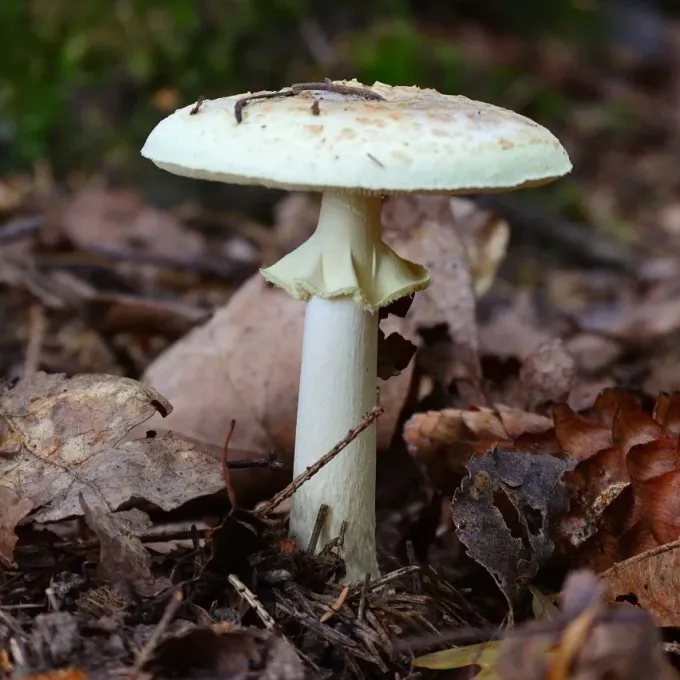
Description
Pathogen
The false death cap (Amanita citrina) is not a plant disease or a phytopathogen. It is a basidiomycete fungus that primarily lives in symbiosis with trees.
Biologically, it is classified as a mycorrhizal fungus, meaning it forms a mutually beneficial relationship with the root systems of various plant species.
The mycelium of the fungus develops in the soil and leaf litter. It does not penetrate the tissues of agricultural plants or act as a parasitic organism.
Finding this fungus in a garden environment is a sign of high soil biological activity rather than a sign of an ongoing infection or agricultural disease.
Because it lacks the ability to harm cultivated plants, it should not be categorized under crop diseases or pathogens in an agronomic database.
Conditions for development
The development of Amanita citrina requires specific conditions, primarily acidic soils and high humidity levels during the growing season.
The fungus is typically found in wooded areas or mature gardens where it can establish connections with host tree roots, such as oak or pine trees.
Optimal conditions include mild temperatures and a thick layer of organic matter, which serves as a protective layer for the fungal mycelium.
The fungus is highly dependent on environmental stability and does not thrive in typical tilled agricultural fields that lack permanent tree root systems.
Fluctuations in moisture levels significantly affect the appearance of fruiting bodies, which usually emerge during the late summer and autumn months.
Why it matters
Amanita citrina causes no damage to crops, vegetables, or ornamental plants. It is considered an ecologically neutral species in agricultural settings.
The main risk associated with this fungus is its potential toxicity if consumed by humans or animals, as it contains bufotenine and other compounds.
It does not deplete soil nutrients to the detriment of crops; instead, it aids in the breakdown of organic matter, contributing to soil health.
Agronomists should note that there is no recorded evidence of Amanita citrina causing yield loss or physiological damage to agricultural crops.
Misidentifying this fungus as a plant disease may lead to unnecessary chemical treatments that harm the soil microbiome and disturb the ecological balance.
Protection
There are no control measures required for Amanita citrina, as it does not pose a threat to plant cultivation or agricultural yields.
If the appearance of fruiting bodies is deemed undesirable for visual reasons, manual removal of the mushrooms is the most effective and safe approach.
To prevent the growth of fungal structures, one should maintain good soil drainage and avoid excessive water accumulation in shaded areas of the garden.
The application of fungicides is strongly discouraged, as such chemicals are ineffective against this specific fungus and may negatively impact beneficial organisms.
- Manual removal of fruiting bodies.
- Improvement of soil aeration and drainage.
- Management of organic debris in the garden.
- Avoidance of unnecessary chemical interventions.
Discussion
No discussions yet — be the first.