
Alternaria leaf spot
Alternaria tenuissima
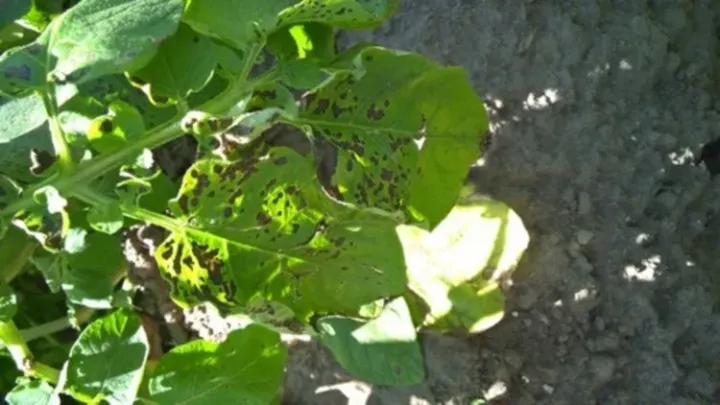
Description
Symptoms
The initial symptoms are small brown spots that gradually increase in size. A distinctive characteristic is the zonate pattern within the spots, often resembling a target.
Infection typically begins on lower leaves, gradually spreading upward to stems and fruit. Inside the spots, tissues may dry out, crack, and fall away, creating perforations.
In high humidity, a velvety, olive-black fungal growth appears on the spot surfaces. This represents active sporulation, which serves as a source for secondary infection cycles.
On fruits, the disease manifests as sunken dark lesions that quickly expand, leading to decay and rendering the product unsuitable for marketing.
Stem lesions appear as dark necrotic stripes, which can cause premature wilting, lodging of plants, or total collapse of the stems.
Pathogen
The causative agent of the disease is the imperfect fungus Alternaria tenuissima, belonging to the genus Alternaria. This is a widespread pathogen capable of infecting a broad range of crops and wild plants.
The fungus survives in soil, on plant debris, and within seeds as mycelium or conidia. The infection exhibits high resilience, making it persistent within crop rotations.
Pathogen spores are dispersed via wind, raindrops, and insect vectors. During development, the fungus produces dark, multi-celled conidia that easily detach and spread to healthy tissues.
The disease is classified as dry leaf spot or tissue necrosis. The pathogen can attack plant organs at any stage of development, from germination to harvest maturity.
The biology of Alternaria tenuissima is closely linked to its ability to rapidly colonize weakened or aging plant tissues, facilitating quick infection spread.
Conditions for development
Optimal conditions for fungal development involve moderate temperatures ranging from +20°C to +28°C. The pathogen is highly dependent on high relative humidity.
Frequent rainfall, heavy dew, and fog create ideal conditions for spore germination and active penetration into stomata or mechanical tissue wounds.
Poor lighting and dense plant canopy, resulting in limited air circulation, promote a microclimate that accelerates the progression of the infectious process.
Plants under stress—due to nutrient deficiencies, poor irrigation management, or pest damage—are significantly more susceptible to fungal attack.
The disease intensity often peaks in the second half of the growing season as plants naturally lose their resistance during the tissue senescence phase.
Why it matters
The harmfulness of the disease lies in the drastic reduction of the photosynthetic leaf area. This hinders metabolic processes, leading to overall plant decline and yield loss.
Severe infection causes premature leaf drop, which critically affects fruit and seed filling, resulting in reduced weight and poor qualitative properties.
For vegetable and fruit crops, the disease makes the produce unsuitable for long-term storage due to rapid necrotic rot development.
Economic damage includes direct yield loss, which can reach 30-50% during epiphytotic years, and increased costs associated with frequent fungicide applications.
Additionally, Alternaria tenuissima may produce mycotoxins that decrease the nutritional value of the product and pose potential health risks to consumers.
Protection
Effective management relies on strict crop rotation, excluding susceptible species for 3-4 years. Thorough disposal of infected crop residues is mandatory.
Using resistant cultivars and planting only healthy, fungicide-treated seeds can significantly lower the primary infection pressure on the field.
Optimizing plant spacing and proper fertilization promote air circulation, which prevents excessive humidity in the plant canopy and inhibits fungal growth.
During the growing season, applying contact or systemic fungicides is essential upon observing the first signs. Rotating active ingredients is key to preventing fungicide resistance.
- Regular monitoring of crop health.
- Balanced potassium-phosphorus fertilization to enhance immunity.
- Effective management of insect pests that damage tissue.
Discussion
No discussions yet — be the first.