
Sesame alternaria leaf spot
Alternaria sesami
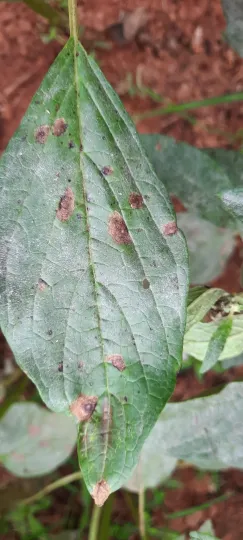
Description
Symptoms
Symptoms of the disease typically appear as small, brownish-black lesions on the cotyledons and leaves of young seedlings. As the infection progresses, these spots expand, often displaying a characteristic concentric pattern that resembles a target.
On stems and petioles, the disease manifests as elongated, dark-brown lesions that can lead to stem breakage and lodging. In conditions of high humidity, an olive-black velvety layer of spores (conidia) covers the necrotic spots.
Severe infestations cause premature yellowing, drying, and widespread defoliation of the plant. If young seedlings are infected, they often wither and die before developing their first true leaves.
The fungus also affects the sesame capsules, causing sunken dark lesions that penetrate the tissue, resulting in shriveled seeds and reduced germination rates. The pathogen can be carried internally within the seeds.
The primary diagnostic marker is the development of distinct dark halos around the infected tissue, which clearly demarcates the fungal lesion from the healthy leaf area.
Pathogen
The causal agent of this disease is the fungus Alternaria sesami, a member of the Pleosporales order. It is a highly specialized pathogen primarily attacking plants within the Sesamum genus.
The pathogen disseminates via conidia, which are easily transported by wind, rain splashes, and insects. It can survive in soil, on infected crop debris, and within the seed coat, making it a persistent threat.
The fungal life cycle involves prolific production of conidia that serve as a source of secondary infection throughout the growing season. The mycelium invades plant tissues through stomata or mechanical wounds on the leaf surface.
The pathogen is well-adapted to various climatic conditions where sesame is cultivated, allowing it to remain viable in the soil for several years in the absence of a host.
The organism shows potential for high genetic variability, necessitating the integration of multiple control strategies to prevent the development of resistant fungal strains.
Conditions for development
Warm and humid weather conditions are most conducive to the rapid spread of Alternaria sesami. The optimal temperature range for spore germination is between +20°C and +28°C.
Frequent rainfall, high humidity, and prolonged morning dew provide the necessary moisture on the leaf surface for the fungus to penetrate the host tissue. Such conditions are critical for the onset of an epidemic.
High-density plantings that restrict airflow increase the humidity within the canopy, creating a microclimate that significantly facilitates the rapid expansion of the disease.
Plants weakened by poor soil fertility, drought, or nutrient deficiencies are significantly more susceptible to infection compared to vigorous, well-nourished plants.
Agricultural practices that promote excessive nitrogen fertilization can cause succulent growth, making the plants more vulnerable to the entry and spread of the fungal mycelium.
Why it matters
The economic impact is primarily due to the reduction of the leaf surface area, which impairs photosynthesis and leads to stunted growth and reduced yields. Affected plants exhibit significantly lower vigor.
Infection of the capsules leads to the production of lightweight, shriveled, and low-quality seeds, which reduces the overall oil yield per hectare and compromises market value.
Seedlings derived from infected plants often exhibit poor germination energy and low survival rates, which disrupts plant population density in the following season.
Under favorable disease conditions, losses in sesame production can range from 30% to over 50%. The disease complicates harvesting, as weakened plants are prone to premature pod shattering.
The indirect costs include increased investments in chemical control agents, which are essential to mitigate losses during severe outbreak years.
Protection
The first line of defense is the use of disease-free, high-quality seeds. If infected seeds are suspected, chemical seed treatment with systemic fungicides is highly recommended.
A rigorous crop rotation system, avoiding planting sesame in the same field for at least 3–4 years, is crucial to breaking the life cycle of the Alternaria sesami pathogen.
- Deep plowing and removal of crop residue to reduce the primary inoculum load.
- Proper spacing between rows to improve ventilation and reduce canopy humidity.
- Balanced nutrient management, particularly focusing on potassium, to boost plant immunity.
- Application of approved foliar fungicides at the first sign of symptoms, particularly during flowering.
Regular scouting of the field is vital; early detection allows for timely intervention, preventing the spread of the pathogen from the initial foci to the rest of the crop.
Discussion
No discussions yet — be the first.