
Passiflora leaf spot
Alternaria passiflorae
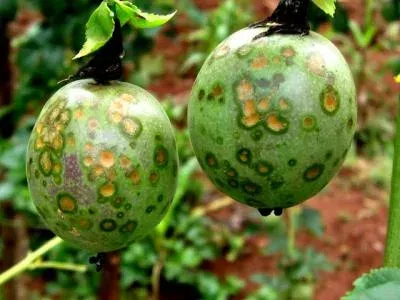
Description
Symptoms
The initial symptoms appear as small, circular, reddish-brown spots on leaves that gradually expand into larger lesions with concentric rings.
Stem lesions manifest as elongated, dark-colored ulcers that can girdle the stems, leading to severe dieback of the affected branches.
On the fruit, the disease causes sunken, dark-colored spots that often lead to premature fruit drop and significant decay of the harvest.
Under humid conditions, an olive-black fuzzy growth consisting of fungal spores becomes visible in the center of the lesions.
- Yellowing of leaves surrounding the infection sites.
- Rapid defoliation of the vine under high infection pressure.
- Cracking of stems in areas where ulcers have penetrated deep into the tissue.
Pathogen
The disease is caused by the fungus Alternaria passiflorae, which is a specialized plant pathogen that primarily attacks passion fruit vines.
This fungus produces spores called conidia that are easily dispersed by wind, rain splashes, and human activity within the planting area.
The pathogen is capable of surviving for long periods on infected plant debris, including fallen leaves and stems, acting as a source for new infections.
It acts as a parasite by colonizing host tissues, secreting toxins that break down plant cells and creating the characteristic necrotic spots.
The biological cycle of the fungus is strictly dependent on environmental moisture, which is required for spore germination and colonization.
Conditions for development
High humidity and temperatures ranging between 20°C and 28°C provide the ideal environment for the rapid development of Alternaria infections.
Frequent rainfall or overhead irrigation systems that keep foliage wet for extended periods are major contributors to the spread of the disease.
Densely planted vines that lack proper airflow prevent leaves from drying quickly, creating a perfect microclimate for the pathogen to thrive.
Physical injuries to the vine caused by pests, hail, or improper handling provide easy entry points for the fungal mycelium.
Poor drainage in the field can also increase overall humidity around the plants, worsening the severity of the outbreak during the rainy season.
Why it matters
The primary impact of the disease is the reduction of the leaf area available for photosynthesis, which drastically weakens the vine's health.
Heavy infections can lead to premature leaf drop and the loss of developing fruit, causing major yield reductions in commercial operations.
Infected fruit often loses its marketability due to unsightly lesions, which also makes them more susceptible to secondary bacterial infections.
Chronic infection can lead to the systemic decline of the vine, making it unable to support robust growth or future production cycles.
Economic losses include not only the loss of yield but also the increased costs associated with repeated fungicide applications and plant replacement.
Protection
Sanitation is the first line of defense; farmers must prune and remove all infected plant parts and destroy them away from the field.
Application of fungicides such as copper-based products or mancozeb can effectively manage the disease when applied at the first sign of symptoms.
Pruning strategies should aim to improve light penetration and air circulation throughout the vine canopy to reduce moisture retention.
Adopting proper spacing between plants is essential to manage canopy density and lower the humidity around the leaves.
The use of resistant cultivars and maintaining overall plant vigor through balanced fertilization helps minimize the impact of the disease.
Discussion
No discussions yet — be the first.