
Alternaria black spot
Alternaria eureka
Description
Symptoms
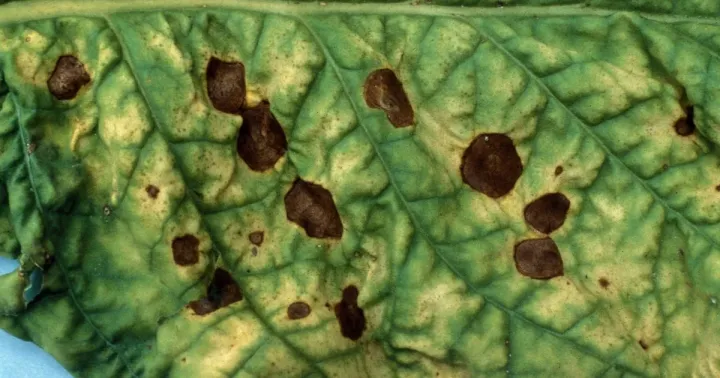
Symptoms typically manifest as small, dark brown or black necrotic lesions on the leaves, stems, and pods. These spots often develop characteristic concentric rings, often referred to as a "target-spot" appearance.
Under high humidity, the affected areas become covered in a dark, velvety layer of sporulation. This mass of spores is a definitive sign of the fungus's active reproductive phase on the plant surface.
On pods, the infection leads to sunken lesions. As these spots grow and coalesce, they cause the pods to weaken and eventually shatter prematurely, leading to significant seed loss before harvest.
Seedlings infected by A. eureka often show damping-off symptoms, resulting in distorted leaves and poor germination rates. This can lead to significant gaps in the field stand early in the season.
Advanced stages of the disease result in premature senescence of the entire leaf, which drastically reduces the plant's ability to photosynthesize and store energy for seed development.
Pathogen
The disease is caused by the fungus Alternaria eureka, a pathogen frequently associated with cruciferous crops. It is a filamentous fungus that reproduces via asexual spores known as conidia, which are highly efficient at dispersal.
The fungus is a facultative parasite, meaning it can survive as a saprophyte on decaying plant matter. It remains in crop debris, ensuring its survival across multiple seasons until a suitable host is available.
Transmission occurs primarily through wind, splashing rain, and mechanical contact. Once landing on a susceptible leaf or pod, the conidia germinate, and the mycelium invades the epidermal tissue using specific enzymes.
Alternaria eureka is particularly known for its ability to produce phytotoxins that weaken the plant's physiological defenses, allowing for rapid colonization of host tissues during the reproductive stage.
The pathogen's life cycle is tightly regulated by the host plant's growth stage, often reaching peak activity during the maturation of leaves and pods, when the plant is most vulnerable to yield loss.
Conditions for development
The development of black spot is heavily dependent on moisture. High relative humidity (above 80%) and temperatures between +18°C and +25°C provide the optimal conditions for spore germination and infection.
Persistent rainfall, heavy dews, and foggy conditions accelerate the disease spread. In contrast, dry weather significantly inhibits the pathogen's ability to propagate and infect new host tissues.
Poor field hygiene, specifically leaving untreated crop residue from the previous season, serves as a major source of primary inoculum, leading to early season infection cycles.
Plants suffering from nutrient stress, particularly nitrogen imbalance or pest damage, exhibit increased susceptibility to A. eureka, as damaged tissue provides easier entry points for the fungal mycelium.
High planting density contributes to the microclimate favorable for the fungus, as it reduces air circulation and traps moisture within the plant canopy for extended periods.
Why it matters
The primary harm caused by Alternaria eureka is the quantitative and qualitative reduction in yield. By damaging photosynthetic tissues, the fungus hinders the plant's ability to fill the seeds properly.
Premature pod shattering is one of the most severe economic impacts, as it causes direct loss of grain into the soil before mechanical harvesting can take place, often resulting in 20-50% yield reduction.
Infected seeds exhibit reduced germination energy and vitality. Furthermore, the oil content and overall seed quality are negatively affected, making the crop unsuitable for commercial use.
The pathogen acts as a persistent threat in agricultural systems, as it can survive in the soil or on weeds, necessitating continuous efforts to manage the inoculum levels through costly chemical interventions.
Severe infestations can lead to complete failure of the crop if conditions remain favorable for the fungus during the critical flowering and pod-filling phases.
Protection
Integrated pest management (IPM) is essential for controlling this disease. This starts with using high-quality, treated seeds to ensure a healthy start and prevent seed-borne infections.
Fungicide applications are crucial during the flowering and pod-filling stages to protect the most valuable parts of the plant from colonization by Alternaria eureka.
Sanitation practices, including the removal or deep burial of crop debris, are vital to minimize the primary inoculum reservoir for the next growing season.
- Selection of resistant or tolerant crop varieties.
- Crop rotation with non-host species for at least 3 years.
- Effective control of insect pests to prevent mechanical damage.
- Balanced fertilization to improve plant vigor.
Regular scouting of the fields during moist periods is recommended to detect early symptoms, allowing for timely application of fungicides and reducing the environmental impact of chemical treatments.
Discussion
No discussions yet — be the first.