
Aleuria rhenana
Aleuria rhenana
Description
Symptoms
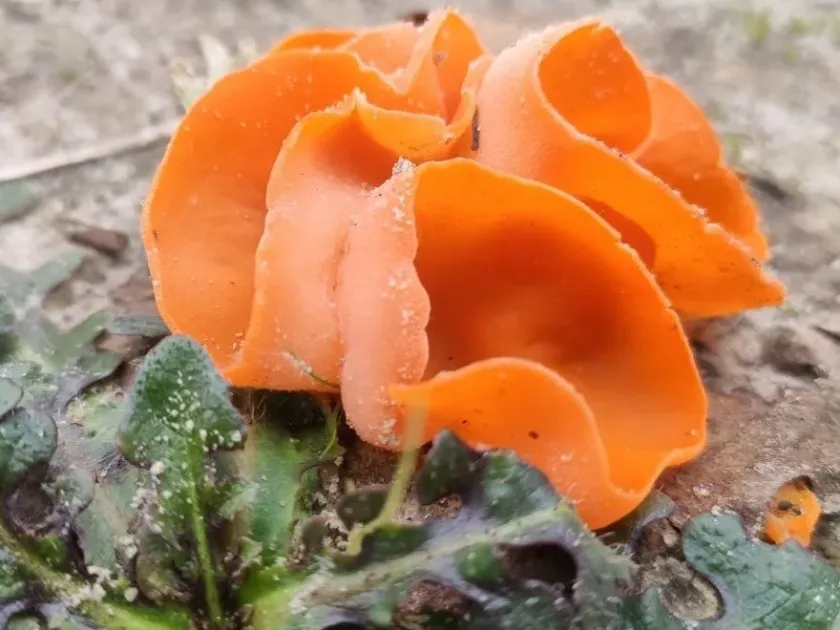
The most evident sign of the presence of this fungus is the emergence of bright orange, cup-like fruit bodies on the ground near the base of trees.
Affected plants often show visible signs of decline, such as thinning foliage, chlorosis, and the premature shedding of needles or leaves.
Examining the root system of symptomatic trees may reveal dark necrotic areas on the root cortex, indicating that the fungus has begun to impact tissue health.
Growth stunting is a common observation in younger seedlings, where the colonized roots cannot efficiently absorb water and essential minerals from the soil.
As the infection progresses, branches may become brittle, and the overall vigor of the host plant decreases significantly over a single growing season.
Pathogen
Aleuria rhenana is a species of fungus in the Pyronemataceae family. It is a saprotrophic organism that primarily inhabits forest soils and leaf litter, though it can interact with tree roots.
This fungus is characterized by its distinctively shaped orange-yellow apothecia, which serve as the reproductive structures responsible for spore dispersal.
While often found in natural ecosystems, it can become an issue in nurseries where high levels of organic matter and constant moisture are maintained for seedling development.
The mycelium of Aleuria rhenana spreads through the upper layers of the soil, forming connections with the root systems of various tree species.
As a fungus that relies on environmental conditions for growth, its cycle involves the production of spores during humid periods, which can land on new substrates and initiate new colonies.
Conditions for development
High humidity is the primary driver for Aleuria rhenana development. Prolonged rainy weather provides the necessary moisture for the activation of spores.
The fungus thrives in cool to moderate temperature ranges, typically found in late spring and autumn, which allow for optimal metabolic activity of the mycelium.
Soil with high organic content provides the nutrient substrate required for the fungus to establish itself and survive during periods of stress.
Poor soil drainage leads to waterlogged conditions, which suppress tree root respiration and simultaneously favor the growth of moisture-loving fungi.
Overcrowded forest nurseries, where airflow is limited, maintain the high humidity levels required for the fungus to spread rapidly among the seedlings.
Why it matters
The primary economic impact of Aleuria rhenana is the reduced viability and survival rates of young trees in commercial forest nurseries.
Infection weakens the host plants, making them significantly more susceptible to secondary pathogens and environmental stressors like drought or frost.
Nutrient uptake deficiency caused by root damage results in slower overall growth rates, extending the time required to produce marketable forestry products.
Increased mortality rates in replanting projects lead to additional costs for nurseries to replace lost stock and maintain the site.
The cumulative effect of fungal colonization is a reduction in the overall health and uniformity of forest stands, which impacts long-term production quality.
Protection
Management of this fungus focuses on cultural practices, particularly maintaining proper drainage to prevent water stagnation around the base of the trees.
Reducing the buildup of decaying organic matter in nurseries limits the substrate available for the fungus, effectively lowering the risk of infestation.
Applying appropriate soil amendments to maintain a balanced pH can make the environment less hospitable for specific fungal pathogens like Aleuria rhenana.
Chemical control with fungicides may be necessary in severe outbreaks to protect valuable nursery stock and prevent the further spread of spores.
- Ensure adequate spacing to promote air circulation.
- Regular inspection of the root zone for early signs of decay.
- Removal of colonized soil and debris from the affected area.
Discussion
No discussions yet — be the first.