
Bacterial necrosis of grape
Xylophilus
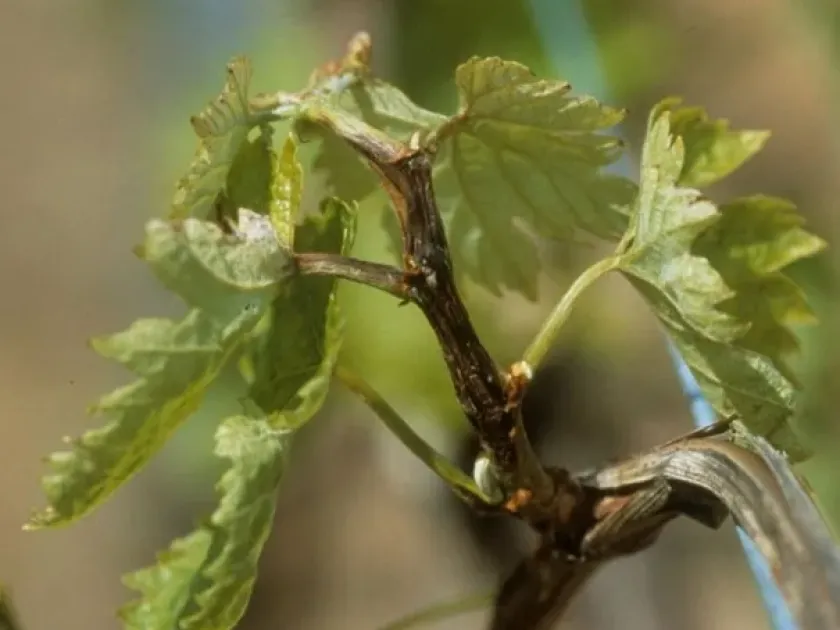
Description
Symptoms
Early spring symptoms include delayed bud break or the total failure of buds to sprout on infected canes, often resulting in withered, dry appearance.
Dark, elongated lesions or cracks develop on young shoots, which can eventually become deep fissures that damage the structural integrity of the wood.
Leaf symptoms appear as small, brownish necrotic spots surrounded by a distinct yellow halo, causing the foliage to look scorched or malformed.
Under humid conditions, a bacterial exudate may emerge from the infected tissues, drying into a shiny, varnish-like crust on the surface of the bark.
- Death of buds and entire cordons or trunks.
- Darkening and necrosis of bark tissues.
- Deformed leaves with distinct necrotic lesions.
- Withering of inflorescences during the flowering stage.
- Formation of deep cracks and longitudinal fissures on shoots.
Pathogen
The causative agent of this disease is the bacterium Xylophilus ampelinus, a vascular pathogen that disrupts the internal transport systems of the grapevine.
The bacterium infects the host through natural openings or wounds created during routine vineyard maintenance, pruning, or due to environmental stress.
It colonizes the xylem vessels, causing a systematic blockage that inhibits the flow of water and nutrients throughout the vine's vascular structure.
The pathogen is known for its ability to persist in the woody tissues of infected vines for several years, acting as a permanent source of inoculum.
Given its latent nature, the bacteria can remain dormant in asymptomatic plants, making it a difficult pathogen to eradicate once a vineyard is infected.
Conditions for development
The disease thrives in moderate temperatures combined with high humidity, which is particularly conducive to bacterial growth during the spring growth flush.
Late spring frosts cause physical damage to the vine tissues, creating entry points that allow bacteria to penetrate deep into the woody parts of the plant.
Rainfall and heavy mists are critical factors that facilitate the dispersal of bacterial cells from infected lesions to healthy areas of the canopy.
The primary pathway for disease entry into new vineyards is the introduction of infected propagation material, such as cuttings or nursery stock.
Improper sanitation practices, such as using unsterilized pruning tools, significantly accelerate the transmission of the bacteria between individual vines.
Why it matters
Bacterial necrosis is a severe threat to viticulture, capable of causing widespread decline and premature death of entire grapevines if left unmanaged.
The disruption of the vascular system weakens the vine significantly, leading to reduced yield and poor overall plant vigor throughout the season.
Affected plants often show poor hardening of the wood, which increases their susceptibility to winter injury and low-temperature damage.
Economic losses arise from the necessity to remove and replace entire blocks of vines, coupled with the long-term impact on vineyard productivity.
The difficulty in chemical eradication forces growers to rely heavily on expensive, long-term preventative measures and strict vineyard hygiene.
Protection
The primary control measure is to source high-quality, certified disease-free propagation material to prevent initial entry into the vineyard.
Strict tool sanitation is mandatory; pruning shears and other tools should be disinfected between each vine to prevent cross-contamination.
Regular monitoring and early detection are crucial, with immediate removal and destruction of symptomatic vines to limit the spread of the pathogen.
Preventative applications of copper-based sprays during the bud-swell stage can help reduce bacterial populations on the surface of the vine.
Optimizing canopy management to improve airflow and reduce moisture levels helps create an environment less favorable for bacterial development.
Discussion
No discussions yet — be the first.