
Bacterial leaf spot of cucurbits
Xanthomonas cucurbitae
Description
Symptoms
Symptoms initially appear on the leaves as small, water-soaked, angular spots. These spots are restricted by leaf veins, giving them a distinct shape.
As the disease progresses, these spots expand, turn necrotic (brown or black), and may sometimes be surrounded by a yellow halo, eventually leading to leaf desiccation.
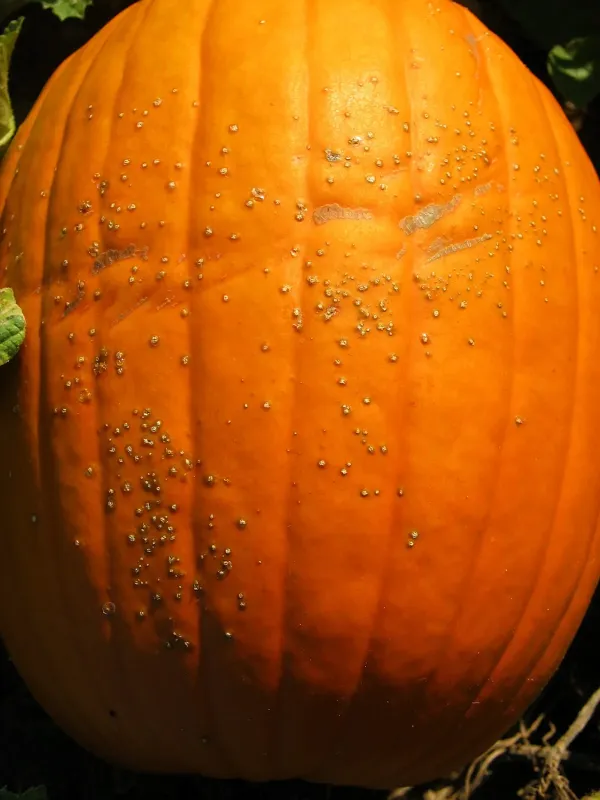
On fruits, the pathogen causes small, circular, water-soaked lesions that later develop into deep, scab-like cracks, often resulting in secondary soft rot.
Stems may also exhibit elongated dark lesions, which can lead to vine collapse if the infection is severe enough to girdle the stem.
A bacterial ooze may be visible on the surface of the lesions during periods of high humidity, which dries into a shiny or crusty film on the plant tissue.
- Angular water-soaked leaf spots
- Necrotic brown lesions on leaves
- Sunken scab-like spots on fruit
- Bacterial exudate on tissue
- Stem cankers and vine collapse
Pathogen
The causal agent of this disease is the bacterium Xanthomonas cucurbitae. This gram-negative, rod-shaped bacterium is highly specific to the Cucurbitaceae family, including pumpkins, squash, and cucumbers.
The pathogen survives in infested crop debris, in the soil, and can be seed-borne, allowing it to persist in the field from one season to the next.
Infection spreads primarily through water splashes from rain or overhead irrigation, as well as by movement through contaminated soil or equipment.
Entry into the plant occurs through stomata or wounds caused by insects, hail, or mechanical cultivation, initiating the colonization of plant tissues.
The biology of Xanthomonas cucurbitae is characterized by its high dependency on humidity, which facilitates its transition from a latent state to an aggressive, pathogenic phase.
Conditions for development
The development of bacterial leaf spot is highly favored by warm temperatures, typically ranging from 20°C to 30°C.
High relative humidity and frequent rainfall are critical for the rapid spread and infection cycles of the bacterium across the crop canopy.
Overhead irrigation is a significant factor in disease dissemination, as it mimics the natural moisture conditions required for the pathogen to move between plants.
Poor field drainage and excessive plant density contribute to prolonged leaf wetness, which creates a highly conducive environment for the establishment of the disease.
The disease incidence is often higher in years with heavy storm activity, as the physical damage to leaves creates entry points for the bacteria.
Why it matters
The primary economic impact of this disease is the significant reduction in fruit quality, making produce unmarketable for fresh markets.
Extensive defoliation caused by the pathogen reduces the photosynthetic capacity of the plants, resulting in stunted fruit growth and lower total yields.
Fruits infected early in their development are often deformed and susceptible to secondary decay, leading to direct crop loss in the field.
The disease weakens the overall plant vigor, making it more susceptible to environmental stressors and other opportunistic pathogenic organisms.
Managing the disease requires increased labor and chemical inputs, raising the overall production costs and lowering the profitability of the operation.
Protection
The use of certified, disease-free seed is the most effective primary measure to prevent the introduction of the pathogen into new fields.
A rigorous crop rotation schedule (3–4 years) is essential to reduce the inoculum load remaining in the soil from previous seasons.
Copper-based bactericides are the standard chemical control option and should be applied preventatively before the onset of favorable weather conditions.
It is crucial to avoid working in the fields when the foliage is wet to minimize the risk of spreading the bacteria mechanically between rows.
Proper field management, including the removal of crop debris and control of cucurbit weeds, helps in eliminating potential reservoirs of the pathogen.
Discussion
No discussions yet — be the first.